
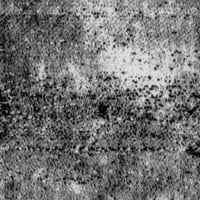


Iron Maiden mp3 compressed 666 times
An oldie but goodie from Cory Arcangel: an mp3 of Iron Maiden’s The Number of the Beast compressed 666 times. (via lined and unlined)

This site is made possible by member support. ❤️
Big thanks to Arcustech for hosting the site and offering amazing tech support.
When you buy through links on kottke.org, I may earn an affiliate commission. Thanks for supporting the site!
kottke.org. home of fine hypertext products since 1998.
An oldie but goodie from Cory Arcangel: an mp3 of Iron Maiden’s The Number of the Beast compressed 666 times. (via lined and unlined)
Amazon has a sampler album of music from Philip Glass available right now for free. Not sure how long that will last so snap it up. See also lots of inexpensive classical music on Amazon.
Update: Here’s a list of all the free mp3 albums on Amazon, 141 in all.
Radiohead’s Jonny Greenwood doesn’t think that the supposed low sound quality of MP3s is something to get worked up about.
We had a few complaints that the MP3s of our last record wasn’t encoded at a high enough rate. Some even suggested we should have used FLACs, but if you even know what one of those is, and have strong opinions on them, you’re already lost to the world of high fidelity and have probably spent far too much money on your speaker-stands.
This conversation with Greenwood is part of a new series by Sasha Frere-Jones’ on the sound quality of recorded music.
A rumination by Suzanne Vega on technology and her hit song, Tom’s Diner. The song was used as a reference when Karl-Heinz Brandenberg was working on the mp3 compression method.
So Mr. Brandenberg gets a copy of the song, and puts it through the newly created MP3. But instead of the “warm human voice” there are monstrous distortions, as though the Exorcist has somehow gotten into the system, shadowing every phrase. They spend months refining it, running “Tom’s Diner through the system over and over again with modifications, until it comes through clearly. “He wound up listening to the song thousands of times,” the article, written by Hilmar Schmundt, continued, “and the result was a code that was heard around the world. When an MP3 player compresses music by anyone from Courtney Love to Kenny G, it is replicating the way that Brandenburg heard Suzanne Vega.”
Vega once went to listen to the final mp3 version of her song. She could not agree with Brandenberg that the track sounded “exactly” like the original.
“Actually, to my ears it sounds like there is a little more high end in the MP3 version? The MP3 doesn’t sound as warm as the original, maybe a tiny bit of bottom end is lost?” I suggested.
Idea for Amazon regarding their MP3 store: allow people to pre-order MP3s and when they’re available for download, send out an email to that effect. For instance, the new Sigur Ros album is out on June 24. A page for the MP3 album exists but it’s difficult to find and while you can preview tracks, you can’t pre-order the album.
After months/years of the band putting the kibosh on it, Radiohead albums are finally available through iTunes. (The albums have been available at Amazon’s MP3 store for months.)
Now that Sony’s on board, all four of the major music labels are selling DRM-free music on Amazon’s MP3 store. Amazon’s giving Apple a real run for its money here.
Amazon has launched their mp3 music store. Files are in mp3 format, no DRM, high bitrate (high quality), and songs are mostly 89-99 cents. A compelling alternative to Apple’s iTMS.
Apple and EMI jointly announced earlier this week that the iTMS would offer EMI’s music without DRM and at a bitrate of 256 kps instead of 128 kps. Twice the bitrate = twice as good, yeah? Not so fast…you might not even notice the difference.
Apple will begin to sell DRM-free songs from EMI via the iTunes Music Store in May. The songs are higher quality but will cost slightly more ($1.29 vs $0.99 for the DRM version). It’ll be interesting to see how many people choose to buy the non-DRM stuff at the higher price. My feeling is that typical consumers won’t care that much…lower price will win out over slightly higher quality and some nebulous future flexibility. I bet EMI is even half-hoping for failure on this thing: “see, customers *want* DRM…”
Paper Thin Walls is offering an mp3 mix tape of their favorite music writers’ favorite songs of 2006…that’s 31 mp3s for free. (via art fag city)
This is old news, but I missed it while I was gone, so apologies if you’ve seen this. Banksy replaced copies of Paris Hilton’s new CD in stores around the UK with his own copies containing doctored album art and a 40-minute song by Gnarls Barkley’s Danger Mouse. Banksy made a video of himself pulling off the stunt. Copies of the CD are on eBay for $180-1,300. An mp3 of the song contained on the doctored CD is available.
The International Dialects of English Archive has a ton of mp3 files of people speaking English from all over the world. “All recordings are in English, are of native speakers, and you will find both English language dialects and English spoken in the accents of other languages.”
Audio versions of dozens of New Yorker articles. Perfect for the long morning commute (if I had a long morning commute). The same site also has audio versions of several other publications, including Wired, The Atlantic Monthly, and Scientific American. What a great resource. (via rw)
Update: Get them all at once, instructions here.
Listen to three tracks from Thom Yorke’s new solo project, the eraser. Radiohead it ain’t, and I’m not sure I like it.
MP3 audio of notable moments in history, including Apollo 13’s “Houston, we have a problem”, Albert Einstein explaining e-mc^2, and, uh, Al Pacino from Scarface. (via cyn-c)
John Hodgman comments on the first few “shuffled” tracks of his mp3 collection.
The Edge has a transcript and an mp3 recording of an event called The Selfish Gene: Thirty Years On. The speakers include Daniel Dennett and Richard Dawkins.
iTunes Signature Maker analyzes your iTunes collection (in the browser via a Java applet) and creates a short sound collage of the music that you listen to most frequently or have rated highly. Here’s the signatute it created for me. (thx, paul)
Starting on Monday, Dec 5th, Ricky Gervais (of The Office and Extras fame) will doing a 12-episode series of podcasts for The Guardian. (thx nicholas)
Since recording the walk signal sounds in Hong Kong, I’ve been a bit slack in documenting the sounds as I travel around Asia (because frankly the iPod is one more thing I don’t want to lug around with me all day). Stuff I’ve missed:
In lieu of hearing any of those things, check out Quiet American’s field recordings from Vietnam. (via np)
The streets of Hong Kong can be a hectic place, but one of the first things you notice is that the pedestrian street crossing signals have a very clear audio signal (one would assume, for the blind and/or very nearsighted). Some American signals has audio as well, but very few, they’re not very loud, and they generally kind of lacking. Anyway, I made an audio recording of the signals (30 sec, 240 KB mp3). The sound is kind of blown out (it’s my first experiment with the iTalk) and the signal doesn’t sound that loud IRL, but you get the gist.
Tom Coates fills us in on the Annotatable Audio project he worked on at the BBC. Basically, you select a timed section of an audio file (music, newscast, etc.) and then you write a little something about it, Wikipedia-style.
An index of mp3s of old TV theme songs. Would-be DJs take note: a friend of mine was DJing a party back in college and he threw on the Knight Rider theme song and people went bonkers. (via rw)
Update: Sound America also has an extensive collection of TV themes in WAV format. (thx josh)
IT Conversations will be streaming presentations from PopTech 2005 live…Windows Media Player required. :( From Etech to the AIGA Design Conference to Web Essentials 05, more and more conferences letting those of us who can’t attend listen in anyway.
The NY Times Magazine has launched The Funny Pages, their comics+ section. PDFs of the comics are available online…here’s the first Chris Ware strip. They’re also podcasting and the first episode is an interview with Ware by John Hodgman, assisted by organist and radio-man Jonathan Coulton.
Apple introduces the iPod nano, which, wow, it’s like a baby iPod. So cute.
Announcing the world’s smallest mp3 player: the iPod Flea. Love the Flea collar.
Final four Beethoven symphonies in mp3 format available for download on the BBC site this week.
Stay Connected