kottke.org

...is a weblog about the liberal arts 2.0 edited by Jason Kottke since March 1998 (archives). You can read about me and kottke.org here. If you've got questions, concerns, or interesting links, send them along.

666 kottke.org posts about food


The versatility of the tuna fish sandwich

This photo on Wikipedia of a tuna, olive, and avocado sandwich is used on exactly two pages:

Tuna fish sandwich
2009 flu pandemic vaccine

On the flu vaccine page, the sandwich photo is accompanied by the caption "The vaccine contains less mercury than a typical tuna fish sandwich."

By Jason Kottke    Nov 18, 2009    food

The world's easiest pie crust

In today's installment of Cooking with the Awl, Choire Sicha shows us how to make his famous Nonchalant Smoker's E-Z Pie Crust. Baking has never been less precise!

3. Put something more than a teaspoon but something less than a tablespoon of salt in the flour. That is like "three pinches." It doesn't really matter how much! Saltiness offsets sweetness! People, who are animals, like salt!

4. Put about the same amount of sugar in the flour! Give or take! IT DOESN'T MATTER.

Choire also notes at one point that the crust "should look sort of gross".

By Jason Kottke    Nov 18, 2009    Choire Sicha   food   how to

DIY chicken plucking machine

Not for the squeamish. Or you can build your own. (via eat me daily)

By Jason Kottke    Nov 18, 2009    food   video

Nathan Myhrvold, cookbook author

Nathan Myhrvold, ex-Microsoftie and founder of an invention company called Intellectual Ventures, is also really interested in food, so much so that he's writing a monster cookbook (currently ~1500 pages) about the science of cooking.

In another discovery of culinary heat transfer physics, Dr. Myhrvold said the bulbous shape and black color of Weber grills were wrong. To achieve an even cooking temperature across the cooking grate, the inside of the grill should be vertical and shiny to reflect the heat. That can be fixed by adding an aluminum insert to the grill. "So we have directions for that," Dr. Myhrvold said.

You may remember reading about Myhrvold and IV in Malcolm Gladwell's piece on the nature of invention last year.

Electrically conductive steak as art

For his piece Steak Filter, Noah Feehan ran a video signal of a steak cooking through the actual steak. The deterioration of the video signal becomes a sign of how done the steak is.

Quite literally, I am plugging composite video into a big steak, which is then cooked. The video signal going through the steak is the image of the steak cooking. Gradually, the steak loses moisture and signal can no longer pass.

The videos don't really show too much, but I love the idea. (via eat me daily)

By Jason Kottke    Nov 17, 2009    art   food   Noah Feehan   video

The masked reviewers of the Michelin Guide

For the first time ever, a Michelin Guide reviewer knowingly sits down to a meal with a journalist, New Yorker writer John Colapinto. The resulting article is pretty interesting; here's my favorite bit:

Le Bernardin was one of only four restaurants in New York (along with Jean Georges, Thomas Keller's Per Se, and the now defunct Alain Ducasse at the Essex House) that earned three stars in the debut issue of the Michelin guide, and it has held on to its three stars ever since. Ripert estimates that revenues increased by eighteen per cent when the first guide came out, but the pressure to hold on to his stars has also escalated.

An 18% increase? Assuming that Le Bernardin was already booked solid before the guide came out and expenses remained constant, that means that the same number of diners generated that increase...presumably Michelin Guide readers spend more on dining than even Le Bernardin regulars do. Margins on Manhattan restaurants, even the fancy ones, generally aren't that large...an 18% increase is insane.

Update: A slight clarification. I fudged the 18% revenue increase into an 18% increase in profits...which isn't the case. But since I'm assuming that the revenue increased was generated by the about same number of customers and that most of the expenses (rent, staff, etc.) stayed the same, the profit margin had to increase by some significant amount (for a Manhattan restaurant). And if those new customers ordered more tasting menus or more expensive bottles of wine, I would assume that the profit margin on those items are higher than average as well. So, my guess is that if you asked Eric Ripert if Le Bernardin's profit margin increased after the Michelin Guide came out, he would answer in the affirmative...but it wouldn't be an 18% increase.

Slow-poached eggs

I mentioned on Twitter last week that I made slow-poached eggs using a technique from the Momofuku book. A few folks asked about a recipe so here are the details:

Fill your largest pot with water and put it over super low heat on the stove. Put something in the bottom of the pot to keep the eggs off the bottom...you want them to be heated by the water, not the flame underneath. Use a thermometer to heat the water to 140-145°F and slip the whole eggs in (no cracking). Let the eggs sit in there for 40-45 minutes, maintaining the temperature the whole time. I found that turning the heat on for 30-45 seconds every 10 minutes or so was enough to keep the temperature in the proper range.

To serve, crack the eggs and discard any clear whites. If you're not serving them immediately, chill the whole eggs in an ice bath and store in the fridge. To reheat, run under hot water for a minute or two.

This takes a little longer than making poached eggs in the traditional way, but you can do several eggs at once (like dozens if you have a big enough pot), this technique is less messy and fussy, and results in a poached eggs with a super-creamy white. The whites on my first batch were a little too runny for my taste, so I'm going to try a slightly higher temperature next time to (hopefully) achieve something between soft boiled and poached.

That's it. There's a lot more context and advice in the Momofuku book (which is excellent and includes a technique for frying your slow-poached eggs); I'd suggest picking up a copy if you're interested.

By Jason Kottke    Nov 13, 2009    books   food   Momofuku

Butchering a side of beef

Video of a butcher breaking down a substantial piece of beef.

Meat Appreciation: A NYC Restaurant Honors the Whole Animal from SkeeterNYC on Vimeo.

Meet Shanna Pacifico, the chef de cuisine & butcher at Back Forty restaurant in New York City. She helped devise a sustainable meat program that brings in whole animals to make up their menu, where everything gets used and nothing goes to waste.

NSFV (not safe for vegetarians). (via serious eats)

By Jason Kottke    Nov 2, 2009    food   video

Restaurant server don'ts

On the NY Times small business blog, Bruce Buschel shares 50 things restaurant servers and staff should never do. The next 50 will follow next week.

Update: Aaaand here's the second 50.

By Jason Kottke    Oct 30, 2009    business   food   lists

The world's best pancake recipe

After discovering the recipe for Robie's Buttermilk Flapjacks in a magazine a year or two ago, my wife has been making them for breakfast most Saturdays and they are, no foolin', the best pancakes I've ever eaten. They are fluffy and moist and delicious. Here's what you do.

Combine the dry ingredients in a bowl, whisk, set aside:

2 cups flour
2 tbsp sugar
4 tsp baking powder
1 tsp baking soda
1 tsp fine salt

Combine the wet ingredients in a second bowl, whisk:

2 cups buttermilk
4 tbsp melted butter
1 tsp vanilla extract
2 beaten eggs

Add the wet ingredients to the dry and whisk until just combined. Fry in a pan with butter. Top with maple syrup and devour.

Don't skimp on the ingredients here. Use real butter and real vanilla extract, but especially real maple syrup and real buttermilk. Depending on where you live/shop, actual buttermilk might be difficult to find. The term "buttermilk" formerly referred to the liquid left behind after churning butter but nowadays refers to a cultured milk product not unlike drinkable yogurt. The only real buttermilk we've been able to find (in VT and MA) is Kate's Real Buttermilk; even at the NYC Greenmarket, the best you can find is cultured buttermilk made with whole milk. At least attempt to avoid most grocery store buttermilk; it's made from skim milk with added thickeners and such, basically buttermilk without any richness, which is, like, what's the point? Oh, and no powdered buttermilk either...it messes with the texture too much. The point is, these are buttermilk pancakes and they taste best with the best buttermilk you can get your mitts on.

By Jason Kottke    Oct 29, 2009    food   pancakes

Momofuku book

I was all fired up to make eight from-scratch servings of ramen last night after looking through the Momofuku book, but ulitmately the book is a Trojan horse for enticing people into the restaurants. As in: "Konbu? 5 pounds of meaty pork bones? Fuck that, let's just go to Noodle Bar."

By Jason Kottke    Oct 28, 2009    books   food   Momofuku   NYC

Thomas Keller cooks his dad's last meal

The NY Times has a really sweet story about Thomas Keller and the rekindling of his relationship with his father.

Mr. Keller ate many of the dishes in the book with his father at Ad Hoc. Even after the accident they would go, despite the physical challenges of getting his father out of the house. Ms. Cunningham said she used to worry about how customers might feel watching the famous chef feed his father. "Here he was taking care of his father just like a baby," she said. "For Thomas, it didn't make the slightest difference. Whatever he could do to make his dad comfortable he did."

The chef as caretaker, literally feeding a loved one...I don't see anything unusual about that at all. Isn't that what all chefs should aspire to? (thx, andy)

The Shake Shack burger recipe

With a bit of research and social engineering, an enterprising burger enthusiast has figured out the recipe for the infamous Shake Shack burger.

Exclamation point interlude: !!!!!!!!!!!!!

Upon tasting it, my immediate thoughts are mayo, ketchup, a little yellow mustard, a hint of garlic and paprika, perhaps a touch of cayenne pepper, and an elusive sour quality that I can't quite pinpoint. It's definitely not just vinegar or lemon juice, nor is does it have the cloying sweetness of relish. Pickle juice? Cornichon? Some other type of vinegar? I can't figure it out. This was going to take a little more effort.

Totally doing this for dinner one of these nights. We'll probably cheat on the ground beef...we've got some Pat LaFrieda patties stockpiled in the freezer.

By Jason Kottke    Oct 19, 2009    food   hamburgers   how to   NYC   restaurants   Shake Shack

150 different pasta shapes

From alfabeto to zitoni, here are over 150 illustrations of pasta shapes, a visual pasta encyclopedia, if you will.

Hiding at the very end of the listing is a pasta shape called Marille, which is unusual in that a) it's a recent shape, b) its designer is known, and c) it is no longer available. Marille's designer, Giorgetto Giugiaro, previously had designed some of the most distinctive cars in the world and in 1999 was named Car Designer of the Century. (via @nicolatwilley)

Pizza pi

A round pizza with radius 'z' and thickness 'a' has the volume pi*z*z*a. That and other math jokes are available on Wikipedia. Don't you love it when people explain jokes:

In this case, DEAD refers to a hexadecimal number (57005 base 10), not the state of being no longer alive.

High larious. (via reddit)

By Jason Kottke    Oct 15, 2009    food   mathematics   pizza

Huge Pepsi Throwback news

It's coming back around the holiday time.

Due to all the Throwback tweets, Facebook fan pages, videos, blog posts, pics & pleas, Pepsi Throwback is coming back!! Starting December 28th Pepsi and Mountain Dew Throwback will be available again for 8 weeks with the same formula and natural sugar, but this time with an even more rad vintage look!

An even more rad vintage look, you say? Rad!

The no control cafe

In Kashiwa, Japan, there was briefly an unusual cafe where you recieve whatever the person in front of you ordered...and you're ordering for the person behind you.

The Ogori cafe was an unforgettable travel moment, and an idea that has stuck with me: It was a complete surprise in our day. It encouraged communication between total strangers or, in this case, members of the Kashiwa community and a couple of weird guys from Oregon. It forced one to "let go", just for a brief moment, of the total control we're so used to exerting through commerce. It led you to taste something new, that you might not normally have ordered. It was a delight.

(via mr)

By Jason Kottke    Oct 9, 2009    economics   food

Michael Pollan's food rules

Michael Pollan asked his readers for suggestions for food rules, and condensed all the answers down to 20. Here are my three favorites:

Never eat something that is pretending to be something else.
Don't yuck someone else's yum.
If you are not hungry enough to eat an apple, then you are not hungry.

By Jason Kottke    Oct 8, 2009    food   lists   Michael Pollan

Calculate the cost of your sandwich

From Rob Cockerham's sandwich calculations:

Dijon mustard is to yellow mustard as a Rolls Royce is to your Honda. A 454 gram bottle sells for $6.99, and that is 5 cents per serving.

He adds up exactly how much homemade sandwiches cost based on the amount of ingredients and their correlating prices. The results are revealing: 98 cents for a processed turkey sandwich, 48 1/2 cents for a grilled cheese, and 64 cents for a pb&j. If you'd like to figure out how much bread you'll need for your picnic, try out Cockerham's sandwich calculator. For more dizzying and delicious equations, cut the corners off the drool-inducing Scanwiches.

By Ainsley Drew    Oct 7, 2009    food   math

International space cuisine

Borsch, sticky rice with sweet bean paste, duck cassoulet, and tvorog (Russian cottage cheese and nuts) are just a smattering of the culinary variety served up in space. On board the Discovery Space Shuttle, the various offerings reflect the amalgamation of nations that make up the ships temporary inhabitants. Recent Discovery visitor Danny Olivas brought a little American fare to the deck, perfecting the zero-g breakfast burrito. If you're looking to spice up your food between the stars, be warned: salt and pepper are only available in liquid form.

Update: Nuts aren't an essential ingredient of tvorog, and it's actually not cottage cheese at all. The thickened dairy treat is a relative of German quark, and is consumed throughout Central and Eastern Europe. Its add-ins vary depending on location, but vanilla and fruit are popular additives in both the Netherlands and Germany.

(thx tomek)

By Ainsley Drew    Oct 5, 2009    food   space

Food phobia

Dave Nunley is a food phobic in the UK who has primarily subsisted on grated cheddar cheese since birth. Although he's eating up to three times the amount of fat recommended for the average diet, he seems to be in fairly good health, save for a vitamin B deficiency.

This isn't as uncommon as you might think. Unlike fad diets that eschew one corner of the food pyramid for another, food phobia is an actual fear-based aversion to a particular kind of vittle, either due to taste, association, or texture. The disorder, which psychologists believe has links to obsessive compulsive disorder, can lead to nutritional deficits, a compromised immune system, and a lot of awkwardness at dinner parties. Orthorexia, a similar condition, is an obsession with healthful eating that can at times become so severe that it leads to anorexia, but food phobics find their meals dominated by their fear. Ironically, legendary egg-shaped director Alfred Hitchcock was an admitted ovophobe, and was "revolted" by eggs.

Update: It seems the Brits have cornered the market on uncovering food phobias. The show Freaky Eaters on BBC Three documents individuals with such severely restricted eating that they avoid certain food groups altogether. The show aims to help each person overcome their aversions and adopt a healthy diet.

(thx jodi)

Update: Another British export is the website Adult Picky Eaters, which aims to provide a forum and self-help information for those struggling with food issues. The author also documents her struggle with picky eating, and the comments on the site are pretty revealing.

(thx rob)

By Ainsley Drew    Oct 2, 2009    food   psychology

Bringing the oyster back to New York

Michael Osinski grows oysters out on Long Island, now an unusual pursuit in an area that used to support dozens of oyster companies...New York used to be the place for oysters (see also).

If you'd like to try them out, Widow's Hole sells their oysters to several NYC restaurants, including Gramercy Tavern, Union Square Cafe, and Bouley. Osinski achieved a bit of notoriety earlier this year when he wrote an article about his experience writing software for Wall Street firms called My Manhattan Project: How I helped build the bomb that blew up Wall Street. (via serious eats)

Livermush

Livermush is a combination of pig scraps and cornmeal, and inhabits some culinary purgatory between meatloaf and corndog. Brought to the South in the 1700s by resourceful German immigrants who migrated from the Northern colonies, true livermush contains at least 30% pig parts and uses cornmeal as the binding ingredient. It is often fried like a patty and served in sandwich form, with mayo, lettuce, and tomato. Many people confuse livermush with liver pudding, and although the distinction between the two is somewhat vague, it's generally accepted that liver mush is the meal to the west of the Yadkin River, while liver pudding is the staple snack of the east.

Once a cornerstone of North Carolinian cuisine, there are signs that this "working man's staple" is dropping off menus. It appears that only five commercial producers are still churning out the meat mixture all of them family-owned and operated, all of them in North Carolina. Jerry Hunter, a livermush manufacturer in the town of Marion, laments the recent downturn.

"We're still running a fairly good volume, but a whole lot of us wish we could see better times. It's not just livermush. All of us is struggling to stay in existence."

Not everyone is forgetting about livermush. Areas like Marion have begun hosting livermush festivals, hoping to create a resurgence. Perhaps it just needs a few high-profile sponsors to bolster its gustatory delights. To start, the wife of former Cleveland Indians first baseman Jim Thome was asked what he was going to miss most after being acquired by Philadelphia, and she answered, "Livermush."

Update: Liver lovers rejoice, various forms similar to the 'mush are alive and well. Goetta is a German ground meat and oat loaf that is also referred to as "Cincinnati caviar," due to its popularity in the area.

(thx alex)

Update: And Mr. Thorme hopefully discovered the Philadelphia equivalent of livermush, known as scrapple. A mixture of pork bits and cornmeal, this combination is enhanced with flour, buckwheat, and spices.

(thx tim)

Update: In Northwest Ohio they have a livermush-like mixture that's sold in brick form. It's called grits, though it's different from the corn-based breakfast porridge that's also known as southern, or hominy, grits.

(thx jeff)

By Ainsley Drew    Oct 1, 2009    economy   food   history

Making BLTs from scratch

Michael Ruhlman announces the winners of his BLT From Scratch contest.

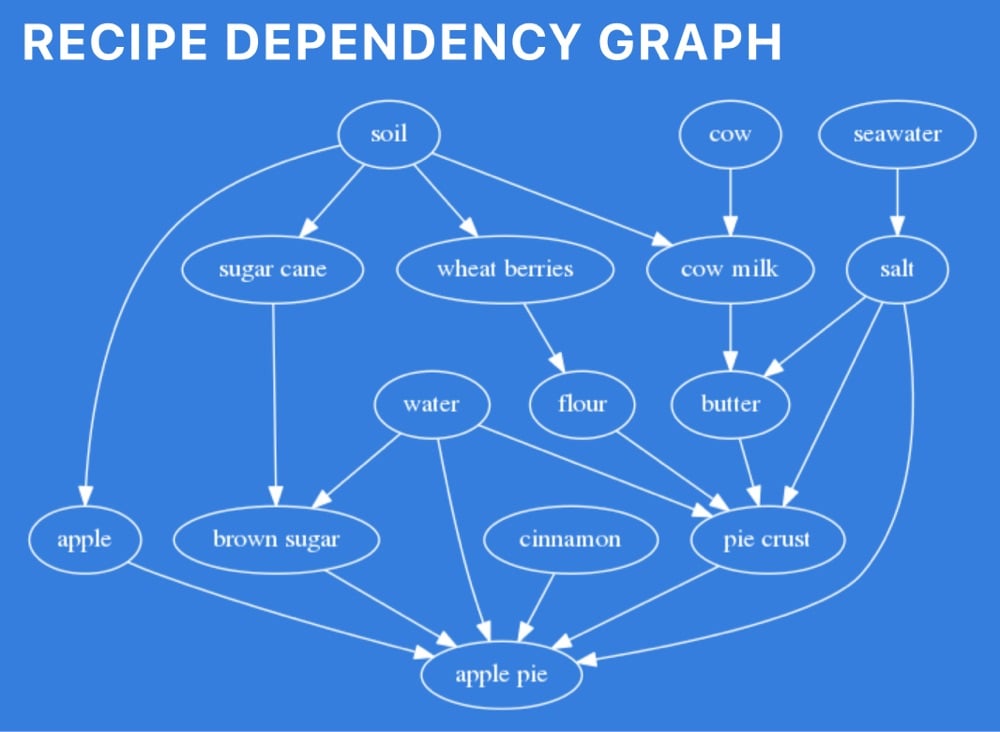
From scratch means: You grow your tomato, you grow your lettuce, you cure your own bacon or pancetta, you bake your own bread (wild yeast preferred and gets higher marks but is not required), you make your own mayo. All other embellishments, creative interpretations of the BLT welcome.

Don't miss the winner's BLT flow chart; he made his own sea salt from sea water.

Snack in a box

An interesting way to hold onto summer would be to engineer a lunchbox that comes with its own outdoor setting. For those who are craftily inclined, this article contains instructions on how to pack more than a sandwich with your mid-day snack, using turf, an image of the outdoors, and some old fashioned ingenuity. With lunch inside the box, nestled among a handmade diorama of the outdoors, complete with a patch of grass, the "Green Space Travel Case" provides a tiny slice of countryside for those confined to a concrete cityscape. Ants and screaming children packed separately.

By Ainsley Drew    Sep 29, 2009    crafts   food

Robotic pancake sorter

This robot can sort pancakes at a rate of over 400 ppm (pancakes per minute).

The action gets going at about 1:15...don't miss the explanation of the pancake buffer shelf about 2/3s of the way through. (via eat me daily)

By Jason Kottke    Sep 28, 2009    food   video

A bite of baby

A farmer in China has grown pears in the shape of babies. Using fiberglass and plastic moulds, Hao Xianzhang has been able to cultivate fruit in the shape of newborns. The popularity likely extends beyond those who catch the literary reference: in the Chinese novel Journey to the West a mythical fruit in the shape of an infant bestows immortality to all who consume it. Xianzhang's pears cost $7 (50 yuan) each, not too pricey for a piece of the eternal. For those who aren't inclined to snack on athanasia, the farmer plans on growing fruit in the shape of other figures, including comedy icon Charlie Chaplin.

Update: Turns out that some sources are calling these "Buddha shaped pears," not baby shaped. Chewing on a deity or consuming your young, either way, it's some peculiar produce.

(thx anna)

By Ainsley Drew    Sep 28, 2009    babies   food   fruit   weird

Hamburger style guide

A Hamburger Today presents a guide to all the different styles of hamburgers and cheeseburgers out there, including sliders, the pub burger, and guberburgers (a regional burger featuring melted peanut butter).

See also America's Regional Hot Dog Styles and A List of Regional Pizza Styles.

By Jason Kottke    Sep 18, 2009    food   hamburgers

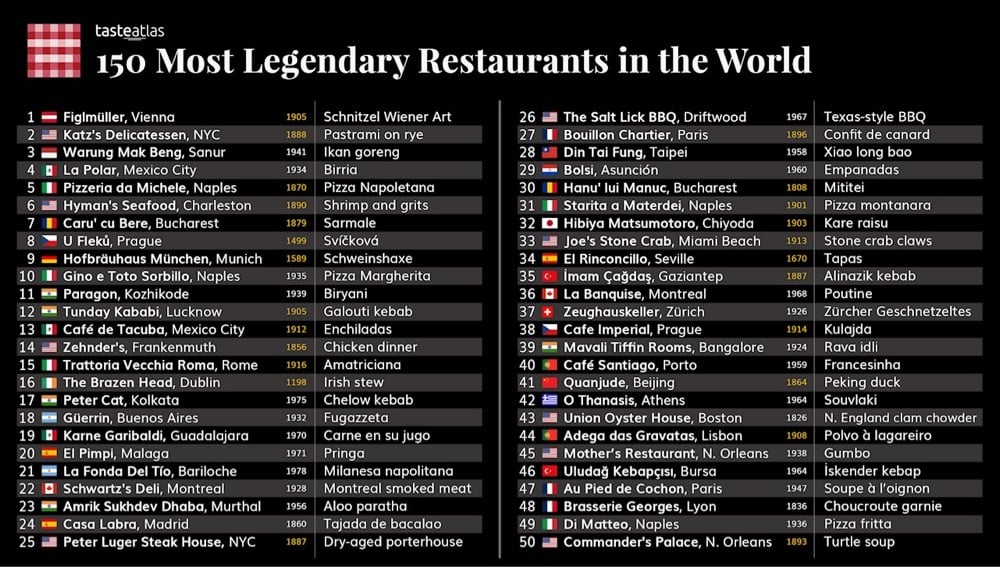
Where's the world's best food?

The Guardian lists the best 50 foods to eat and where to get them. I've had a few of these (ravioli at Babbo, pork at Gramercy, pho at Pho 24, pastrami at Katz's, etc.) but, sucker that I am for such things, I particularly enjoyed reading about the Turkish olive oil available at an electrical supply shop in London:

At his electrical supply shop in London's Clerkenwell, Mehmet Murat sells wonderful, intensely fruity oil from his family's olive groves in Cyprus and south-west Turkey. Now he imports more than a 1,000 litres per year. His lemon-flavoured oil is good enough to drink on its own.

By Jason Kottke    Sep 17, 2009    best of   food   lists

Climate change tasting menu

New Scientist reports that Czech beer tastes worse than it used to due to climate change.

Climatologist Martin Mozny of the Czech Hydrometeorological Institute and colleagues say that the quality of Saaz hops -- the delicate variety used to make pilsner lager -- has been decreasing in recent years. They say the culprit is climate change in the form of increased air temperature.

Winemaking regions are shifting due to climate change as well.

Nicola Twilley proposes a Climate Change Tasting Menu that highlights food and drink demonstrating the effects of human activities on climate.

The starter would feature new products that have only recently been cultivated locally, thanks to climate change -- Devon olive oil perhaps, accompanied by a nice glass of Kent rosé. The main course might be controversial: test-tube grown imitation meats and vegetables that recreate the flavour and mouthfeel of species that are already lost or threatened with extinction by climate change.

One pig, 185 different products

PIG 05049 by Christien Meindertsma recently won the 2009 Index Award in the Play category. This book looks amazing.

05049 was an actual pig, raised and slaughtered on a commercial farm in the Netherlands. Rotterdam designer Christien Meindertsma was shocked to discover that she could document 185 products contributed to by the animal.

Meindertsma's design includes the publication of her book, PIG 05049, which charts and pictures each of the products supported by the animal. The surprise is in the fact that elements of production contributed to by pig farming include not only predictable foodstuffs -- pork chops and bacon -- but far less expected non-food items: ammunition, train brakes, automobile paint, soap and washing powder, bone china, cigarettes.

PIG 05049

The caption on the page reads:

Fatty acids derived from pork bone fat are used as a hardening agent in crayons and also gives them their distinctive smell.

Crayons smell like pig bone fat. I don't think I'll use crayons ever again without thinking of that little factoid.

See also I, Pencil. Nobody knows how to make a pencil and nobody knows where all the parts of a pig go either. (via design observer)

The mushroom tunnel of Mittagong

Li-Sun Exotic Mushroom Farm grows their mushrooms in a disused railway tunnel just outside of Sydney, Australia; the varieties grown there have been bred specifically for growing in the tunnel..."they are species designed for architecture".

He keeps his mushroom cultures in test-tubes filled with boiled potato and agar, and initially incubates the spawn on rye or wheat grains in clear plastic bags sealed with sponge anti-mould filters before transferring it to jars, black bin bags, or plastic-wrapped logs; (middle) Shimeji and (bottom) pink oyster mushrooms cropping on racks inside the tunnel. Dr. Arrold came up with the simple but clever idea of growing mushrooms in black bin bags with holes cut in them. Previously, mushrooms were typically grown inside clear plastic bags. The equal exposure to light meant that the mushrooms fruited all over, which made it harder to harvest without missing some

Big food companies hilariously attempt to regulate themselves

According to the nation's largest food manufacturers, among the Smart Choices that shoppers can make at the supermarket are Fruit Loops, Fudgsicle bars, Cocoa Krispies, Frosted Flakes, Lucky Charms, I Can't Believe It's Not Butter, and Hellmann's mayonnaise. Nutritionists are understandably upset.

"These are horrible choices," said Walter C. Willett, chairman of the nutrition department of the Harvard School of Public Health. He said the criteria used by the Smart Choices Program were seriously flawed, allowing less healthy products, like sweet cereals and heavily salted packaged meals, to win its seal of approval. "It's a blatant failure of this system and it makes it, I'm afraid, not credible," Mr. Willett said.

Nutrition professor Marion Nestle added:

The object of this is to make highly processed foods appear as healthful as unprocessed foods, which they are not.

Is there a term for this...perhaps something akin to greenwashing? Faux-ganic?

By Jason Kottke    Sep 8, 2009    food

Salting ice cream

In last Sunday's episode of Mad Men, Grandpa Gene ate ice cream right out of the container and salted each spoonful before putting it in his mouth.

Mad Men Salt Ice Cream

It was an odd sight...salt isn't normally the first thing you think of as an ice cream topping. After the episode, Rex Sorgatz tweeted:

WHO THE FUCK SALTS THEIR ICE CREAM?

Salt has its own flavor when it's concentrated (if you salt foods too much or eat some all by itself) but used judiciously, salt takes the natural flavor of food and enhances the intensity. To use another dairy product as an example, fresh mozzarella tastes pretty good on its own but throw a little salt on top and it's mozzarella++. Salt makes ok food taste good and good food taste great. Along with butter, salt is the restaurant world's secret weapon; chefs likely use way more salt than you do when you cook at home. It's one of the reasons why restaurant food is so good.

But back to the ice cream. As food scientist Harold McGee writes, salt probably won't make ice cream taste sweeter but will make it taste ice creamier, particularly if the ice cream is of low quality, as the store-bought variety might have been in 1963.

I'm not sure that salt makes sugar taste sweeter, but it fills out the flavor of foods, sweets included. It's an important component of taste in our foods, so if it's missing in a given dish, the dish will taste less complete or balanced. Salt also increase the volatility of some aromatic substances in food, and it enhances our perception of some aromas, so it can make the overall flavor of a food seem more intense.

So that's why the fuck someone might want to salt their ice cream.

By Jason Kottke    Sep 8, 2009    food   Harold McGee   Mad Men   Rex Sorgatz   TV

Anthony Bourdain's Disappearing Manhattan

A Continuous Lean recommends Anthony Bourdain's Disappearing Manhattan episode of No Reservations...with the pertinent YouTube embeds.

Fuck, it's worth a watch even if you have seen it ten times. Eisenberg's, Manganaro Foods, Keens, Le Veau d'Or, this show is like my NYC gastro-playbook. Watch it, love it, live it.

Grub Street has some textual CliffsNotes if you're not into the video. If I had one of them life lists, sharing a meal with Bourdain would probably be on it.

By Jason Kottke    Sep 2, 2009    Anthony Bourdain   food   No Reservations   NYC   TV   video

Things that are better than a New York City hot dog

In response to a hyperbolic statement from a friend about the goodness of New York City hot dogs, Matthew Diffee compiles an extensive list of stuff that's better. A sampling:

Nice fluffy towels
Believing in yourself
Finding a lost twenty in your coat pocket
Prince Edward Island
Coming home after being away for a while
Submarines
Supermodels
A kiss in the rain

By Jason Kottke    Aug 31, 2009    food   hot dogs   lists   Matthew Diffee   NYC

A pizza oven grows in Brooklyn

Adam Kuban interviewed my friend Mark about the pizza oven he built in his Brooklyn backyard.

It is actually pretty amazing how well the oven works. The first thing we made after pizza was a roasted chicken. I just can't describe how amazing it was. Not to mention the pizzas. They cook in about 90 seconds, and when I pulled the first one out of the oven, and the backyard smelled like a pizzeria, we knew all the work was worth it.

Mark and I work in the same office and it's nice to hear that his daily phone conversations about stucco, stucco suppliers, stucco styles, and stucco application techniques have resulted in success.

By Jason Kottke    Aug 25, 2009    Adam Kuban   food   interviews   Mark Wilkie   NYC   pizza

The Line Diet

The Line Diet (good name!) is a web-based version of the Steve Ward Diet. There is also an (unrelated) iPhone app. From the site's creator:

About 4 weeks ago, I stumbled across a story on Kottke's Blog about the "Steve Ward Diet". The idea seemed ingeniously simple to me... so I started my chart the same day. I've lost almost 8 pounds since then.

Update: There's an Excel spreadsheet version as well.

By Jason Kottke    Aug 24, 2009    food   Steve Ward

North Korean cuisine

The new restaurant hotness in NYC: A Taste of Pyongyang.

After a lengthy stare down, the maitre d' shows you to your table. Once seated, you must adhere to two conditions: you will cook your own meal with your own ingredients, and no photography. If you refuse these terms, you will be warned that a crushing defeat will soon be brought down upon your soul. Don't give in, though; stick to your guns (to coin a phrase), and ask calmly for a menu. But don't press your luck by asking for water. This is very important.

By Jason Kottke    Aug 21, 2009    food   North Korea   NYC

The Cove

The Cove has been getting great reviews: four stars from Ebert (who calls it "a certain Oscar nominee") and a score of 82 on Metacritic. A quick synopsis from Wikipedia followed by the trailer:

The Cove is a 2009 documentary film documenting the annual killing of more than 2,500 dolphins in a cove at Taiji, Wakayama in Japan. The film was directed by former National Geographic photographer Louis Psihoyos, and was filmed secretly during 2007 using underwater microphones and high-definition cameras disguised as rocks.

By Jason Kottke    Aug 21, 2009    dolphins   fishing   food   Japan   movies   The Cove   trailers

Bang Bang Diet iPhone app

Inspired by the Steve Ward Diet, an iPhone developer wrote Bang Bang Diet to help you "diet like a robot". Again, here are the rules:

You plot your desired weight on a desired date towards the right side, making sure that you've left the correct number of lines in between (one per day). You draw a line from the current weight/date to the desired weight/date. Every morning you weigh yourself and plot the result. If the point is below the line, you eat whatever you want all day. If the point is above the line, you eat nothing but broccoli or some other low-calorie food.

The app takes care of the plot for you and tells you either to "Eat Normal" or "Eat Light" on any particular day. Only $1.99 at the App Store.

Update: The folks behind Bang Bang Diet have cleverly applied the same idea to budgeting with their Simple Budget app...the app tells you to "Spend" or "Don't Spend" based on how much you've already spent for the day.

True fruits and false fruits

Under close scrutiny, hardly any of the things we refer to as fruits actually are.

Strawberries, you will be glad to know, are a 'false fruit'. Which seems reasonable enough. But at this point a small doubt started to grow in my mind... what, actually, then, was a real fruit? Oranges? No, they're a modified berry. Bananas? Leathery berry. Plums? Drupe -- fleshy bit with one stone inside.

(via clusterflock)

By Jason Kottke    Aug 12, 2009    food

NYC greenmarket documentary

Serious Eats made a short documentary (~9 min.) about the Union Square Greenmarket and one of the farmers who brings his goods to the market every week.

By Jason Kottke    Aug 11, 2009    Ed Levine   food   NYC

Coca-Cola vs. Pepsi branding

You know that image that's been going around that shows several revisions to the Pepsi logo while the Coca-Cola logo is the same as it's been since 1885? It tells a compelling story...Pepsi shifting its brand every few years in an attempt to catch up to steady market leader Coca-Cola. But of course it's bullshit...Armin Vit constructs a more accurate brand timeline that shows many Coca-Cola logos over the years.

By Jason Kottke    Aug 6, 2009    arminvit   branding   Coca Cola   design   food   Pepsi   timelines

New NY Times restaurant critic

The NY Times has named their replacement for outgoing restaurant critic Frank Bruni: current Times editor Sam Sifton. This is good news for me...I look a bit like Sifton; if I'm mistaken for him and incur favorable treatment at restaurants because of it, I won't complain.

Update: Many many updates on Sifton and his appointment: from the Times itself on the transition, on restaurant critics and anonymity, and on Sifton's preparation for the gig (more here); Ed Levine thinks Sifton is going to be good; and Eater has a dossier on Sifton.

By Jason Kottke    Aug 5, 2009    food   NYC   NY Times   Sam Sifton

Makes you not want to eat

Even though Michael Ruhlman had heard it all before, Food Inc. packed a powerful punch for him and his son.

Indeed his response will mirror that of most other people who see this movie. Upon leaving the theater, James said, "That was a really good movie, Dad. (pause) Kind of makes you want to be a vegetarian. (pause) Kind of makes you not want to eat."

Here's the trailer for Food, Inc.

The decline of cooking and the rise of watching people cook

In his latest long piece for the New York Times Magazine, Michael Pollan explores the reasons for the simultaneous decline of people cooking and the popularity of food shows.

Today the average American spends a mere 27 minutes a day on food preparation (another four minutes cleaning up); that's less than half the time that we spent cooking and cleaning up when Julia arrived on our television screens. It's also less than half the time it takes to watch a single episode of "Top Chef" or "Chopped" or "The Next Food Network Star." What this suggests is that a great many Americans are spending considerably more time watching images of cooking on television than they are cooking themselves -- an increasingly archaic activity they will tell you they no longer have the time for.

One of the things that food/cooking shows do -- particularly the dump-and-stir programs like Rachael Ray -- is to give the viewer the impression that by watching, they have cooked a meal. (Mirror neurons, anyone?) Perhaps that's a small factor contributing to cooking's decline in the American home.

Food allergies

An article in New Scientist discusses the current state of food allergy research.

Perhaps most striking are the regional differences. "Peach and melon allergy is particularly common in the Mediterranean - in Spain and Greece," says Fern'andez Rivas. Reports from clinics suggest that Iceland is a hotspot for fish allergy and Switzerland has a higher rate of celeriac allergy than elsewhere.

These regional variations are likely to be due in part to differences in eating habits, causing people to be exposed to different allergens. But that alone cannot explain a pronounced north-south divide in the type of apple allergy people experience. In northern Europe, people react to the uncooked flesh of apples, whereas in the south it's the skin that sets them off, whether it's cooked or not. What could be the cause of this strange invisible dividing line that skims across south-west France, cuts through Italy close to Florence, and continues eastwards through the middle of the Black Sea?

Significantly, this line marks the southern limit of the birch tree, a plant whose pollen is one of the causes of hay fever in northern Europe.

Update: Are we being too tolerant of gluten-intolerance?

By Jason Kottke    Jul 30, 2009    allergies   food   science

The Steve Ward Diet

From an article by Philip Greenspun illustrating how the web allowed writers to find an audience for things that are too long for magazines yet too short for books, a simple and effective method for dieting developed by Steve Ward.

"All that you need for my diet is graph paper, a ruler, and a pencil," Steve would explain. "The horizontal axis is time, one line per day. The vertical axis is weight in lbs. You plot your current weight on the left side of the paper. You plot your desired weight on a desired date towards the right side, making sure that you've left the correct number of lines in between (one per day). You draw a line from the current weight/date to the desired weight/date. Every morning you weigh yourself and plot the result. If the point is below the line, you eat whatever you want all day. If the point is above the line, you eat nothing but broccoli or some other low-calorie food."

The resulting graph would look something like this:

Steve Ward Diet

By Jason Kottke    Jul 30, 2009    food   Steve Ward

How to be a regular at a restaurant

Ben Leventhal on how to become a regular at a restaurant.

Restaurants may be the only place on earth where the last impression is the most important. Admit it: Your opinion can be swayed, or at least rescued, by excellent desserts. Similarly, it's true for the house, and if you make a strong exit, they'll remember you next time on the way in. So, in addition to the aforementioned good tip, this means a few things: When you sense the restaurant wants the table back, give it to them (once you're a Regular, you'll have the corner booth for as long as you need it). Thank your server by name if he or she is in earshot when you get up to leave.

As noted in the comments, it's best not to try all of these at once, but this is pretty solid advice.

Virtually delicious

Simple video of a burger, fries, and a drink, right? Well, just watch until about 28 seconds in.

Food stylists, your days are numbered...some intern at Pixar is gunning for your job. (via red)

By Jason Kottke    Jul 22, 2009    food   video

Fast food mafia

Fast food spokespersons as mob bosses.

Fast Food Mafia

By Jason Kottke    Jul 21, 2009    food

T-shirt designs on cakes

Threadcakes is a contest that turns Threadless t-shirt designs into cakes. Ooh, do this one. (via waxy)

Update: Yes! (thx, andy)

By Jason Kottke    Jul 20, 2009    fashion   food   remix

Consider the gyro

Those spinning meat cylinders and the sandwiches that emerge from them...where did they come from? From something like this factory in Chicago.

The process starts with boxes of raw beef and lamb trimmings, and ends with what looks like oversized Popsicles the shade of a Band-Aid. In between, the meat is run through a four-ton grinder, where bread crumbs, water, oregano and other seasonings are added. A clumpy paste emerges and is squeezed into a machine that checks for metal and bone. ("You can never be too careful," Mr. Tomaras said.) Hydraulic pressure -- 60 pounds per square inch -- is used to fuse the meat into cylinders, which are stacked on trays and then rolled into a flash freezer, where the temperature is 20 degrees below zero.

But forget how they're made...how do you pronounce the damn word? The article gives what I would guess is the proper pronounciation of gyro: YEE-ro. I've ordered gyros using this pronounciation and have sometimes gotten confused looks in return. Alternate pronounciations that have worked in various situations include YUR-o, GEE-ro, JI-ro, and GUY-ro. The last pronounciation somehow seems the least correct to me but yields the best results. Somehow tzatziki is a lot easier.

By Jason Kottke    Jul 15, 2009    food   language

Good food at The Cheesecake Factory?

Challenged to enjoy the food at The Cheesecake Factory, Michael Ruhlman finds some good dishes and a not so good overall impression.

The fact that any of the 146 [Cheesecake Factory restaurants] around the country can put out this astonishing variety of food is an impressive work of corporate organization and efficiency.

Four Fucking Dinners

David Chang and Wylie Dufresne will be hosting a series of dinners at their restaurants featuring the talents of some of France's up-and-coming chefs. It's part of a number of events put on by Omnivore, a French restaurant guide.

There will also be one large meal, a free picnic in Central Park where eight chefs will each contribute a dish to what Luc Dubanchet, the founder of Omnivore, calls a "bento box performance." Then there will be a series of demonstrations at the Alliance Francaise, master classes held by an impressive roster of French and American chefs (the final program is still being decided).

By Jason Kottke    Jul 6, 2009    David Chang   food   NYC   wyliedufresne

Fancy Fast Food

Love this: the chefs at Fancy Fast Food take fast food items and reformulate them into more delectable looking dishes. Here is just a portion of the directions for turning a White Castle meal into a tasty looking assortment of tapas.

Next, deconstruct everything and separate them into separate plates: french fries, onion rings, fried clams, beef patties, buns, cheese, bacon, and chicken. Using a paper towel, squeeze and dab each bun dry of its oil and ketchup. Then place all the buns on a baking sheet and bake them for ten minutes in a pre-heated oven at 400° F.

Meanwhile, using a food processor, blend the french fries into a pulp with a little water. Do the same with the beef (no water necessary) until it's ground and moldable. Hand-roll the ground beef into meatballs, then pan-fry them until they start to brown.

(thx, paul)

By Jason Kottke    Jul 6, 2009    food   remix

Breatharians

Last night I found out about the most amazing load of crap I have ever heard of: breatharianism, a extreme diet whose most dedicated followers claim to subsist on air only. There are a number of variations on this basic theme but perhaps the most colorful breatharian is Wily Brooks. From Wikipedia:

Wiley Brooks is a purported breatharian, and founder of the "Breatharian Institute of America". He was first introduced to the public in 1980, when he appeared on the TV show That's Incredible!. Wiley has stopped teaching in recent years, so he can "devote 100% of his time on solving the problem as to why he needed to eat some type of food to keep his physical body alive and allow his light body to manifest completely." Wiley Brooks believes that he has found "four major deterrents" which prevented him from living without food: "people pollution", "food pollution", "air pollution" and "electro pollution". In 1983 he was allegedly observed leaving a Santa Cruz 7-Eleven with a Slurpee, hot dog and Twinkies.

He told Colors magazine in 2003 that he periodically breaks his fasting with a cheeseburger and a cola, explaining that when he's surrounded by junk culture and junk food, consuming them adds balance. On his website, Brooks explains that his future followers must first prepare by combining the junk food diet with the meditative incantation of five magic "fifth-dimensional" words which appear on his website. In the "Question and Answer" section of his website, Brooks explains that the "Double Quarter-Pounder with Cheese" meal from McDonald's possesses a special "base frequency" and that he thus recommends it as occasional food for beginning breatharians. He then goes on to reveal that the secret of Diet Coke is "liquid light". Prospective disciples are asked after some time on this junk food/magic word preparation to revisit his website in order to test if they can feel the magic.

He further mentions that those interested can call him on his fifth-dimensional phone number in order to get the correct pronunciation of the five magic words. In case the line is busy, prospective recruits are asked to meditate on the five magic words for a few minutes, and then try calling again; he does not explain how anyone can meditate with words they cannot yet pronounce. Brooks's "institute", in the past, charged varying fees to prospective clients who wished to learn how to live without food, which ranged from US$15 million to $25 million. These charges have historically been presented as limited time offers exclusively for billionaires, New lower fees have been set to $10,000 with an initial deposit of $2,000.

He wants to consume only air but can't stop eating McDonald's hamburgers! Diet Coke is liquid light! My impulse is to say "you just can't make this stuff up, folks" but that's obviously not true. Kinda makes you want to start your own completely implausible religion, doesn't it? (thx, andy)

Global Street Food

Global Street Food is an exhibition the various contraptions people use to make and sell food on the street.

Street Food Cart

"Global Street Food" is dedicated to the fascination with improvised kitchens in public places. Urban fast food stations navigating the contrast between pragmatic dilettantism and complexity in the smallest of spaces. Mike Meiré will be presenting several objects and street kitchens from different parts of the world in the Buckmneister Fuller Dome. An exhibition depicting the sculptural quality of authentic objects and their cultural identity

(via today and tomorrow)

By Jason Kottke    Jun 16, 2009    art   exhibitions   food

Milk Thistle goes public

Milk Thistle Farm, which makes great organic milk that can be had at NYC greenmarkets or at Whole Foods, is asking small investors to finance their expansion.

While many organic dairy farmers who supply big producers have been suffering in the recession, Mr. Hesse says demand for their milk and cream has been growing and that they'd like to start selling in more markets. He's also thinking about producing yogurt and ice cream.

The minimum investment is $1000 and the notes offer 5-7% interest.

Distinctive waters

In the future, there will be sommeliers for everything from toothpaste to flip-flops. Today's example: water.

Take Mahalo Deep Sea Water, at £20 for 71cl, which comes from "a freshwater iceberg that melted thousands of years ago and, being of different temperature and salinity to the sea water around it, sank to become a lake at the bottom of the ocean floor. The water has been collected through a 3000ft pipeline off the shores of Hawaii." According to the Daily Mail, Mahalo has a "very rounded quality on the palate" and it "would be good with shellfish."

There's even a book on this "up-and-coming trend": Fine Waters: A Connoisseur's Guide to the World's Most Distinctive Bottled Waters.

Update: The Grand Hyatt Sao Paulo has a cheese sommelier, a specially water menu, and "an extensive soap menu".

By Jason Kottke    Jun 3, 2009    beverages   food   water

Huge rooftop farm in Brooklyn

A pair of farmers are growing a huge garden on the top of a former bagel factory in the Greenpoint neighborhood of Brooklyn.

But for some New Yorkers, a vegetable-filled rooftop is far more conceivable and practical than moving to the country. Novak agrees. "When these farmers go in and lecture these inner city kids about dairy farming in upstate New York, it's in one ear and out the other. But I can tell them, I have two farms in the city," and they can take the subway and come help on the weekends.

Update: More on urban farming.

By Jason Kottke    May 29, 2009    food   gardening   NYC

Hybrid cutlery

A Venn diagram showing the relationships between hybrid cutlery like the spork, spife, knork, and the little known splayd. See also forkchops.

Update: See also the history of forks. (thx, jake)

Thomas Keller: Ad Hoc at Home

If you're daunted by The French Laundry Cookbook and Under Pressure, Thomas Keller is coming out with a more accessible cookbook based on his casual Yountville restaurant: Ad Hoc at Home.

Keller showcases dishes that can be made every day (and not just for special occasions). Invaluable lessons, secrets, tips and tricks -- as well as charming personal anecdotes -- accompany recipes for such classics as the best fried chicken, beef Stroganoff, roasted spring leg of lamb, hamburger, the crispiest fried fish, chicken soup with dumplings, potato hash with bacon and melted onions, and superlative grilled cheese sandwiches, apple fritters, buttermilk biscuits, relishes and pickles, cherry pie -- 200 recipes in all.

It's due November 1. Ruhlman, did you have a hand in this one?

Update: Ruhlman says "yes".

Our soon-to-be outdated beliefs

From Reddit, a question that yielded a number of thought provoking answers:

So many of our grandparents were racist, and some of our parents are homophobes. Which of our own closely held beliefs will our own children and grandchildren by appalled by?

Phil Dhingra collected some of his favorite answers.

That drugs were illegal
Eating meat
Monogamy (or anti-polygamy)
Imprisonment vs. rehabilitation

Attitudes about human treatment of animals is something that will likely change in my lifetime. At some point domestication and consumption will move from something that we do because our ancestors did to something that just doesn't fit into modern society. In a cultural sense, humans don't belong to the animal kingdom anymore; we're not normal predators that need to kill animals to survive. Soon we'll have the technology to grow enough meat in factories to satisfy even the most hardcore meat-eaters. Once this happens, it will be difficult to justify the continued imprisionment and slaughter of cows, pigs, chickens, and the like simply so that we can eat what we like rather than what we need to survive.

Frank Bruni hanging up his knife and fork

After five years, NY Times restaurant reviewer Frank Bruni is moving on to other assignments.

In his spare time, between aerobic eating and the requisite gym time to burn it all off, he has managed to produce a memoir of his lifelong, complicated relationship with food. Recognizing that the book is certain to seriously compromise his ability to be a spy in the land of food, Frank picked this as a natural time to move on. He will be turning in his restaurant-critic credentials when his memoir, "Born Round: the Secret History of a Full-Time Eater," is published in late August.

Sad to see him go...I liked Bruni as a reviewer. But how long can the Times continue to expect their critics to remain anonymous? Savvy restaurateurs often knew when Bruni was in the house and it remains unclear whether a known reviewer is a biased reviewer.

By Jason Kottke    May 14, 2009    food   Frank Bruni   journalism   NYC

Fun milk reviews

There have been many funny product reviews posted at Amazon -- perhaps the first was John E. Fracisco's 2000 review of The Story About Ping -- but these reviews of a gallon of whole milk are funn...no, wait, I laughed so hard at the reviews that milk came squirting out my nose. (How's *that* for layered narrative! Bam!)

Milk Review

(thx, jeff)

Update: I totally forgot to mention that the reviews are only part of the magic going on with this milk. For starters, it's only available through two Amazon resellers, both of which are charging $2500 for the gallon (hand delivered). And the "Customers Who Viewed This Item Also Viewed" listing includes a $220,000 diamond ring, a relaxation capsule ($40K), a book called BIRTH CONTROL IS SINFUL IN THE CHRISTIAN MARRIAGES and also ROBBING GOD OF PRIESTHOOD CHILDREN!! ($135), and uranium ore (only $30?). Many many more unusual Amazon products can be found under the Amazon Oddities tag. (thx, stuart)

By Jason Kottke    May 12, 2009    Amazon   food   milk

The food of Star Trek

In celebration of Star Trek opening today, Adam Kuban goes long on a piece about food in Star Trek movies and TV shows.

Science fiction often holds a mirror up to contemporary culture, critiquing its practices, politics, and mores. So, too, with Romulan ale. Because of the United Federation of Planets' standoff with the Romulan Empire, the drink is illegal within the Federation -- much like Cuban cigars are in the U.S. But like the captains of industry of today, captains of starships indulge in this vice.

Oddly, my only complaint is that (somehow) his piece isn't long enough. Adam, you didn't even get in to "Tea. Earl Grey. Hot." (thx, alaina)

By Jason Kottke    May 8, 2009    Adam Kuban   food   movies   Star Trek   TV

Momofuku cookbook

Get yer clickity fingers ready: you can pre-order the Momofuku cookbook on Amazon. Publication date is October 27, 2009. It is likely to include the several recipes that David Chang shared with Gourmet magazine in Oct 2007 like the brussels sprouts and the still-amazing pork buns. (via serious eats)

Update: NY Times food critic Frank Bruni also has a book coming out soon: Born Round (weird title).

By Jason Kottke    May 4, 2009    books   David Chang   food   Frank Bruni   momofuku   NYC   restaurants

Julie and Julia trailer

The trailer for Julie and Julia is out, based on the blog and book of the same name.

I can't figure out if Meryl Streep is almost nailing her Julia Child impression or completely blowing it. Also, Streep is ~5'7"....I don't know what they're doing in the movie to make her look so tall, but it doesn't work.

Update: Michael Ruhlman has seen the movie and has positive things to say about it.

Food, Inc.

Food, Inc. opens on June 12; here's the trailer.

Our nation's food supply is now controlled by a handful of corporations that often put profit ahead of consumer health, the livelihood of the American farmer, the safety of workers and our own environment. Food, Inc. reveals surprising -- and often shocking truths -- about what we eat, how it's produced, who we have become as a nation and where we are going from here.

By Jason Kottke    Apr 28, 2009    food   foodinc   movies

Slow beef

The cow genome has been published and the results show changes due to millions of years of natural selection but also to the thousands of years of selective breeding by humans.

Both types of cattle show evidence of natural selection in genes that appear to be involved in making the animals -- large, horned and potentially dangerous -- docile. In some breeds, specific variants of behavior-related genes are "fixed," or seen in essentially every animal. Curiously, some of those genes are in regions that in the human genome seem to be involved in autism, brain development and mental retardation.

So...by "docile", you really mean "mentally retarded". (via long now)

By Jason Kottke    Apr 24, 2009    food   genetics   science

NYC tap water wins again

A year ago, I collected a bunch of links related to what makes NYC pizza taste like it does. New York's fantastic tap water was a leading candidate. In a recent blind taste test of identical pies, a panel of judges -- including some noted NYC pizza chefs -- chose a pizza made with NYC municipal water over those made from LA and Chicago water.

Also, I just ran across this map showing NYC pizzerias which are outfitted with coal ovens. There are many more than I would have thought.

By Jason Kottke    Apr 23, 2009    food   NYC   pizza   water

Finally, real maple syrup at IHOP

A Vermont IHOP is the only restaurant in the chain of ~1400 to serve real maple syrup with its pancakes.

You can't open up a Vermont pancake shop without Vermont maple syrup.

This story offers up a microcosm of the contemporary American experience.

By Jason Kottke    Apr 22, 2009    food   ihop   restaurants   Vermont

Potato bins

How to construct a build-as-you-grow potato bin. Start with a base and some potatoes planted within it and then just keep building up and dumping in dirt. Come harvest time, the box will be full of potatoes.

I'm told a rule of thumb for potato harvests is 10 pounds per pound of seed. I got 25 pounds for my one pound, so I guess I shouldn't be too disappointed about the results of my first year planting potatoes. Still it's nowhere near the 60 pound average that Greg Lutovsky's customer's experienced. In hindsight I think I got lazy in hilling my potato plants as they were growing. Sometimes I would let them get to be 8 or so inches tall and jungle-like before dumping more dirt in and covering the stems.

By Jason Kottke    Apr 17, 2009    diy   food   gardening   how to

Is the Heinz ketchup bottle good design?

If the glass Heinz ketchup bottle were introduced today, it would likely be disparaged because it doesn't work very well as a ketchup dispenser. But since it's been around so long, people love it.

Like the Apple iPod, a Rawlings baseball and 3M's Post-it Notes, Heinz Ketchup is a rare example of a best-selling brand that is also generally considered to be best in class. It would seem silly to splash out on a more expensive alternative, especially as the glass bottle affirms its stellar status.

That is why Heinz Tomato Ketchup is one of the very few branded products you see in its original packaging in expensive restaurants. "Sometimes we have to accept that we can't better something that already exists," said Jeremy King, who co-owns The Wolseley in London and is now re-opening The Monkey Bar in New York. "When a customer asks for ketchup they generally want Heinz. The iconic glass bottle reassures them that they are getting it." Quite a coup for something that does not really do its job properly.

ps. He-ketchup for manly men.

Update: Daniel Eatock Everything Heinz project:

An edition of 57 sealed cans each containing a composite mix of 57 Heinz canned foods.

(thx, andy)

By Jason Kottke    Apr 13, 2009    design   food

Banh Mi!

Banh Mi Saigon Bakery, one of my favorite places to get my lunch on, gets a shout-out in the NY Times. The bread is really fantastic. I'm intrigued by the sandwich at Silent H called the Greenpoint:

Elsewhere in Brooklyn, where authenticity is not as strictly enforced, Vinh Nguyen has created a succulent banh mi at Silent H called the Greenpoint: a tribute to the area's many traditional Polish butcher shops. Instead of cha lua, smooth pork terrine, he lays on Krakowska kielbasa, a smoked sausage. "That smokiness and pepperiness makes perfect sense on a banh mi," he said. "I would be a fool to ignore these great traditional products being made in my neighborhood."

Yes, more sandwiches!

By Jason Kottke    Apr 9, 2009    food   NYC   restaurants

Girl Scout cookie recipes

Wanna stick it to the Girl Scouts? Make their cookies at home: Thin Mints, Samoas (my fave), Do Si Dos, Tagalongs, and Shortbreads. (via the kitchn)

By Jason Kottke    Apr 8, 2009    food   girlscouts

Cooking with ratios

Michael Ruhlman announces that his newest book is available for sale. It's called Ratio: The Simple Codes Behind the Craft of Everyday Cooking.

We have been trained in America to believe that we can't cook unless we have a recipe in hand. I am not saying recipes are bad or wrong -- I use them all the time; there are plenty of recipes in the new book -- but when we rely completely on recipes, we cooks do ourselves a grave disservice. We remain chained to the ground, we remain dependent on our chains. When you are dependent on recipes, you are a factory worker on the assembly line; when you possess ratios and basic technique, you own the company.

With this book, Ruhlman aims to to improve the home cook's comfort level in the kitchen and provide a blueprint for a way of cooking that is less restrictive and more improvisational than following recipes. I haven't seen Ratio yet, but Ruhlman's "...of a Chef" trilogy are some of my favorite books. If you want a signed copy of Ratio (or any of his other books), you can order one directly from his site.

By Jason Kottke    Apr 6, 2009    books   food   Michael Ruhlman   Ratio

Tropicana's poor redesign kills sales

In the month and a half after the awful redesign of their packaging, sales of Tropicana's Pure Premium orange juice dropped 20%. !!! Same juice, different package, 20% fewer sales.

Tropicana had certainly sought to create excitement around the Pure Premium rebrand, announcing Jan. 8 a "historic integrated-marketing and advertising campaign ... designed to reinforce the brand and product attributes, rejuvenate the category and help consumers rediscover the health benefits they get from drinking America's iconic orange-juice brand."

Who knows what the proper conclusions are to draw from all this. Did sales drop because glancing shoppers couldn't tell Tropicana from a generic store brand? Does this underscore the importance of good design? Or should we beware of what seems like good design but turns out to be a bunch of metaphorical subterfuge? Did PepsiCo do this on purpose, a la the New Coke conspiracy? Are people stupid because they focus more on orange juice packaging than the actual juice when making buying decisions? (via df)

By Jason Kottke    Apr 2, 2009    design   food   tropicana

Producing Peeps

A photo gallery that shows how marshmallow Peeps are made inside the Just Born confection company in Bethlehem, Pennsylvania.

Seeing a shower-capped woman dye-coat sugar with an industrial-grade sprayer puts a supreme damper on my sugar high.

Mimic gimmick

Designer Naoto Fukasawa has designed juice boxes that both look and feel like their juices' fruits of origin. That newly-reinstated orange on Tropicana cartons is turning green with envy.

By Ainsley Drew    Apr 1, 2009    advertising   art   design   food   packaging

Stuff about Fluff

Archibald Query was the inventor of the pasty, sticky, somewhat offensive "creme spread" known as Marshmallow Fluff. The sugar shortage during World War I cost Query his confection. He sold the recipe to H. Allen Durkee and Fred Mower, two candymakers who quickly figured out that combining it with peanut butter creates the "Fluffernutter," which in turn creates sandwich-obsessed mobs of thieving children. The Fluffernutter may soon be the state sandwich of Massachusetts, even though it was almost legally banned from school lunches back in 2006.

Marshmallow was originally used as a throat-coating precursor to the lozenge, but these days it's molded into everything, from cereal squares to baby chickens and moon pies.

This Croque Madame is a fancy, sweet version of a fried ham-and-cheese, made with Nutella and Fluff on cinammon-raisin bread. Yum.

By Ainsley Drew    Mar 31, 2009    fluff   food   history   laws   video

Subprime rib

Barclay Prime, home of the notorious $100 cheesesteak, says that there's no evidence of the recession hitting their sandwich sales.

Galangal

Related to ginger, galangal has been used since medieval times to spice food and quell digestive issues, but it doesn't taste like your friendly, corner-store ginger candy.

If you were to bite into this tuberous rhizome, you would be very surprised at the slightly sweet, "perfumy" taste and scent of it, not to mention the spiciness factor. While not exactly "hot" like a chili, galangal has a sharp pungency to it that will make you gasp and perhaps cough a little.

Galangal's role outside the kitchen includes a place in folk medicine and hoodoo magic, where it's called "Chewing John." If you're entering litigation and require a favorable verdict, you're supposed to chew it thoroughly before spitting it onto the floor of the courtroom.

If only Blake Griffin of the Sooners had hocked a ginger loogie yesterday, North Carolina would have been sent packing.

By Ainsley Drew    Mar 30, 2009    food   magic   NCAA   sports

Dairy airs

Attention milk product enthusiasts: The 2009-2014 World Outlook for 60-Milligram Containers of Fromage Frais has been released, and it won the dubious distinction of the Bookseller/Diagram Prize for Oddest Book Title of the Year.

The benefits of winning the award appear to be few. According to Philip Stone, The Bookseller's charts editor:

"What does the future hold for these items?" Mr. Stone asked, speaking of fromage-frais cartons. "Well, given that fromage frais normally comes in 60-gram containers, one would assume that the world outlook for 0.06-gram containers of fromage frais is pretty bleak. But I'm not willing to pay £795 to find out."

For those of you who are more into designer accessories than dairy almanacs, the Calf & Half pitcher lets you pour with udder abandon.

And if you're looking for more clandestine cream, bring your own containers. Raw milk, once our only option, then treated as a potential health hazard, now finds itself on the black market.

By Ainsley Drew    Mar 27, 2009    awards   design   food   publishing   science

You're toast

Eno is an antacid produced by GlaxoSmithKline. It's globally distributed, mainly across South America, India, and the Middle East, and it's available as sachets and tablets in both Lemon and an ambiguous "Regular" flavor.

Ogilvy & Mather produced a stunning print advertisement for the company, featuring a gun made of food. Quite an improvement over Eno's commercial from the 80s, although if the packets made me seem as effervescent as the actor, perhaps I'd take some on my down days.

via Coloribus

Playing with food

Biogen is an art installation by Hanna von Goeler that's inspired by the genetic engineering of tomatoes. Consisting of oil paintings, sculptures, a mobile made of tomato skin, and a model of a "tomato six pack," von Goeler's work is striking, and notably unappetizing.

Food Fray offers an equally fascinating, though less creative case against GM fruits and veggies. Both the art and the argument raise questions about the dangers of chewing with an open mind.

By Ainsley Drew    Mar 26, 2009    art   food   science

A side of pay-o

The winner of Jif's Most Creative Peanut Butter Sandwich Contest this year was the Po' Boy Peanut Butter Chicken Cheese Steak, created by Jordyn Boyer, age 10. Featuring ingredients like Worcestershire sauce, mozzarella, a hoagie bun, and chicken, that jar of strawberry jelly might find itself collecting dust in the pantry for quite some time.

Jordyn won a $25,000 college scholarship fund, and a lot of respect from Southern chefs everywhere.

One of the entries in the competition was called The Happy Hedgehog. I wonder how happy that hedgehog would be to find itself on Scanwiches.

By Ainsley Drew    Mar 26, 2009    contests   food   sandwiches

Quick soil

Metafilter feeds our needs for time-lapse photography and nutrition by linking to a full plate of time-lapse vegetation growth. Beans may be good for the heart, but pepper plants know how to shake it.

By Ainsley Drew    Mar 26, 2009    food   science   time lapse   video

Tournament of meat

Bracket featuring the tournament of meat. The winner, hailing from the Beef Region, is deserved but bacon fans aren't going to like it. (thx, liz)

By Jason Kottke    Mar 24, 2009    food

Modern food mythology

Several food experts share their favorite misconceptions about what and how we eat.

One big myth is that fruit juice is a healthy part of our diet. Wrong. Drinking a glass of fruit juice a day -- which is the equivalent of one soft drink of 110 to 180 calories -- has been linked in the U.S., Australia and Spain to increased calorie intake and higher risks of diabetes and heart disease.

Also: kosher != quality.

By Jason Kottke    Mar 24, 2009    food

The McGangBang

The McGangBang has to be one of the more American things I've ever seen. It's a McDonald's Double Cheeseburger with a McChicken sandwich crammed into it.

Let that soak in a bit before you actually view this piece of hideous gorgeousness. The best part is that it only costs $2.16.

By Jason Kottke    Mar 13, 2009    food   McDonalds

Recession cocktails

The New Yorker shares some cocktail recipes for the recession.

BlackBerry Sling
Discover that your BlackBerry doesn't work because you haven't paid the bill. Sling it against the wall, then buy a pre-paid phone and make some rum in your toilet.

I LOL'd at Nasdaiquiri.

Retronovation

Retronovation n. The conscious process of mining the past to produce methods, ideas, or products which seem novel to the modern mind. Some recent examples include Pepsi Throwback's use of real sugar, Pepsi Natural's glass bottle, and General Mills' introduction of old packaging for some of their cereals. In general, the local & natural food and farming thing that's big right now is all about retronovation...time tested methods that have been reintroduced to make food that is closer to what people used to eat. (I'm sure there are non-food examples as well, but I can't think of any.)

By Jason Kottke    Mar 9, 2009    food   language

Pepsi Natural

Ok, wait, stop the internet for a second. Last month, reports popped up on the web that Pepsi Throwback would be released in the US with real cane sugar in place of the hated HFCS. Now comes a report of a Pepsi Natural product also hitting the shelves in select cities...with sugar and in a glass bottle. Glass bottle! Here's a review:

While the regular version had a biting, acidic feel, the natural felt smoother and more mellow. The regular mouthfeel was inferior, being somewhat astringent. There was a grittiness on my tounge and teeth with the regular version that seemed absent with the other. Overall, the taste profile was very similar. I think that the natural version had hints of cognac, but even in the non-blind test the two drinks were difficult to distinguish. Later, a couple of my friends also used the adjective "smoother" when describing Pepsi Natural versus regular Pepsi.

It's like Pepsi Island has time-shifted back to 1974 and I couldn't be happier.

Not so orange juice

An interview with Alissa Hamilton about her new book, Squeezed, reveals that that fresh orange juice you're buying might not be so fresh or even orange-y.

In the process of pasteurizing, juice is heated and stripped of oxygen, a process called deaeration, so it doesn't oxidize. Then it's put in huge storage tanks where it can be kept for upwards of a year. It gets stripped of flavor-providing chemicals, which are volatile. When it's ready for packaging, companies such as Tropicana hire flavor companies such as Firmenich to engineer flavor packs to make it taste fresh. People think not-from-concentrate is a fresher product, but it also sits in storage for quite a long time.

(thx, oli)

Perfect pancake recipe

Or so says a mathematics teacher from the UK. The formula is:

100 - [10L - 7F + C(k - C) + T(m - T)]/(S - E)

In the complex formula L represents the number of lumps in the batter and C equals its consistency. The letter F stands for the flipping score, k is the ideal consistency and T is the temperature of the pan. Ideal temp of pan is represented by m, S is the length of time the batter stands before cooking and E is the length of time the cooked pancake sits before being eaten. The closer to 100 the result is -- the better the pancake.

However, a commenter notes:

According to that formula, if you left the pancake batter standing for ten years, (s-e) would be large, and so the pancake would be near perfect. If you let it stand for the same time as you left the pancake to cool, (s-e) would be zero and the pancake would be infinitely bad.

The suggestion to serve with sugar and lemon is clearly wrong as well. See also the formula for how tall high heels can go. (via buzzfeed)

Less water for pasta cooking

Harold McGee, frequent dropper of food science, says that the home cook can prepare pasta using much less water than traditionally called for.

Heartened by the experts' willingness to experiment, I went back to work, this time starting with hot water. I found that it's possible to butta la pasta in 1 1/2 or 2 quarts of boiling water without having the noodles stick. Short shapes just require occasional stirring. Long strands and ribbons need a quick wetting with cold water just before they go into the pot, then frequent stirring for a minute or two.

McGee also comments that the energy equivalent of "250,000 to 500,000 barrels of oil" could be saved per year by using less water and the resulting pasta water is thicker and "very pleasant tasting".

By Jason Kottke    Feb 25, 2009    food   haroldmcgee

Bad Tropicana packaging to go away

We won! PepsiCo is reverting to the old Tropicana OJ containers.

The about-face comes after consumers complained about the makeover in letters, e-mail messages and telephone calls and clamored for a return of the original look. Some of those commenting described the new packaging as "ugly" or "stupid," and resembling "a generic bargain brand" or a "store brand."

"Do any of these package-design people actually shop for orange juice?" the writer of one e-mail message asked rhetorically. "Because I do, and the new cartons stink." Others described the redesign as making it more difficult to distinguish among the varieties of Tropicana or differentiate Tropicana from other orange juices.

David Wertheimer notes that the decoration of the packaging was not the main issue, the design was:

As a loyal Tropicana buyer, I don't love the straw-punctured fruit or the old logo at all. What I love is Tropicana juice. And the new packaging made it hard for me to buy it. My preference was hidden in small type; the cartons no longer differentiated on the shelves. It took me longer to shop, and twice this winter I went home with the wrong juice.

(thx, david)

By Jason Kottke    Feb 23, 2009    design   food   tropicana

Sweet sweet sugared Pepsi Throwback

This is absolutely HUGE news. Wait, let's do this properly:

PEPSI WITH REAL SUGAR COMING TO USA!!!

If they were selling it in a glass bottle, I would have used 96 pt. type. But no matter...according to BevReview.com, Pepsi is introducing Pepsi Throwback (and Mountain Dew Throwback) in the United States around mid-April and instead of using high-fructose corn syrup, it will be sweetened with real cane sugar.

Pepsi Throwback

This is a big deal since mainstream soft drinks in the United States are sweetened with High Fructose Corn Syrup (HFCS). Typically, the only way to get soda from the "big guys" with real sugar is to import it (i.e., Mexican Coke) or wait till Passover (Kosher Coke, Kosher Pepsi).

I know why Pepsi and Coke don't want to permanently introduce sugared versions of their products -- it would take away from their main products' market share and it would mean admitting that the HFCS versions are inferior -- but I think they would do really well in the marketplace. I don't know how well the boutique sodas that use cane sugar (e.g. Jones, Whole Foods, etc.) are selling, but based on their availability in many more places than just a few years ago, I'd say they're doing pretty well.

Anyway, let the stockpiling begin! (via serious eats)

Update: It is true that outdated sugar import quotas would make the production of sugared Coke and Pepsi more expensive but some drinkers would gladly pay a little extra for a Pepsi or Coke Premium product made with "natural" ingredients. (thx, peter & jason)

Fruits and vegetables getting less healthy

Three different kinds of evidence all indicate the same thing: the nutrient value of UK and US fruits and vegetables has declined over the last 50-100 years. This is particularly worrying:

Plantings of low- and high-yield cultivars of broccoli and grains found consistently negative correlations between yield and concentrations of minerals and protein, a newly recognized genetic dilution effect.

With fertilizers, clever pesticides, and genetic modification, farmers can grow more crops per acre of land but it's more difficult for people to eat twice as much food to get the same amount of nutrients. (via the meaningfulness of little things)

By Jason Kottke    Feb 16, 2009    food

Make your own cheese at home

Making cheese: how to turn five gallons of milk into six pounds of cheese.

This recipe for a basic hard cheese works for any kind of milk. I primarily use my own fresh goats' milk, but have made it quite successfully with cow's milk purchased from the grocery as well as raw cow's milk from a local farmer.

(thx, grant)

Update: No rennet? Just use lemon juice. (thx, nathan)

By Jason Kottke    Feb 6, 2009    cheese   food   how to

The sucky new Tropicana orange juice cartons

Steven Heller asks why Tropicana redesigned the packaging for their orange juice.

What could Arnell, the agency that did the deed, have been thinking? It's one thing to change the logo; it's another to abandon the mnemonic orange with the straw in it. As package imagery goes, it was pretty smart, and decidedly memorable.

He goes on to call the redesign "a big tactical mistake". I'm a Tropicana drinker and I think the new packaging sucks. It's impossible to figure out at a glance which juice is which because all the packages look the same, aside from some thin lines at the very top. Horrible.

Coke not Classic anymore

I missed this a few days ago: Coca-Cola will finally be removing the "Classic" from their packaging, 24 years after their New Coke fiasco. What took so long?

By Jason Kottke    Feb 4, 2009    branding   Coca Cola   food

The 20 worst foods of 2009

Men's Health has a listing of the 20 worst foods of 2009, all of which fit the description of "calorie bombs". For instance, the worst "healthy" sandwich is the Blimpie Veggie Supreme, which contains 1100 calories, and 33 grams of saturated fat. And Jesus, the worst food is a shake from Baskin Robbins that has 2600 calories.

We didn't think anything could be worse than Baskin Robbins' 2008 bombshell, the Heath Bar Shake. After all, it had more sugar (266 grams) than 20 bowls of Froot Loops, more calories (2,310) than 11 actual Heath Bars, and more ingredients (73) than you'll find in most chemist labs. Rather than coming to their senses and removing it from the menu, they did themselves one worse and introduced this caloric catastrophe. It's soiled with more than a day's worth of calories and three days worth of saturated fat, and, worst of all, usually takes less than 10 minutes to sip through a straw.

By Jason Kottke    Feb 4, 2009    best of   food   lists

Restaurants eager to please in recession

NY Times food critic Frank Bruni notes that in this down economy, it's easier to get reservations and deals at even the hottest restaurants as they struggle to remain profitable. And the service is less haughty.

"The attitude that a number of places used to have, they don't have that anymore," Ms. Rappoport said, her tone of voice communicating equal measures bewilderment and relief. "That attitude of 'we're doing you a favor,' that frosty condescending attitude -- I don't find that anymore. And I've experienced that change over and over again." Servers, she said, make double- and triple-sure that her table has everything it needs. Managers circle back to the table more often than ever to ask, with new urgency, if everything's O.K.

For opportunistic diners, there are at least three big advantages to this trend.

1. Great food at relatively reasonable prices.

2. Dining opportunities at great but previously unavailable restaurants at good times.

3. The chance to become a highly valued regular at your favorite restaurant. If they're doing things right and you support them when times are tough (visit often, tip well, etc.), they'll gratefully reward you in better times with reservations at prime times, VIP treatment, and dishes "courtesy of the chef".

Dolphins, the chefs of the sea

My grandpappy used to say to me, "Them dolphins is smart. The chefs of the sea they are!"** Scientists have observed bottlenose dolphins preparing cuttlefish for consumption.

Considering they can't wield a knife or cleaver, dolphins make impressive butchers. Researchers in Australia recently observed a bottlenose performing a precise series of manoeuvres to kill, gut and bone a cuttlefish. The six-step procedure gets rid of the invertebrate's unappetising ink and hard-to-swallow cuttlebone.

** This is not true.

By Jason Kottke    Jan 30, 2009    biology   dolphins   food   science

Tyler Cowen's Ethnic Dining Guide

Tyler Cowen has updated his Ethnic Dining Guide for the Washington DC area. Even if you don't live in DC, the general remarks section is good advice to keep in mind when dining out.

The better ethnic restaurants tend to have many of their kind in a given geographic area. Single restaurant representations of a cuisine tend to disappoint. Competition increases quality and lowers prices. The presence of many restaurants of a kind in an area creates a pool of educated consumers, trained workers and chefs, and ingredient supplies - all manifestations of increasing returns to scale.

Cowen also wants against ordering ingredients-intensive dishes because of inferior American ingredients.

Avoid dishes that are "ingredients-intensive." Raw ingredients in America - vegetables, butter, bread, meats, etc. - are below world standards. Even most underdeveloped countries have better raw ingredients than we do, at least if you have a U.S. income to spend there, and often even if one doesn't. Ordering the plain steak in Latin America may be a great idea, but it is usually a mistake in Northern Virginia. Opt for dishes with sauces and complex mixes of ingredients. Go for dishes that are "composition-intensive."

A solution to our bee problem

Scientists are still trying to figure out what's causing CCD, or Colony Collapse Disorder, a plague that's killing off millions of bee across the United States. Among the possible culprits are a virus, increased vulnerability to disease due to breeding, overwork (hives of bees are trucked around the country for months to pollinate crops), increased exposure to all kinds of insecticides, and perhaps even all of the above.

Whatever the cause, Aaron Hirsh says, the way to keep our crops pollinated could be simple: restore habitats for wild bees near crops that need to be pollinated.

As the swift expansion of feral honeybees across the Americas shows, they are not especially picky about their habitat; most anything outside of parking lot or vast monoculture will do. And for native bees, habitat could be restored to suit the needs of whichever species are exceptionally good pollinators of local crops. Bumblebees, for instance, are the best pollinators of Maine blueberries, whereas blue orchard bees work well for California almonds.

Hirsh's idea is reminiscent of Michael Pollan's proposals for decreasing the present monoculture in American agriculture outlined in his recent books.

Update: See also Beekeeping Backwards. (thx, david)

A wonderful meal

The story of a fantastic meal eaten in Venice.

The owner came out; he was a short but large man, balding, and he wore a rather soiled white apron. Teel asked him if he made a fish soup. The man paused, and then asked how long they could wait for it. Rick and Teel told him -- as long as it took, they were in no hurry. [...] The owner returned in about half an hour with a huge fish overlapping both sides of the basket, which also contained a mass of greens and several bags of clams and shrimp and other things.

By Jason Kottke    Jan 15, 2009    food   venice

Assembling Ikea groceries into meals

Serious Eats contributor Michele Humes buys some groceries at Ikea and prepares some unexpected dishes from them, including canapés made from Swedish flatbread, crab paste, and lumpfish caviar. Don't know why, but it never occurred to me to make spaghetti and meatballs using Ikea meatballs. (thx, david)

By Jason Kottke    Jan 14, 2009    food   Ikea

Dreams of sprouts

Natalie Portman dreams about brussels sprouts. The first comment is: "i love you please marry me".

The younger foodie set

A fifteen-year old foodie used some of the money from his summer job to go dine solo at Per Se. In an attempt to secure the hard-to-get reservation, he asked to be excused from his classroom and dialed the reservations line while hiding in the bathroom.

It was September 29th; exactly two months from the Saturday of Thanksgiving break and one of the few times I would be able to make the trek up to New York to dine at Per Se. I would have to call to make the reservation at Per Se at exactly 10 A.M today if I had any hope of getting that Saturday reservation. The only problem? I had school.

I sat patiently in my 9:30 - 10:25 science class as the clock neared 10. Very strategically, at exactly 9:57, I innocently asked to use the bathroom. I walked, no sprinted to the bathroom down the hall. I scrolled down my contact list until I reached Per Se, then dialed, and waited...

By Jason Kottke    Dec 30, 2008    food   NYC   Per Se   restaurants

Still Considering the Lobster

In a letter to the editor from Janice Blake of Milton, Massachusetts printed in the December 2008 issue of Gourmet magazine, a belated appreciation of David Foster Wallace's 2004 piece, Consider the Lobster.

I began subscribing to Gourmet in 1973, but I have to admit that over the years, I haven't been able to read each issue from cover to cover. I'm just now getting around to reading August 2004's issue. "Consider the Lobster," by David Foster Wallace, was a delight -- it went well beyond informative and entertaining; it was challenging and thought-provoking. I vividly remember the spate of letters that followed its publication. In fact, I was so impressed with his article that I recently decided to write to say thank you both to the author and to you. What a shock it was to find out that he had tragically passed away. Thank you, Gourmet, for being so willing to change and grow over the years, and for challenging all of us faitful readers to do the same.

Whole wheat Christ has more flavor

The Cavanagh Company of Greenville, Rhode Island makes about 80% of the communion wafers used by several Christian churches in the US.

Some customers say the Cavanaghs have such a big market share because their product is about as close to perfect as earthly possible. "It doesn't crumb, and I don't like fragments of our Lord scattering all over the floor," said the Rev. Bob Dietel, an Episcopal priest.

By Jason Kottke    Dec 26, 2008    food   religion

Careers in thermometrics

David Mamet, speaking on Jeremy Piven's decision to leave Mamet's play, Speed the Plow, in the middle of its run because of mercury poisoning:

My understanding is that he is leaving show business to pursue a career as a thermometer.

Piven's elevated mercury levels came from eating too much sushi and other fish.

By Jason Kottke    Dec 19, 2008    davidmamet   food   jeremypiven   plays

Mmm, lame duck

Vanity Fair has gotten ahold of a few menus to be served at the White House before George W. Bush leaves office. Here are a few of the dishes:

Gored hearts of Palm Beach, with hanging chard
Chateau Petreas, Iraqi Riserva (bold start with a long, nutty finish)
Utter tripe, with Crawford ranch dressing
Deep-fried Halliburton, in Saddam Hoisin Sauce
New Orleans flounder

And for dessert, coalition crumble.

The Chef programming language

I have no idea how to describe the Chef programing language to you, but here is its Hello World program, in the form of a souffle:

Ingredients.
72 g haricot beans
101 eggs
108 g lard
111 cups oil
32 zucchinis
119 ml water
114 g red salmon
100 g dijon mustard
33 potatoes

Method.
Put potatoes into the mixing bowl. Put dijon mustard into the mixing bowl. Put lard into the mixing bowl. Put red salmon into the mixing bowl. Put oil into the mixing bowl. Put water into the mixing bowl. Put zucchinis into the mixing bowl. Put oil into the mixing bowl. Put lard into the mixing bowl. Put lard into the mixing bowl. Put eggs into the mixing bowl. Put haricot beans into the mixing bowl. Liquefy contents of the mixing bowl. Pour contents of the mixing bowl into the baking dish.

Serves 1.

Ok, I think I get it now...the programs look like food recipes but act like code when run through the proper interpreter. Mmmm, fibonacci with caramel sauce! (via ben fry)

By Jason Kottke    Dec 18, 2008    chef   food   programming

Periodic table of awesomeness

A periodic table of awesomeness featuring Bacon as element #1, Laser as #21, and Black Holes as #82. I like bacon. Bacon is a close personal friend of mine. But can't we keep this overexposed pork product out of it for once? (via rw)

By Jason Kottke    Dec 18, 2008    bacon   food   periodic table   remix

Recession dining

50 NYC dining deals.

By Jason Kottke    Dec 11, 2008    2008 recession   food   lists   NYC

How hot dogs are made

How hot dogs are made. It's true, sometimes you don't want to know how the sausage gets made. (via cyn-c)

By Jason Kottke    Dec 9, 2008    food   hot dogs   video

Wall-E bento box

This amazing Bento box featuring Wall-E is only one of many such creations by AnnaTheRed. (thx, fiona)

By Jason Kottke    Dec 8, 2008    food   WALL-E

The anti-branding of a fake French restaurant

Eat me daily rounds up a recent AIGA event about food. The most interesting tidbit came from Matteo Bologna's speech. Bologna designs restaurants, most notably for Keith McNally (Pastis, Balthazar, Morandi, Schillers, etc.).

Really fascinating was what he and McNally did for Pastis -- it doesn't actually have a visual brand. McNally wanted the restaurant to look like it had been in the neighborhood for years, so Bologna constructed this narrative of a family that had maintained the restaurant for a century, and each generation some element gets updated or redesigned, but without going for consistency or even style. The result is completely different-looking signage, awnings, menus, wine lists, checks... everything uses a different palette, type set, but its essential Frenchiness ties everything together. It's an anti-brand.

The name of the restaurant is thus a play on pastiche in addition to being named after the French aperitif. (via eater)

Inside a frozen pizza factory

Video of the inner workings of a mostly automatic Irish frozen pizza factory. I like the tomato sauce shooter (the way it tracks along with the pizzas briefly as they whiz by on the conveyor belt) and the writhing pepperoni sticks.

Update: Inside an Austrian bread factory where they still made bread by hand.

By Jason Kottke    Dec 5, 2008    food   pizza   video

Saigon Grill owners arrested

More on the Saigon Grill saga: the owners were arrested yesterday on over 400 counts of "violating minimum-wage laws, falsifying business records and defrauding the state's unemployment insurance system".

"Like so many restaurants across New York City, Saigon Grill was run on the backs of its workers," Mr. Cuomo said in a statement. "These workers allowed the business to thrive, and in exchange they were allegedly cheated out of wages, fined for ridiculous reasons" and, he said, "pulled into a painstaking ploy to cover it all up."

(thx, nick)

By Jason Kottke    Dec 4, 2008    food   legal   NYC   restaurants   saigongrill   working

Five sandwiches out of one

The ridiculously giant Carnegie Deli pastrami sandwich (retail: $14.95) contains enough meat to make at least 5 normal-sized sandwiches.

Update: There's a Flickr group called Campaign for a Sensible Sandwich. (thx, dunstan)

By Jason Kottke    Dec 4, 2008    carnegiedeli   food   NYC

A timeline of food

The Food Timeline shows which foods were invented when. Ok, not invented, exactly, but first eaten. A tasting menu:

Pretzels, 5th century AD.
Pork and beans, 1475.
Foie gras, 1st century AD.
Croissants, 1686.
Chop suey, 1896.
Popcorn, 3600 BC.
Swedish meatballs, 1754.

(via snarkmarket)

By Jason Kottke    Dec 2, 2008    food   timelines

The blockade diet

Harper's has a translated excerpt from a 1942 letter detailing a list of recipes used by the residents of Leningrad during the city's blockage by the Nazis in WWII (subscribers only). In addition to mustard cakes and leather-belt soup, here's this:

Soup from pets and domesticated animals
Meat is ranked by taste in the following order: dog, guinea pig, cat, rat. Gut the carcass, wash well and place in cold water. Add salt. Cook for one to three hours. For aroma: bay leaf, pepper, any sort of herbs, and, if available, grain.

By Jason Kottke    Nov 28, 2008    food   war   World War II

So long, fish

Mark Bittman talks about the problems with overfishing and the prospect that in the future, most or all of the fish we eat will be farmed.

The biggest consumers of these smaller fish are the agriculture and aquaculture industries. Nearly one-third of the world's wild-caught fish are reduced to fish meal and fed to farmed fish and cattle and pigs. Aquaculture alone consumes an estimated 53 percent of the world's fish meal and 87 percent of its fish oil. (To make matters worse, as much as a quarter of the total wild catch is thrown back -- dead -- as "bycatch.")

This infographic about overfishing is worth a look. It's a pity that Bittman felt compelled to write this from the "snob" point of view (which was exacerbated by the editor's choice of title). As the article makes clear, overfishing is an important issue that affects the earth's entire population, not just a few picky fish eaters.

By Jason Kottke    Nov 17, 2008    food   markbittman

Spam's fortunes rise and fall

The amount of spam email decreased by more than 66% last week after a single company was knocked offline by their ISP after the Washington Post dug into their activities. But sales of Spam, the midwestern delicacy, are up, up, up because of the crappy economy.

Through war and recession, Americans have turned to the glistening canned product from Hormel as a way to save money while still putting something that resembles meat on the table. Now, in a sign of the times, it is happening again, and Hormel is cranking out as much Spam as its workers can produce.

In a factory that abuts Interstate 90, two shifts of workers have been making Spam seven days a week since July, and they have been told that the relentless work schedule will continue indefinitely.

People are also buying fewer socks and more frozen pot pies. And Spam can be added to the list of unlikely economic indicators, joining sushi, Big Macs, cigarettes, and others.

Update: Oh, and lipstick.

An indicator based on the theory that a consumer turns to less expensive indulgences, such as lipstick, when she (or he) feels less than confident about the future. Therefore, lipstick sales tend to increase during times of economic uncertainty or a recession.

(thx, dann)

Breakfast cereal timeline

A timeline of the greatest American breakfast cereals, from Grape Nuts in 1897 to Cheerios in 1941 to the present day. (via geek out new york)

By Jason Kottke    Nov 7, 2008    food   timelines

Candy hierarchy

Post-Halloween, an attempt to determine a candy hierarchy.

Still no unanimous decision on the placement of Candy Corn, which as of 2006 remained unclassified, but as of 2007 had been tentatively placed in the Upper Chewy/Upper Devonian. 2008: no sighting.

The top tier is comprised of Caramellos, Milky Way, Snickers, Rolos, and Twix. Rolos? Please. Sub Peanut Butter Cups in there and you've got yourselves a pyramidal apex.

By Jason Kottke    Nov 6, 2008    food

What's in your food?

What I Learned Today is reading the labels of the food she consumes to see what's in them and then researching each component. First up, her yogurt.

cultured pasteurized grade A low fat milk: It's cultured, which means bacteria has been added to it to ferment the lactose and galactose (milk sugars) and convert them into lactic acid. Milk is fermented in order to increase the shelf-life, add taste, and increase digestibility. It's pasteurized, which means it's been heated to destroy some viable pathogens. It's Grade A, meaning it complies with the National Conference on Interstate Milk Shipments "Grade A" milk program, which is based on the FDA's Pasteurized Milk Ordinance requirements to be shipped interstate. It's low fat which mean it's gone through a centrifuge which separates the fat from the the rest of the product.

Even food ingredient labels become literature with many layers when governmental agencies and large food companies get involved. That's a lot of information disseminated in so few words.

By Jason Kottke    Oct 30, 2008    food

Ma Gastronomie, influential cookbook

Michael Ruhlman lets us know that a new edition of Ferdinand Point's long-out-of-print cookbook, Ma Gastronomie, is being republished in the United States. The book was a big influence on Charlie Trotter and Thomas Keller.

Success is the sum of a lot of little things done correctly.

New Pepsi logo

What do I think about the new Pepsi logo? Eh. Companies spend way too much time, effort, and money building up feelings about logos -- like decades and billions of dollars -- and then they just go and change it all. Of course the new logo and colors are similar to the old ones and it's variations on a theme but the new designs feel like someone's idea of what packaging is going to look like 10 years from now, an approach that never seems to work out well (see Back to the Future II). Coca-Cola had such success refreshing their brand with a simple take on their classic look and logo, why can't Pepsi do the same with this classic look?

By Jason Kottke    Oct 28, 2008    branding   Coca Cola   design   food   logos   Pepsi

Obama is up to speed on the Pollan Doctrine

Senator Obama doesn't need to be paged...he's already read Michael Pollan's piece on US food policy.

I was just reading an article in the New York Times by Michael Pollen [sic] about food and the fact that our entire agricultural system is built on cheap oil. As a consequence, our agriculture sector actually is contributing more greenhouse gases than our transportation sector. And in the mean time, it's creating monocultures that are vulnerable to national security threats, are now vulnerable to sky-high food prices or crashes in food prices, huge swings in commodity prices, and are partly responsible for the explosion in our healthcare costs because they're contributing to type 2 diabetes, stroke and heart disease, obesity, all the things that are driving our huge explosion in healthcare costs. That's just one sector of the economy. You think about the same thing is true on transportation. The same thing is true on how we construct our buildings. The same is true across the board.

I wonder if McCain had a chance to read it. (thx, tim & jeremy)

Naked sushi modeling

The confessions of a first-time naked sushi model.

As the reality of what I'd gotten myself into set in, I began to have doubts. Maybe my parents were correct and I was, in fact, an absolute loon. Who the fuck does this? Maybe I should have avoided the spicy food at lunch. What if these freaking booties cause my toes to cramp? What if I twitch my arms? What if I look terrible in this position? What if I can't stop myself from laughing my ass off?

If you live in NYC, you can give the naked sushi thing a try. NSFW.

By Jason Kottke    Oct 27, 2008    food   NSFW   sex

Michael Pollan: less oil and more sunshine for food production

Michael Pollan, who I have spoken of previously, wrote an open letter in a recent issue of the NY Times magazine to the whoever prevails in the November presidential election. Pollan is concerned with contemporary American food policy.

There are many moving parts to the new food agenda I'm urging you to adopt, but the core idea could not be simpler: we need to wean the American food system off its heavy 20th-century diet of fossil fuel and put it back on a diet of contemporary sunshine. True, this is easier said than done -- fossil fuel is deeply implicated in everything about the way we currently grow food and feed ourselves. To put the food system back on sunlight will require policies to change how things work at every link in the food chain: in the farm field, in the way food is processed and sold and even in the American kitchen and at the American dinner table. Yet the sun still shines down on our land every day, and photosynthesis can still work its wonders wherever it does. If any part of the modern economy can be freed from its dependence on oil and successfully resolarized, surely it is food.

This is a really long piece but essential, important reading dripping with great stuff. If you don't have time to read it, Michael Ruhlman summed up Pollan's main points in a more bite-sized form. An even more abridged version of Pollan's recent food advice would be:

For people: "Eat food. Not too much. Mostly plants."

For the United States: "We need to wean the American food system off its heavy 20th-century diet of fossil fuel and put it back on a diet of contemporary sunshine."

The more I read of Pollan's writing, the more I wish he were the Secretary of Agriculture or the head of the USDA or something. Paging Mr. Obama...

By Jason Kottke    Oct 27, 2008    food   Michael Pollan   politics   usa

Answers from Frank Bruni

The NY Times restaurant critic, Frank Bruni, has been answering reader questions all week...it's worth a read if you care at all about food and dining out.

By Jason Kottke    Oct 24, 2008    food   Frank Bruni

Foods of the 80s

Top 10 foods associated with the 80s. Go back in time with jawbreakers, Cool Ranch Doritos, Tab, and Capri Sun. (No Fruit Roll-ups?)

By Jason Kottke    Oct 23, 2008    food   lists

Tweet, tweet, free tacos

Fun evening activity: type whatever crazy shit is happening on TV into Twitter Search and watch the wittisicms and not-so-witticisms roll by. Example: in game one of the World Series tonight, someone stole a base and every single person in the United States won a free taco from Taco Bell. Instant tweetalanche.

By Jason Kottke    Oct 22, 2008    baseball   food   sports   tacobell   TV   Twitter

Boycott! Saigon Grill!

Love this.

A federal judge has awarded $4.6 million in back pay and damages to 36 delivery workers at two Saigon Grill restaurants in Manhattan, finding blatant and systematic violations of minimum-wage and overtime laws.

We live right around the corner from one of the SGs and have avoided eating there despite the decent and close Vietnamese food. The fired workers were out in front of the place protesting for months and months...it's great to see hard work pay off like that, particularly when the protestors probably couldn't actually afford to be out there.

By Jason Kottke    Oct 22, 2008    food   legal   NYC   saigongrill   working

A catfish by any other name would taste as good?

The catfish is the latest Asian import to threaten the USA-produced version.

If Vietnamese growers can be believed, tra may be the most efficient way on earth to make animal protein. It takes three acres of grazing land to grow a single 700-pound cow. That same land, flooded and turned over to channel catfish ponds will generate 25,000 pounds of catfish. But in Vietnam, those three acres will bring in up to 1 million pounds of tra. The question that fish farmers outside of Southeast Asia ask is whether the Vietnamese are competing on a level playing field. And if not, they wonder, are the Vietnamese grabbing up huge swaths of the global white-fish market at the expense of environmental and consumer safety?

Under pressure from the Chinese, the Vietnamese are even trying to cross the tra with the giant Mekong catfish, which grows up to ten feet long and can weigh 1000 pounds.

By Jason Kottke    Oct 21, 2008    food   Vietnam

Bottled water considered harmful

NY Times editorial: don't bother with bottled water, drink tap instead.

While a lot of bottled water may be as pure as promised in those alluring commercials, the real problem is telling which is which. Public water supplies are regulated by the federal government. Not so for bottled water. The Food and Drug Administration does have some oversight, but bottled water is not very high on their long list of priorities.

By Jason Kottke    Oct 20, 2008    food   water

Molecular gastronomy for four-year-olds

Slate writer Sara Dickerman's 4-year-old son won't eat his vegetables so she decided to try some molecular gastronomy to fool the kid into eating his broccoli in little spheres.

The tomato water doesn't really transform into spheres so much as blobs with little tails of clear gelatin. And here my son begins to get really nervous; realizing that he will have to eat not only something tomato-flavored but something that in shape and overall texture most closely resembles a tadpole.

By Jason Kottke    Oct 13, 2008    food   parenting

The Shopsin's philosophy

This NY Times article about Shopsin's is full of wisdom and bullshit (sometimes both at the same time) from owner Kenny Shopsin.

"I dedicate myself to consuming all sorts of ideas," says Shopsin, an avid reader and Internet crawler. "Eventually something inside me, probably skewed by my erotic feelings about breasts and things like that, assembles a product and just shoots it up." For example, a recent item on the food blog Serious Eats about foods on a stick led to the State Fair combo plate: corn-dog sausage, s'mores pancakes and chicken-fried eggs. New dishes are printed on the menu the same day: "I spent almost $3,000 on toner in the last three months," Shopsin says.

Love it. Check out the video of Shopsin cooking his mac 'n' cheese pancakes.

$1 food in NYC

You can still get food for $1 at some eating establishments in NYC, even outside of the McDonald's Dollar Menu.

By Jason Kottke    Oct 8, 2008    food   NYC

Sustainable farming on the La Cense Beef ranch

Speaking of Yann Arthus-Bertrand, as we were just yesterday, he made a TV series based on his photographs. Information on how to actually view the series is scarce but a clip is available on the Earth From Above site about the sustainable farming practices used on the La Cense Beef ranch. Meg and I order from La Cense from time to time and it's good beef.

Calvin Trillin's food tour of NYC

One of the most popular events of the annual New Yorker Festival is Calvin Trillin's food-oriented walking tour of SoHo, Greenwich Village, Chinatown, and Little Italy. According to the New York Times, one of the tour's favorite destinations is Banh Mi Saigon Bakery, also one of my top lunch destinations.

Standing outside, dipping his roll into peanut sauce, he said he liked to eat standing up. "If I couldn't eat in a four-star restaurant again, it would mean nothing to me," he said. "But if someone said I couldn't eat any more cilantro, I would be very upset."

Root beer at Ssam Bar

Remember the fun we had reading about this root beer tasting a few months back? The #1 root beer from that tasting, Sprecher (from Wisconsin), is now available on the root beer section of the menu at Ssam Bar. My Moscato d'Asti-addled brain forgot to get a bottle to go when I was there last, but I'll be back for you soon, Sprecher.

By Jason Kottke    Oct 6, 2008    beverages   food   restaurants   rootbeer   soda   ssambar

Power of noodles

I know I've posted this one before but I'm probably gonna post it each time I run across it.

That's chef Kin Jing Mark stretching and dividing dough into super-thin noodles. Seeing this when I was a kid made a great impression on me about the wonder of mathematics.

By Jason Kottke    Oct 3, 2008    food   mathematics   video

Mad Men places

The Washington Post takes a stroll through Manhattan, circa the Mad Men era.

Sterling Cooper, as every fan with a pause button knows, is at 405 Madison Ave., an address that...does not exist. If it did exist, it would be where a bank of Chase ATMs is now, not the ideal spot to spend the morning, but don't worry, soon it will be 11:30 and time for your first cocktail.

One place the article doesn't mention is Lutèce, the fancy French place frequented by the bigwigs in the show. It closed in 2004. (thx, jake)

By Jason Kottke    Sep 29, 2008    food   lutece   Mad Men   NYC   restaurants   TV

40 years of food in NYC

As part of their monster 40th anniversary celebration, New York magazine has some notes from the past four decades of food and dining in NYC. Gael Greene remembers her favorite meal as a restaurant critic and also lists the 14 most important NYC restaurants over the past 40 years. No Union Square Cafe? Meyer deserves some credit for taking the stuffiness out of NYC dining.

Legendary chef André Soltner and David Chang share a conversation about the state of food in the city. When Soltner was asked if he did interviews, he replied:

If they came to Lutèce, if they came to my kitchen, yes. I would not go out. If they asked me to go to Chicago to do a fund-raising dinner, it was, "No." If they asked me to come to give me a prize or whatever, I said, "Only on Sundays, when I'm not in the kitchen." I was sort of a slave to my restaurant. And my wife too. I don't say it was right. Today, I maybe say it was wrong. Years ago, in Paris, we had no money. But when we were more comfortable, maybe twenty years later, I said, "Simone, you know, you've paid your dues and everything, I buy you whatever you wish." I was thinking to buy her a ring or a necklace or something like that. "Whatever you wish, tell me." She looked at me and said, "Take me to a movie." For twenty years, I hadn't taken her to a movie. I woke up. I said, "Oh my God, what did I do to my wife?"

And finally but wonderfully, a timeline of food in NYC. The first McDonald's opened here in 1972 and Starbucks in 1994. Hanger steak was big in 1990.

By Jason Kottke    Sep 29, 2008    andresoltner   David Chang   food   lists   lutece   NYC   restaurants

Momofuku Ko reservation yours for the taking

Ok folks, there's a reservation for 4 people for lunch today at Momofuku Ko that has been sitting there since last night. Snap it up, it's yours!

Update, 10:21am: It's still there. This is insanity!

Update, 10:46am: Still there!! The financial crisis is taking its toll...no one wants to spend $160 per person on lunch today.

Update, 11:25am: 35 minutes until lunch...looks like they might have empty seats. Walk-in? (Unless this is some sort of weird software bug.)

By Jason Kottke    Sep 26, 2008    food   momofukuko   NYC

Nothing like a good 12-yo hamburger

Karen Hanrahan shares her favorite prop that she shows parents in her Healthy Choices for Children workshop: a McDonald's hamburger purchased in 1996 that still looks like it did the day it was made.

People always ask me -- what did you do to preserve it? Nothing -- it preserved itself.

(via wider angle)

Update: Looks like the post got taken down for some reason? Server getting a little melty maybe? Anyway, that hamburger was amazingly preserved. Serious Eats grabbed a pic before the site went down.

By Jason Kottke    Sep 25, 2008    food   McDonalds

David Chang on peak meat

David Chang, AKA Captain Fucking Pork Bun, and his food producers are growing uneasy about the breakdown of the sustainability of the "Crazy Eddie abundance of the American agricultural industry".

The machinery that's pumped so much meat into our lives over the last half century was never built to last, and now it's breaking down big-time. Feed is more expensive. Gasoline is more expensive. Milk, rice, butter, corn -- it's all going through the roof. And for the foreseeable future, it's not coming back down.

By Jason Kottke    Sep 25, 2008    David Chang   food

Food porn, porn porn

This Harper's article from 2005 compares the food porn of the Food Network to regular porn.

Eventually, Tyler and the housewife would go cheek to cheek, lean forward, open their mouths, taste the chicken and rice, and melt into a flushed-face, simultaneous food swoon. When the inevitable sequence finally rolled, the editor kept looping their wet mouths and rapt faces as they pushed forkful after forkful of arroz con pollo past their lips, chewed, and swallowed-and pushed and chewed and swallowed again and again. "Classic porn style," said Nitke. "They're stretching the moment out, the orgasmic moment. In porn they'll take a cum shot and run it in an endless loop."

That must have been a fun one to write. See also: Food Network star or porn star? (via serious eats)

Update: Here's an interview with the author about the article. (thx, jim)

By Jason Kottke    Sep 22, 2008    food   foodnetwork   sex

Grand Theft Festal

This year's harvest of crop art from the Minnesota State Fair included Grand Theft Festal, a mashup of Grand Theft Auto and Festal-brand canned corn done in millet, alfalfa, canola, and white clover seeds. The artist recorded a timelapse video of its construction. (via mark simonson)

The economics of fruit picking

A British fruit company gave three economists the chance to increase the company's fruit harvest by tinkering with pay schemes of the pickers.

The owner had been paying a piece rate -- a rate per kilogram of fruit -- but also needed to ensure that whether pickers spent the day on a bountiful field or a sparse one, their wages didn't fall below the legal hourly minimum. Farmer Smith tried to adjust the piece rate each day so that it was always adequate but never generous: The more the work force picked, the lower the piece rate. But his workers were outwitting him by keeping an eye on each other, making sure nobody picked too quickly, and thus collectively slowing down and cranking up the piece rate.

Over the course of three summers, three different approaches raised the total harvest by 50% the first year, another 20% the second year, and by another 20% the third year.

By Jason Kottke    Sep 16, 2008    economics   food

The McDonald's theory of war

The Russian/Georgian conflict has proven the McDonald's theory of war wrong. The theory stated that no two countries with McDonald's restaurants would ever go to war with each other. (via mr)

Update: Depending on what you consider a war, the theory has been proven incorrect before. (thx, lots of folks who sent this in)

By Jason Kottke    Sep 8, 2008    economics   food   McDonalds   restaurants   war

Las Manitas closed forever

SXSW will never be the same again: Las Manitas is closed forever to make way for a Marriott Hotel complex. The patio out back = good times.

By Jason Kottke    Sep 4, 2008    austin   food   SXSW

Not so middle management

Joel Spolsky, popular tech writer and founder of Fog Creek Software, has an article in the September 2008 issue of Inc. called How Hard Could It Be: How I Learned to Love Middle Managers. In it, Spolsky details how he came to the idea of building a small company where middle management was unnecessary. He took particular inspiration from an article he read about a GE plant.

It was about a General Electric plant in Durham, North Carolina, that made jet engines, and it offered a portrait of the perfect work environment: a factory that had more than 170 employees but just one boss. All the engine technicians reported directly to the plant manager, who did not have the time or the inclination to micromanage. There was no time clock, and people set their own schedules. Pay was egalitarian (there were only three pay grades), and workers who assembled the engines could switch tasks each day so their jobs were not monotonous. The result? In terms of quality, the plant was nearly perfect. Three-quarters of the engines it produced were flawless, and the remaining 25 percent typically had only a slight cosmetic defect.

The no-management rule worked at Fog Creek for a time but as the employee count crept up, cracks appeared in the system. Employees became disgrunted, in part because of a perceived lack of availability of the only two members of management, the CEO (Spolsky) and the president. To fix the problem, Fog Creek established a small layer of middle management.

First, we eliminated the need to get both me and Michael in the room. You have a question? I'm the CEO. Talk to me. If I want to consult with Michael, that's my problem, not yours. Second, we appointed leaders for two of the programming teams -- in effect, creating that layer of hierarchy that I had tried to avoid.

And frankly, people here seem to be happier with a little bit of middle management. Not middle management that's going to overrule the decisions they make on their own. Not symbolic middle management that only makes people feel important. But middle management that creates useful channels of communication. If my job is getting obstacles out of the way so my employees can get their work done, these managers exist so that, when an employee has a local problem, there's someone there, in the office next door, whom they can talk to.

Given his inital progressive approach to building a company, I'm surprised that Spolsky didn't try something a bit different. For instance, Adaptive Path is structured using an advocate system. AP co-founder Peter Merholz explained the system to me via email.

It's a way of avoiding typical management structures, where you have people reporting up a hierarchy. Our current structure has two levels... Executive management, and everyone else. That "everyone else" doesn't report to the executive management. Instead, the report to one another through the advocate system. Each employee has an advocate. An advocate is like a manager, except they don't tell you what to do. They are there to help you achieve what you want, professionally. Employees choose their own advocates. They simply ask someone if they would be their advocate.

Merholz allows that what the advocacy system doesn't help with is communication across the organization -- the very problem that was plaguing Fog Creek -- and would likely work best alongside a light layer of middle management. But with the right guidelines and some slight changes, I believe it could work well in a company of 20-30 employees.

The Grey Dog's Coffee restaurants -- there are two locations in Manhattan -- use a slightly different system of rotating management. Co-owner David Ethan explains.

From a historic perspective, I like to think that it's one of the few truly bohemian places left in New York City, just based on the way we run it, like a commune. The management system here is that everybody manages. In order to work here you have two tries to show you can manage the place and if you can't, you're fired. Everybody manages about one shift a week and everybody's equal. People work hard for each other. I don't want to let you down because tomorrow it will be me. And I think they enjoy the responsibility of running a New York City restaurant. They get to pick the music, set the vibe, the lighting, everything. And they're all pretty laid back, so it's got a bohemian nature.

Running a restaurant each day and operating a software development company are quite different (for one thing, having a new boss every week wouldn't work at a company like Fog Creek), but rotating managers on a project-by-project basis might work well. (BTW, I think Adaptive Path at one point rotated the presidency of the company through each of the founders in one-year chunks.)

Pentagram's organizational structure provides a third possible way of avoiding a traditional system of middle management...although probably less germane to the Fog Creek situation than the previous two examples. The company is composed of several loosely connected teams that operate more or less autonomously while sharing some necessary services. Pentagram partner Paula Scher explained the system in her book, Make It Bigger.

As a design firm Pentagram's structure is unique; it is essentially a group of small businesses linked together financially through necessary services and through mutual interests. Each partner maintains a design team, usually consisting of a senior designer, a couple of junior designers, and a project coordinator. The partners share accounting services, secretarial and reception services, and maintain a shared archive. Pentagram partners are responsible for attracting and developing their own business, but they pool their billings, draw the same salary, and share profit in the form of an annual bonus. It's a cooperative...

She goes on to add:

Pentagram's unique structure enabled me to operate as if I were a principal at a powerful corporate design firm while maintaining the individuality of a small practitioner.

Working small with the resources of a bigger firm, that's the common thread here. I imagine there are many more similar approaches but these are a few I've run across in the past couple of years.

How to boil an egg

French cookery scientist Hervé This says that the 10-minute boiled egg is the wrong way to go about cooking your eggs. Temperature and not time is the governing factor to gloriously boiled eggs.

Recall that when an egg cooks, its proteins first unwind and then link to form a rigidifying mesh. But not all its proteins solidify at the same temperature. Ovotransferrin, the first of the egg-white proteins to uncoil, begins to set at around 61 degrees Celsius, or 142°F. Ovalbumin, the most abundant egg-white protein, coagulates at 184°F. Yolk proteins generally fall in between, with most starting to solidify when they approach 158°F. Thus, cooking an egg at 158°F or so should achieve both a firmed-up yolk and still-tender whites, since at that low temperature only some of the egg-white proteins will have coagulated.

"Cooking eggs is really a question of temperature, not time," says This. To make the point, he switches on a small oven, sets the thermostat at 65°C, or 149°F, takes four eggs straight from the box, and unceremoniously places them inside. "I use an oven in the lab; it's easier. But if the oven in your kitchen is not accurate, cook eggs in plenty of water, using a good thermometer." About an hour later -- timing isn't critical, and the eggs can stay in the oven for hours or even overnight -- he retrieves the first egg and carefully shells it. "The 65-degree egg!" he announces. The egg is unlike any I've eaten. The white is as delicately set and smooth as custard, and the yolk is still orange and soft.

(via biancolo)

By Jason Kottke    Aug 27, 2008    food   hervethis   how to

Ice cream, igneous rock

Ice cream is an igneous rock made up of ice, air, and sugar.

Much like igneous rocks, the same liquid mix can turn out very differently depending on what happens while it is freezing. The goal of most ice cream and sorbet is to have a smooth and creamy texture, which would be ruined by the presence of large ice crystals. To achieve this, you want to cool your ice cream so quickly that the crystals don't have time to grow, and keep the mixture stirred up while it freezes. There's a lot of energy involved in the transition from liquid to solid water, and a home ice cream maker can't do the heat transfer quickly enough to keep the ice crystals small, so you have to sit there and turn the crank until your arm is sore while the mixture slowly freezes (or invest in a fancier machine that will do the stirring for you).

See also what happens when ice cream sits for too long in the freezer and the book, The Science of Ice Cream.

By Jason Kottke    Aug 25, 2008    food   icecream   science

Cloudy with a Chance of Meatballs, the movie

They're making an animated movie of my favorite book from childhood, Cloudy with a Chance of Meatballs.

"It's actually only loosely -- very, very loosely -- based on the book," Faris explained. "But it's about a small town that rains food, basically. So hamburgers come down, and ice cream, and [the residents] have to figure out a way [stop it]. Eventually, it gets more and more dangerous, and they have to figure out a way to stop the satellite machine that's raining food."

It stars Andy Samberg and Anna Faris. I'm prepared to be *very* disappointed. (thx, kimberly)

Fake restaurant wins wine award

Beware gatekeepers on autopilot. As part of the research process for an academic paper on wine awards, Robin Goldstein submitted an application for Wine Spectator's Award of Excellence using a fake restaurant and a subpar wine list.

I named the restaurant "Osteria L'Intrepido" (a play on the name of a restaurant guide series that I founded, Fearless Critic). I submitted the fee ($250), a cover letter, a copy of the restaurant's menu (a fun amalgamation of somewhat bumbling nouvelle-Italian recipes), and a wine list. Osteria L'Intrepido won the Award of Excellence, as published in print in the August 2008 issue of Wine Spectator.

Most of the wines on the "reserve" list had previously been panned in the magazine. Ouch. (via eater)

Update: Wine Spectator's executive editor has responded to what he calls an "elaborate hoax" on the magazine's message board. The response is somewhat defensive, defiantly unapologetic, and, in the end, a pretty effective defense of the magazine's position. In particular, they did take steps to verify the restaurant's existence, including several phone calls to the provided phone number, reading (fictitious) online reviews, and visiting the restaurant's web site. (via diner's journal)

By Jason Kottke    Aug 20, 2008    food   wine   winespectator

McDonald's medals

Morgan Spurlock ate McDonald's for 30 days, gained 25 pounds, and had health problems. US swimmer Ryan Lochte has eaten McDonald's for "almost every meal" since he arrived in Beijing and has won four Olympic medals. His fellow swimmer Michael Phelps doesn't eat so healthy either. In a sport where you can win or lose by tenths or hundredths of seconds, I wonder what impact a proper diet would have on their times. (And to not eat any Chinese food -- one of the world's great cuisines -- while in Beijing? A travesty.)

Update: The Guardian's Jon Henley tries Michael Phelps' diet for a day. Unsuccessfully, I don't need to add. (thx, laura)

Update: Fear of illness may also have something to do with Lochte's standing reservation at McDonald's.

No image in toast for atheist

Atheist finds image of nothing in his toast. Quick, put the toast on eBay!

By Jason Kottke    Aug 7, 2008    food   religion

Americans eating more food

'Mericans today are eating 1.8 pounds more food per week than in 1970, including an extra 1/2 pound of fat. Check out the chart for more info on how we've changed our diet. (thx, meg)

By Jason Kottke    Aug 5, 2008    food   usa

Old airline menus

A large collection of old airline menus. The collection is poorly organized but worth poking through (check out Air France and Pan Am). Tracked this down after reading this short piece in the Times about a private menu collection, complete with a tiny image of some menus that's barely worth the effort of clicking the link.

By Jason Kottke    Aug 4, 2008    design   flying   food

Not too much, not too little

Four-star chef Eric Ripert checked out the burgers at McDonald's and Burger King to use as a pattern for a burger at his new D.C. restaurant. Part of what he learned is proportion is everything.

Just looking at the basic burgers at each of these chains -- particularly the Big Mac -- showed me a couple of very key things: First of all, the burgers are a perfect size. You can grab them in both hands, and they're never too tall or too wide to hold on to. And the toppings are the perfect size, too -- all to scale, including the thickness of the tomatoes, the amount of lettuce, etc. In terms of the actual flavors, they taste okay, but you can count on them to be consistent; you always know what you're going to get.

Ripert's findings dovetail quite nicely with my theory of sandwichcraft.

By Jason Kottke    Jul 28, 2008    burgers   ericripert   food

Estonian meat commercial

Commercial from Soviet-era Estonia that makes eating meat seem so glamorous. (via smashing telly)

By Jason Kottke    Jul 25, 2008    commercials   food   video

The Wieners Circle

Here's a clip from the This American Life TV show about a hot dog joint in Chicago called The Wieners Circle. On weekend nights after the bars close, the staff and drunken patrons yell verbal abuse at one another like prison inmates or Jerry Springer's guests.

This, this free-for-all has doubled their business, Larry and Barry figure. They end up seeing a side of people that, honestly, changes how you feel about everybody. You really wish you never saw it.

There are several other Wieners Circle videos on YouTube, including one where a customer orders a chocolate shake, throws down $40, and one of the workers begins to take her shirt off. (via delicious ghost)

Passive-aggressive appetizers

A list of fourteen passive-aggressive appetizers for your next dinner party.

Another one for the vegetarians. If they think they like tofu, wait until they sample your delicious mock tofu -- all you need is chicken fat, puréed pork loin, and five cups of piping-hot tallow. Cheryl will never know the difference.

(via snarkmarket)

By Jason Kottke    Jul 18, 2008    food

Ketchup potato chips

I dunno, ketchup-flavored potato chips?

By Jason Kottke    Jul 18, 2008    food

The no-food restaurant

Caroline Kininmonth runs a restaurant in Australia that doesn't serve food. The place is BYOF and donations are accepted in a box next to the front door. (thx, john)

Foodie vs. machine

New York Times food critic Frank Bruni tries out the Urbanspoon restaurant-seeking application on the iPhone (shake the phone to find restaurant options near you) and ends up writing a pretty convincing argument for individual expertise over collective wisdom.

I locked in a price of two dollar signs and shook again. Up came the Morgan Dining Room, and off went an alarm in my head. Isn't the Morgan Dining Room a lunch place that's closed most nights? I called to make sure, and, sure enough, got a recording.

Urbanspoon is more of a beginning than an end, unable to factor in, for example, whether the restaurant it's recommending books up a month in advance (Babbo, for example) or often has long waits (Momofuku Ssam Bar). That's a troublesome shortcoming in New York, where competition for seats in the most popular places is fierce.

By Jason Kottke    Jul 16, 2008    food   Frank Bruni   iPhone   NYC   restaurants   urbanspoon

Waiter Rant book

A book by the proprietor of the Waiter Rant blog is finally due out at the end of July.

According to The Waiter, eighty percent of customers are nice people just looking for something to eat. The remaining twenty percent, however, are socially maladjusted psychopaths. Waiter Rant offers the server's unique point of view, replete with tales of customer stupidity, arrogant misbehavior, and unseen bits of human grace transpiring in the most unlikely places. Through outrageous stories, The Waiter reveals the secrets to getting good service, proper tipping etiquette, and how to keep him from spitting in your food. The Waiter also shares his ongoing struggle, at age thirty-eight, to figure out if he can finally leave the first job at which he's truly thrived.

By Jason Kottke    Jul 10, 2008    books   food   NYC   restaurants   waiterrant

Snack food sexual innuendo

A photo gallery of snack foods that sound a bit naughty. Salted Nut Roll, Dutch Crunch, Double Creme Betweens, etc. (via buzzfeed)

By Jason Kottke    Jul 10, 2008    food   language   photography   sex

Restaurant family meals

A reporter checks out the family meals -- the quick meal eaten by the staff of a restaurant before the dinner service starts -- at various NYC restaurants.

At considerably more lofty establishments, though, formal family meals take place shortly before lunch or dinner service, giving staff members time to both relax and rev up before their long and arduous shifts. It's a simple concept, and as I discovered while hopping from one acclaimed New York restaurant to the next, if you're lucky to work somewhere that serves caramelized, blanched, or poached vegetables, rather than "bloomin' " ones, you're in for a real treat.

I was wondering the other day what the family meal is like at a place like Alinea, where the kitchen doesn't have a lot of traditional cooking implements. Does everyone just get a spoonful of powdered pork chops and 15 minutes at the pea soup IV drip station at some point during the evening? (via eater)

Update: Family meal at Alinea sounds downright normal:

Family meal was green salad with vinaigrette; baked potatoes with sour cream, chives, bacon, and a bacon and eggs mayo; blanched broccoli; carrot cake with cream cheese frosting; and a huge tub of iced coffee. I also brought a box of assorted Chinese pastry snacks from Richwell Market in Chinatown - including pastry-wrapped thousand-year-old egg.

(thx, kathryn)

By Jason Kottke    Jul 10, 2008    Alinea   food   NYC   restaurants

Proper backyard BBQ

Foodie Jason Perlow takes the plunge and gets himself a proper barbeque rig, a Brinkmann box smoker for only $70 at Home Depot. The results look impressive, especially for $70.

By Jason Kottke    Jul 1, 2008    food   jasonperlow

Sourdough sucks

The tyranny of sourdough, AKA San Francisco's bread problem.

It's sour because in the US, particularly in San Francisco, it's hard to buy good bread. About 75% of the decent bread in my grocery store, both fresh baked and industrial, is sourdough. Consumers think sourdough is shorthand for quality. It's not. In fact, sourdough is seldom the appropriate bread for a meal. It makes lousy sandwiches, lousy breakfast, it clashes with cheese. It's good with creamy soups, and it's good plain with butter. But the premium bakeries all push sourdough, and so sourdough becomes synonymous with "good", when it's not.

This is probably more than 50% of the reason why I left San Francisco.

Root beer tasting

NY Times wine guy Eric Asimov and his panel taste a bunch of root beers and conclude, among other things, that "too much root beer can make a man mean".

Our No. 1 root beer, from Sprecher in Wisconsin, a wonderfully balanced and complex brew, uses a combination of corn syrup and honey, while our No. 2, the restrained and flavorful IBC, uses only corn syrup. So even with the importance of the sweetener, something more is at play with root beers.

I've always wanted to have a root beer tasting.

By Jason Kottke    Jun 25, 2008    beverages   food   rootbeer   soda

Menu typos

Washington Post writer admits to having a fantasy of correcting typos in restaurant menus with "a distinctive purple pen". But sometimes the computer's spellchecker is no help.

Despite my attempts to stop it, my Microsoft Word program would always change the word for Italy's famous cured meat into what it assumed I meant to type. The night we closed an issue, I would have nightmares that when the magazine hit the stands, one of my reviews would describe "the delicate sweet and salty balance of melon and prostitute."

Sea Urchin Bukkake

A fancy Manhattan restaurant opened by famed chef Jean-Georges Vongerichten features on its menu a dish called "Sea Urchin Bukkake". It, er, comes with "all the condiments of bukkake". (I could go on, but that's a good place to stop.)

Chinese restaurant name changes

The Chinese are encouraging their restaurants to change the names of some of their dishes before the Olympics start. Those dishes due for a name change include:

- Bean curd made by a pock-marked woman
- Chicken without sexual life
- Husband and wife's lung slice

How to make bread

The most awesome bread-making video in the world. (via madame lamb)

By Jason Kottke    Jun 18, 2008    food   video

Tomato salmonella

Tomatoes are currently spreading salmonella across the United States. In 1981, the culprit in a smaller outbreak was marijuana. Hey High Times, dude,
the NYer is totally bogarting your pot coverage on this...we need a potcast, stat!

By Jason Kottke    Jun 16, 2008    drugs   food   marijuana   salmonella

How to improve your home cooking

The top ten home cooking mistakes. The name of the post is something of a misnomer...it's really a list of suggestions to improve your home cooking.

2. A real knife. You can do a lot with a good chef's knife, and you can't do shit without one. It doesn't have to be an expensive model; America's Test Kitchen has recommended this Victorinox 8" chef's knife (or its 10" version, about a buck cheaper!) for years, although I have grown accustomed to the handles on my Henckels Four-Star knives. Buy a good chef's knife that feels comfortable in your hand, with a blade 8 to 9 inches long, and buy a honing steel to keep it sharp. Avoid home sharpeners, though, which "sharpen" your blade by destroying it.

(thx, andrew)

By Jason Kottke    Jun 13, 2008    food   lists

Fast food not fattening

New paper: fast food doesn't make you fat.

When eating out, people reported consuming about 35 percent more calories on average than when they ate at home. But importantly, respondents reduced their caloric intake at home on days they ate out (that's not to say that people were watching their weight, since respondents who reported consuming more at home also tended to eat more when going out). Overall, eating out increased daily caloric intake by only 24 calories. The results for urban and suburban consumers were similar.

(via marginal revolution)

By Jason Kottke    Jun 4, 2008    economics   food   obesity

Shopsin's cookbook

Kenny Shopsin, the proprietor of NYC institution Shopsin's, is coming out with a cookbook. Eat Me: The Food and Philosophy of Kenny Shopsin is out in September.

By Jason Kottke    May 24, 2008    books   food   Kenny Shopsin   NYC   restaurants   Shopsins

Mmm, wiener water soup

If you need proof that Cooks.com lets anyone submit recipes:

Wiener water soup

1 pkg. wieners
3 c. water

Combine wieners and water in a two quart saucepan. Bring to a boil until wieners are cooked. Throw the wieners in the garbage. Serve soup. Serves 3.

The NYC hot dog vendors should think about branching out into soup. (via serious eats)

By Jason Kottke    May 23, 2008    food

Kenneth Noid

In commercials for Domino's Pizza, the chain's employees wage a never ending battle against the Noid, a gremlin who delays deliveries and carries a gun that can turn a pizza ice cold. Many viewers are amused by the Noid, Domino's says, but one of them took the advertising campaign personally. Last week Kenneth Noid, 22, walked into a Domino's Pizza shop in Chamblee, Ga., with a .357 Magnum revolver and took two employees hostage. When police arrived, he demanded $100,000 in cash, a getaway car and a copy of The Widow's Son, a 1985 novel about secret societies in an 18th century Parisian prison.

All Noid got was the pizza he ordered. After a five-hour siege, the two employees slipped away and Noid gave himself up. According to police, Noid has "psychological problems" and believes that he has an "ongoing dispute with Tom Monaghan," the head of the Detroit-based Domino's chain.

Time Magazine, you're making that shit up. (via lonelysandwich)

Basic kitchen elements

Kitchen chemist Herve This' 10 basic elements of kitchen knowledge.

By Jason Kottke    May 23, 2008    food   hervethis   lists

Chefs at the New Yorker Conference

One of the most enjoyable sessions at the New Yorker Conference was the chefs roundtable.

Bill Buford talks with the chefs David Chang, Daniel Humm, and Marc Taxiera about their influences and the future of the culinary world.

Buford talks too much and the chefs too little but he manages some good questions and fun is had.

Under Pressure by Thomas Keller

Another new book out in the fall is Thomas Keller's Under Pressure, the chef's long-awaited cookbook on sous vide cooking.

In "Under Pressure", Thomas Keller shows us how sous vide, which involves packing food in airtight plastic bags and cooking at low heat, achieves results that other cooking methods simply cannot -- in flavor and precision. For example, steak that is a perfect medium rare from top to bottom; and meltingly tender yet medium rare short ribs that haven't lost their flavor to the sauce. Fish, which has a small window of doneness, is easier to finesse, and salmon develops a voluptuous texture when cooked at a low temperature. Fruit and vegetables benefit too, retaining their bright colors while achieving remarkable textures. There is wonderment in cooking sous vide -- in the ease and precision (salmon cooked at 123 degrees versus 120 degrees!) and the capacity to cook a piece of meat (or glaze carrots, or poach lobster) uniformly.

Under Pressure is out October 1, 2008 and plays Bowie when you open the cover. Keller and Michael Ruhlman have also begun work on a book that "will focus on family-style cooking, in the style of Ad Hoc, and great food to cook at home".

Free Red Hook Ikea taxi

When the new Ikea is finished, it'll be easier than ever to get to Red Hook from Manhattan. The Serious Eats crew noticed that the free ferry deposits interested eaters about four blocks from the renowned Red Hook soccer taco vendors.

By Jason Kottke    May 18, 2008    food   Ikea   NYC

Suck Cola!

Greg Allen still has his bottle of Suck Cola from when the now-defunct web site Suck was handing them out at a trade show in 1996. He's building a registry of Suck Cola bottles...if you've got one, send in the details.

After your Cola information is reviewed and validated, you will be issued a Suck Cola Registry Number. I have designated my bottle SC0005, having reserved the first four Registry Numbers, SC0001-SC0004, for Suck.com co-founders Joey Anuff and Carl Steadman.

Suck the web site has now been dead for as long as it was active, but the Cola lives on.

By Jason Kottke    May 16, 2008    beverages   food   Greg Allen   nostalgia   Suck

Changing portion sizes

A look at how portion sizes have changed in the US over the years.

We don't have to eat those extra 360 calories in the tub of popcorn, but that's easier said than (not) done. Studies indicate that when given food in larger containers, people will consume more. In a 1996 Cornell University study, people in a movie theater ate from either medium (120g) or large (240g) buckets of popcorn, then divided into two groups based on whether they liked the taste of the popcorn. The results: people with the large size ate more than those with the medium size, regardless of how participants rated the taste of the popcorn.

By Jason Kottke    May 15, 2008    food   usa

kottke.org, quickly...

The best way to get a sense of what kottke.org is all about is to head to the front page or check out some random entries from the archives.

Tags related to food:

NYC (694)    restaurants (188)    video (746)    design (612)    books (737)    science (634)    lists (646)    how to (158)    art (389)    mathematics (78)    Thomas Keller (28)    business (382)    Momofuku (2)    pancakes (2)    hamburgers (11)

Looking for work?

See more on the Job Board.

Tags, tags, tags

Many posts on kottke.org have been "tagged" with keywords, which activity results in collections of related posts like sports, infoviz, or best of.

Recently popular tags (last 3 weeks)

The 2000s (14)    post updates (43)    video (746)    USA (13)    movies (1072)    books (737)    science (634)    lists (646)    food (666)    photography (821)    art (389)    best of (372)    sports (486)    advertising (178)    maps (234)

All-time popular tags

movies (1072)    photography (821)    video (746)    books (737)    NYC (694)    food (666)    lists (646)    science (634)    design (612)    sports (486)    music (405)    art (389)    business (382)    best of (372)    TV (370)

Useful favorites

photography (821)    economics (202)    lists (646)    best of (372)    infoviz (163)    food (666)    NYC (694)    firstworldproblems (4)    cities (135)    restaurants (188)    video (746)    timelapse (3)    interviews (256)    language (272)    maps (234)    fashion (164)    NSFW (63)    remix (207)

Random tags

tomcoates (4)    archimedes (2)    brucewillis (4)    leotolstoy (2)    cindysherman (2)    carlsteadman (2)    uncanny valley (9)    Metacritic (5)    Will Smith (5)    robots (17)    Joshua Schachter (6)    creationism (24)    giselebundchen (2)    sexuality (5)    timrussert (2)