kottke.org home archives + xml about kottke.org contact me
kottke.org - home of fine hypertext products

kottke.org posts about 'typography'

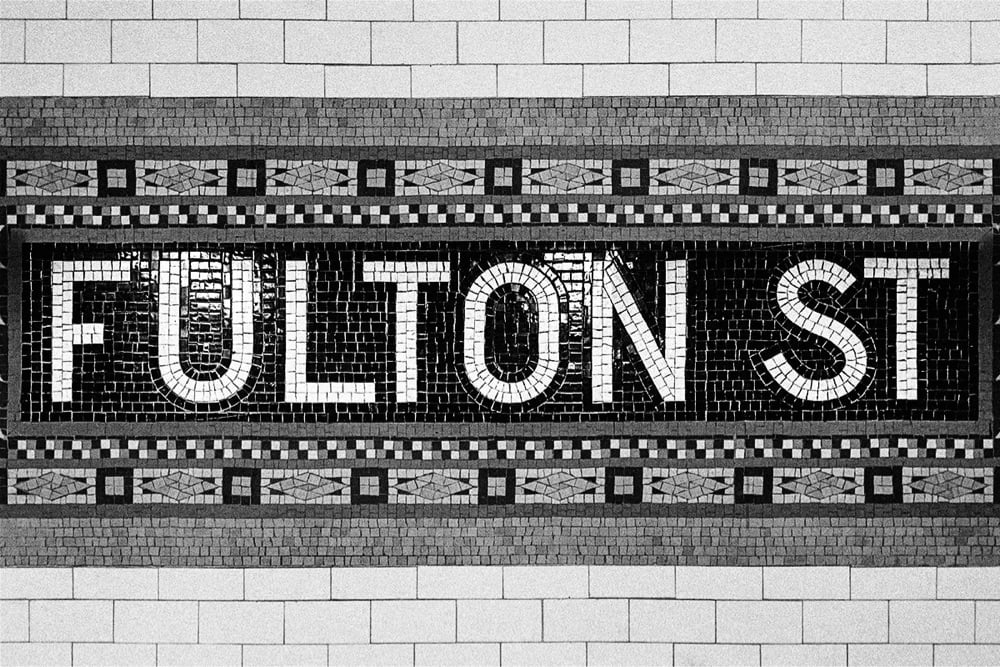
The (Mostly) True Story of Helvetica and the New York City Subway details the use of type in signage, maps, and manuals for the NYC subway. A must-read for type and subway fans.

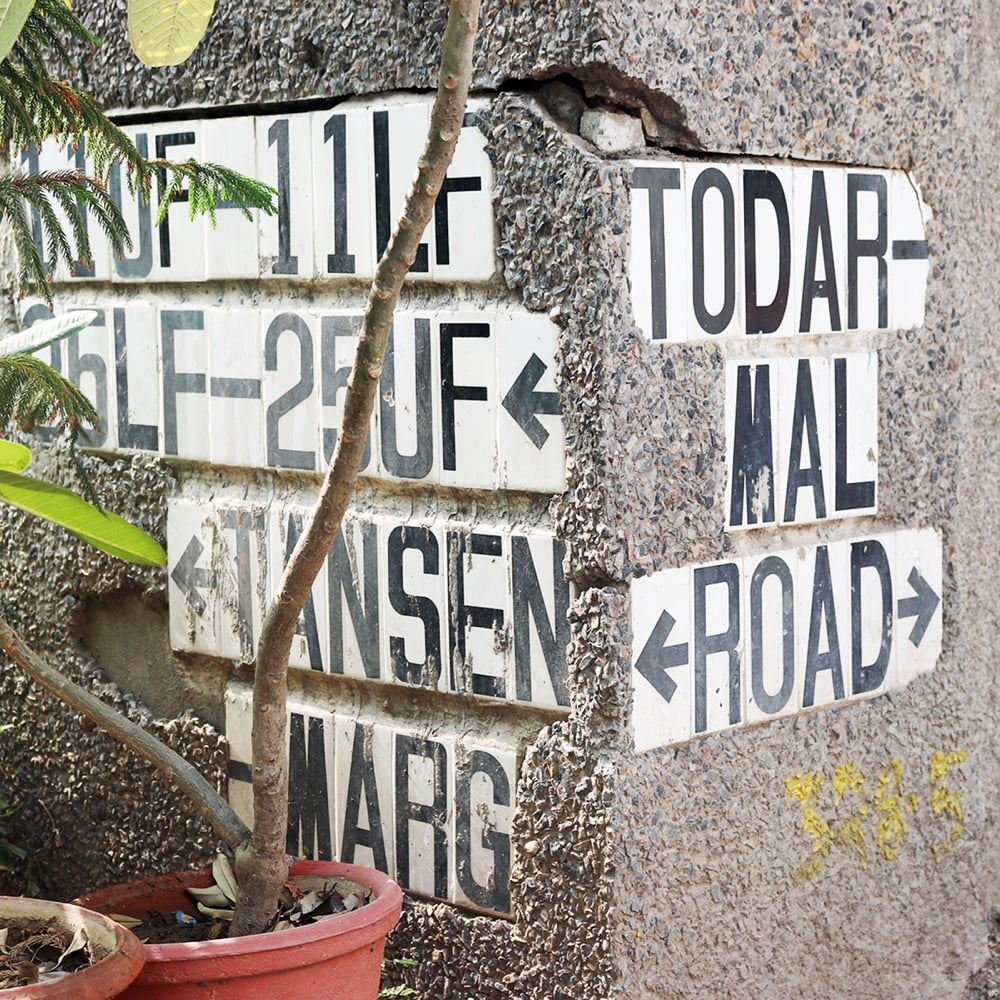
As if this plethora of signs were not enough, the subway system also had a bewildering variety of other porcelain enamel and hand-painted signs. The porcelain enamel signs, either hung from the ceiling or posted on the walls, were directional as well as informational. The directional signs included those on the outside of the station entrances as well as those intended for the corridors and platforms underground. Many of the informational signs warned against criminal, dangerous or unhealthy behavior: no peddling wares, no leaning over the tracks, no crossing the tracks, no smoking, no spitting. The directional and informational ones were made by Nelke Veribrite Signs and the Baltimore Enamel Company, while the behavioral ones were the product of the Manhattan Dial Company. Most were lettered in some form of sans serif capitals-regular, condensed, square-countered, chamfered, outlined-though some were in bracketed or slab serif roman capitals. They were usually white letters on a colored background (often dark green for the IND and dark blue for the IRT and BMT), yet many were also black on a white background. There was no house style.

What is to modern eyes a beautiful disorder of tiled text and hand-painted enamel became an embarrassing shambles in the 70s and 80s. It was only in late 1989 that Helvetica became the official typeface for New York City subway system signage...about 20 years too late to prevent the current signage from looking dated.

The pixel font circa 1567 is cool, but more interesting is Jonathan Hoefler's assertion that the pixel is nearly dead -- except as a design cliche.

The pixel will never go away entirely, but its finite universe of digital watches and winking highway signs is contracting fast. It's likely that the pixel's final and most enduring role will be a shabby one, serving as an out-of-touch visual cliche to connote "the digital age."

Goldenfiddle has screenshots of the type done for each of the locations in Quantum of Solace, hand-crafted by Tomato.

Inspired by Emmett Williams, a practitioner of concrete poetry, Rob Giampietro has written three poems: Wastebasket, Snowflakes, and Spraypaint.

Spraypaint poem

Giampietro has put out a call for someone to develop a Williams Word Generator. Drop him a line if you can help out...shouldn't be too much different than the many "words within words" generators scattered around the web.

Rives shares a typographic fairy tale in three minutes. It's a O}-< meets Q<= story.

Garamond Powerline, a typeface made out of photos of powerlines. The "quick brown fox..." sample at the bottom is kind of awesome. (via waxy)

Oct 24, 2008    tags: typography

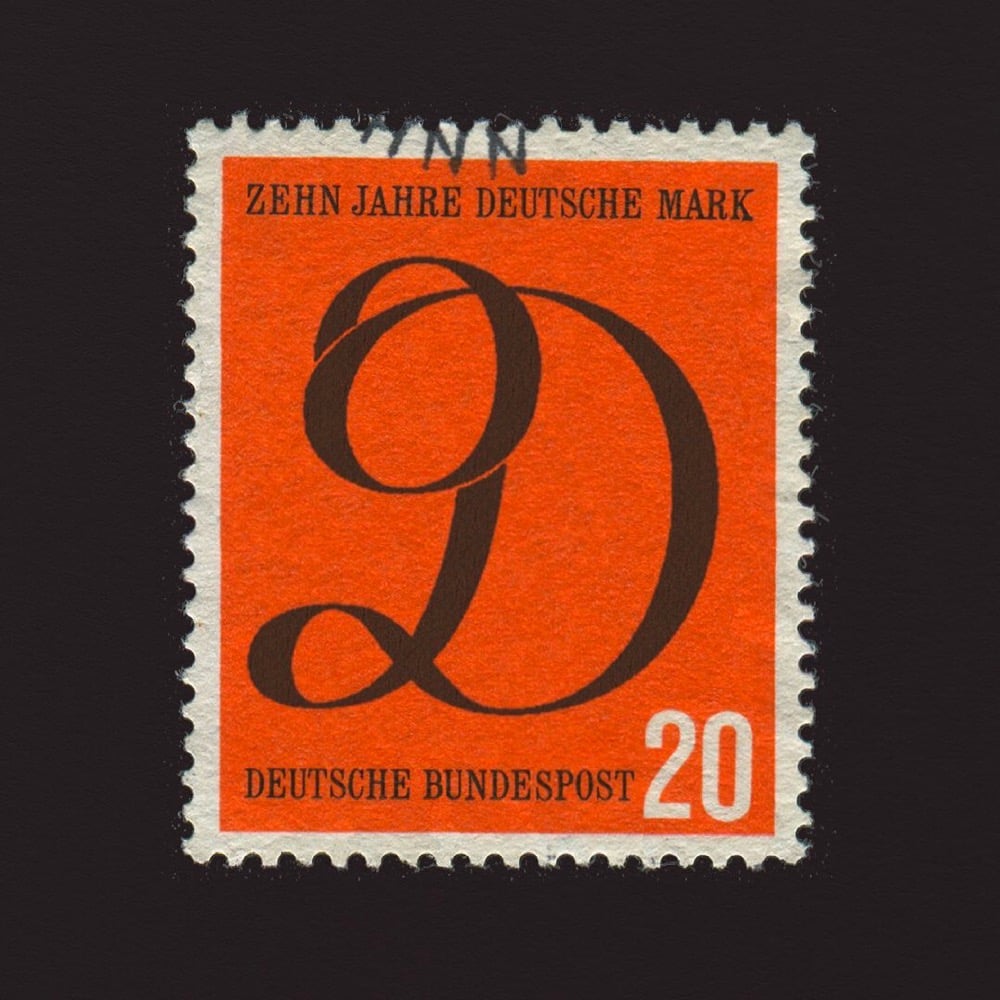
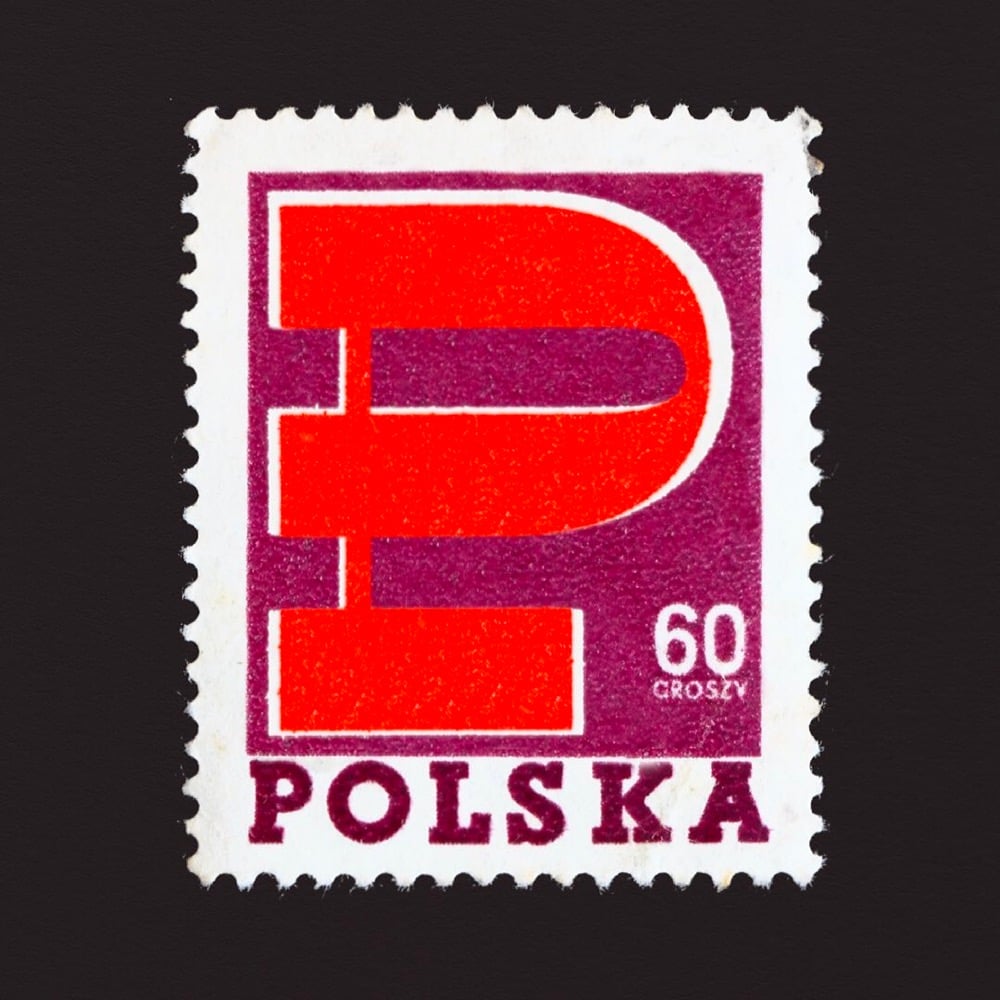
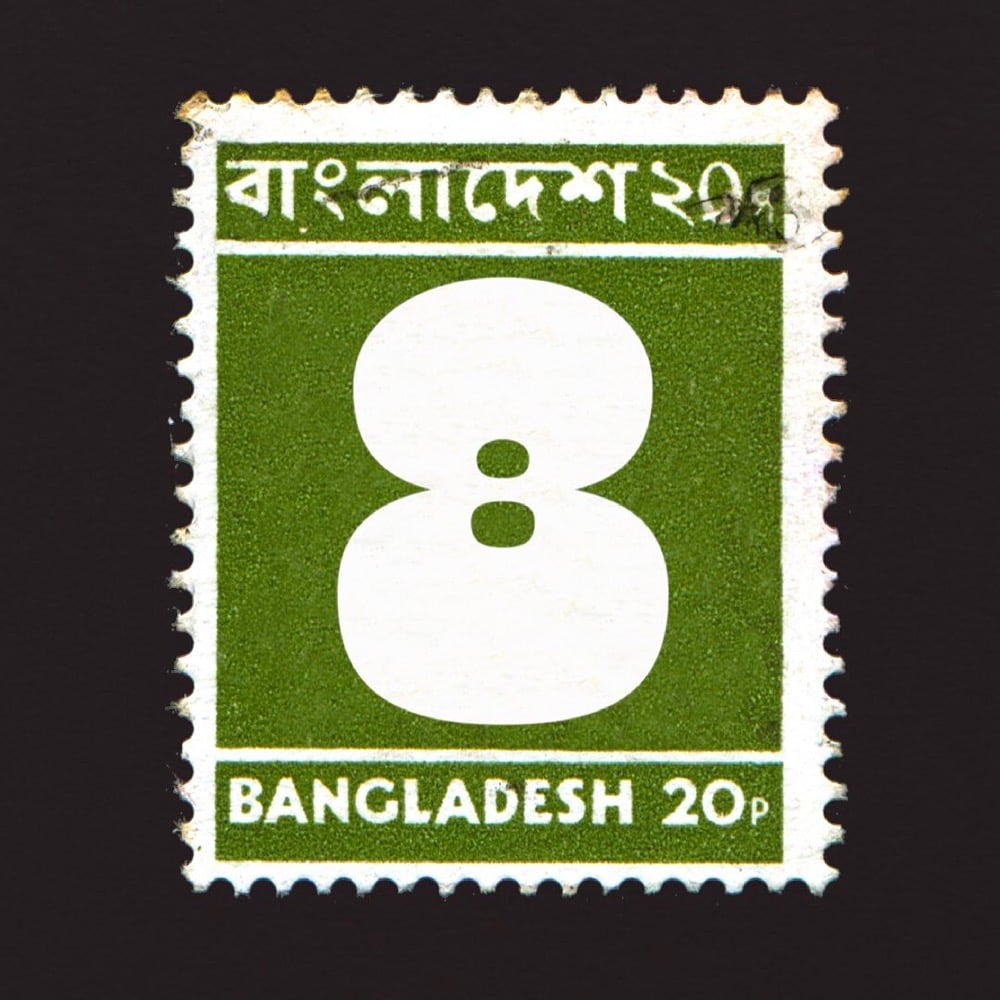
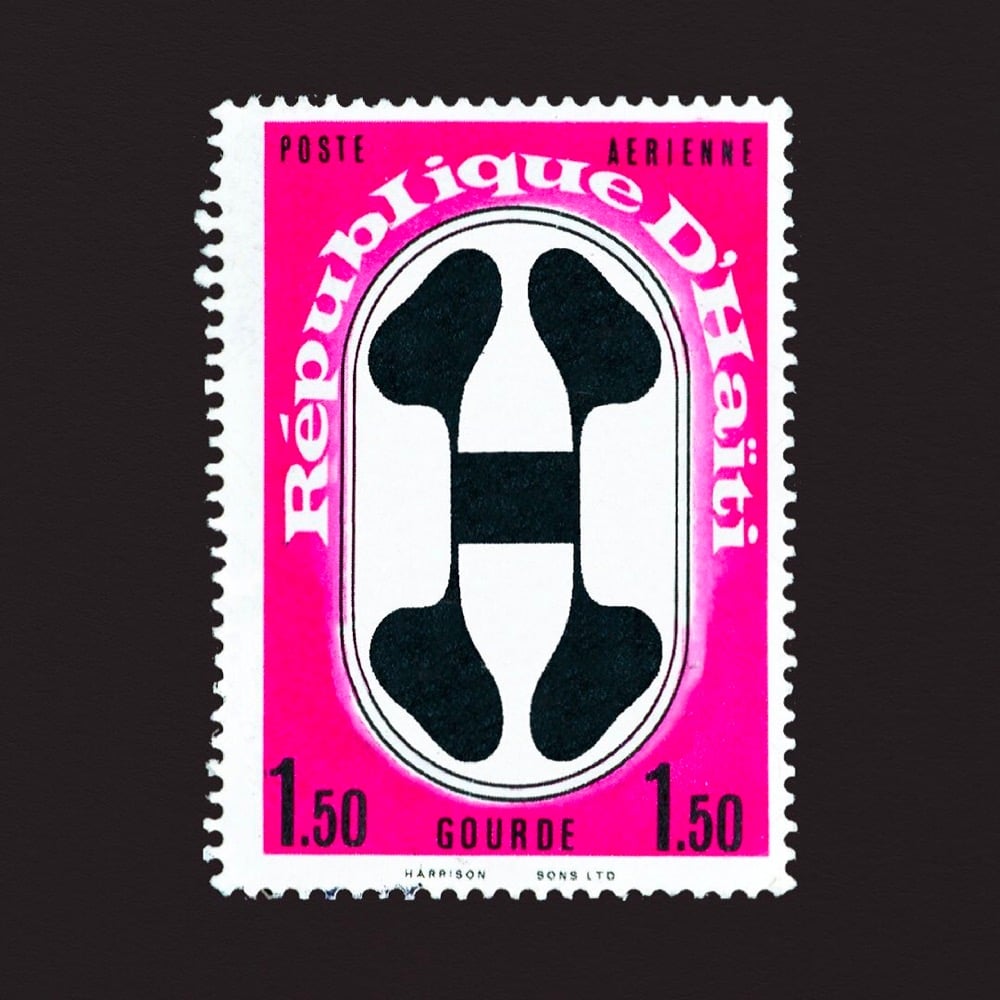
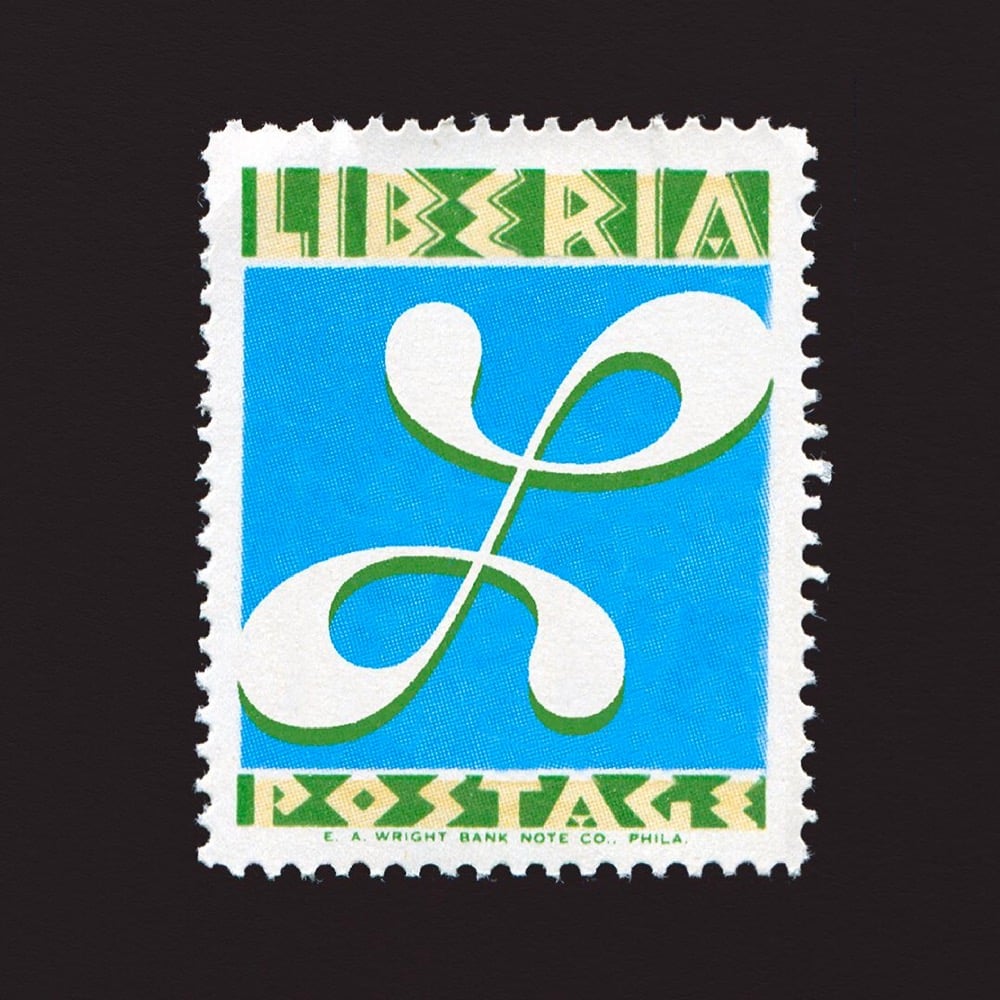
A collection of postage stamps designed by type designers. (via do)

Mark Simonson takes an extensive look at the typography of Mad Men and concludes that a surprising amount of the type is set in fonts that either weren't around in the early 60s or weren't yet popular in the US.
Then there is the Gill Sans (c. 1930) problem. Gill is used quite a lot in the series, mainly for Sterling Cooper Advertising's logo and signage. Technically, this is not anachronistic. And the way the type is used -- metal dimensional letters, generously spaced -- looks right. The problem is that Gill was a British typeface not widely available or popular in the U.S. until the 1970s. It's a decade ahead of its time in American type fashions.
There's also the Arial problem in the ending credits.

A Helvetica-themed version of Monopoly. (via df)

Mad Men gets a C- for using Arial in the closing credits instead of original-and-still-champion Helvetica. Time for Sterling to have a chat with the art department.

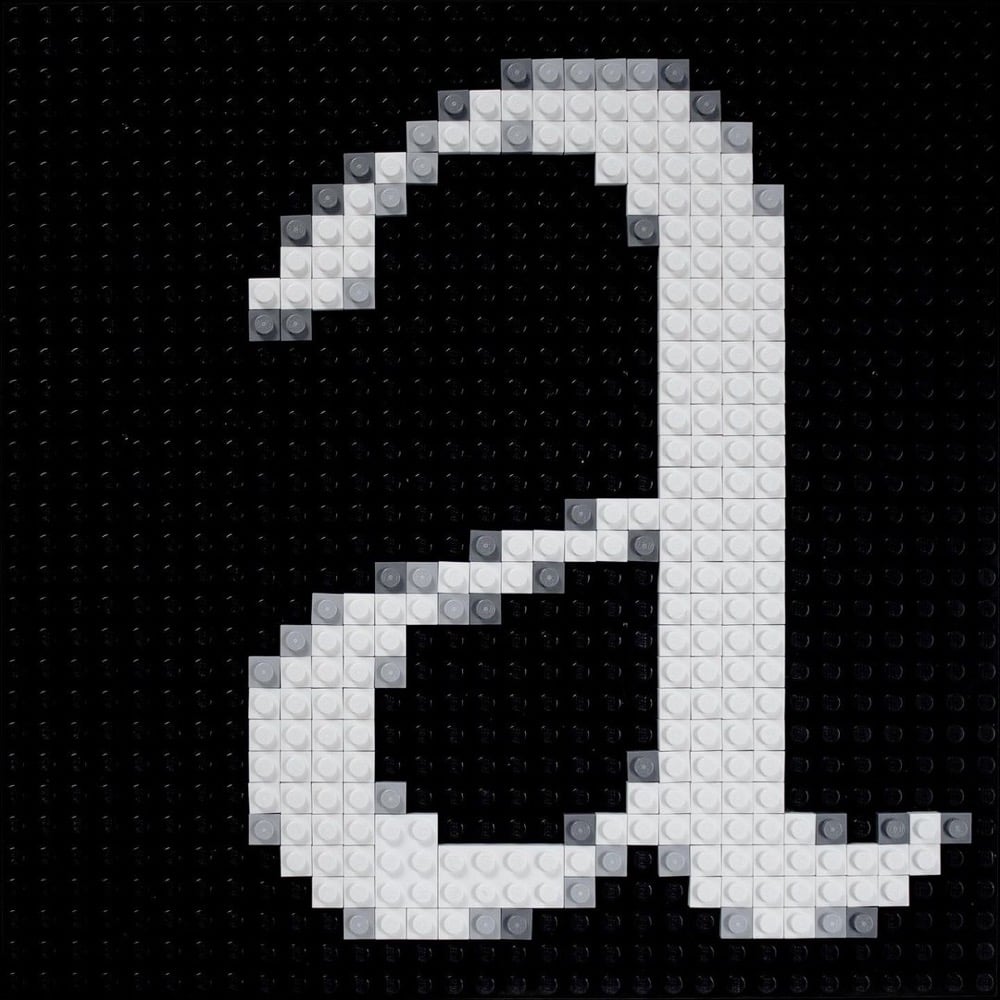
In addition to being well-suited to web graphics, Silkscreen works equally well in cross-stitch.

A weblog about ampersands, "often the most attractive punctuation mark of them all". (via le gruber)

Aug 6, 2008    tags: weblogs typography

The typography of The Electric Company.

Fonts personified at a font conference.

Pencil, telephone, hourglass, diamonds, candle, candle, flag. Mouse, scissors, ball, mailbox, mailbox, mailbox!

That's Wingdings talking.

Jul 22, 2008    tags: video typography

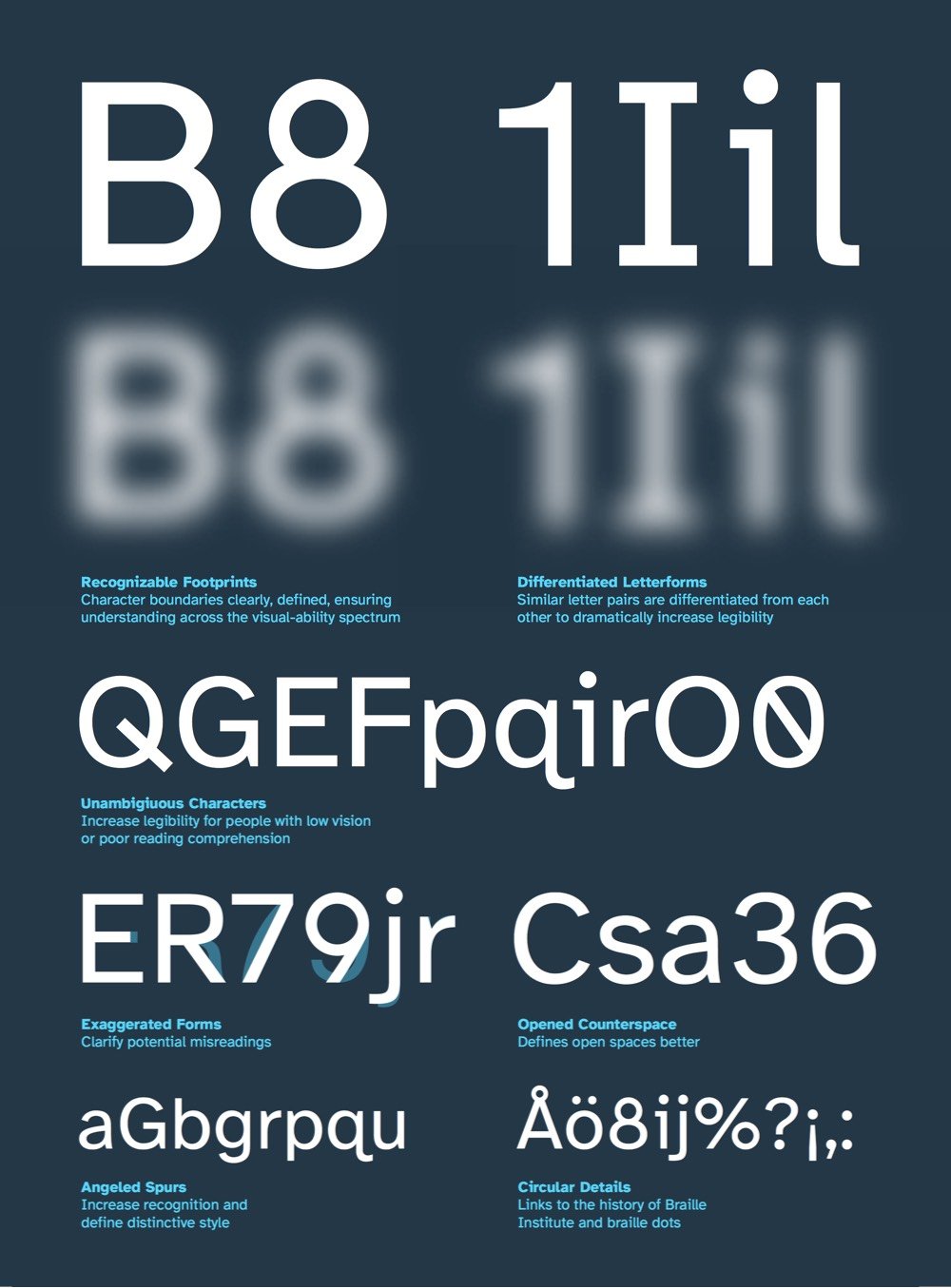
Fontsmith designed the Mencap typeface to be highly readable and legible for those with learning disabilities. See also the Clearview typeface used on the new highway signs in the US. (via ministry of type)

Jul 14, 2008    tags: typography

A comparison of typographers' fonts with their handwriting...among them Erik Spiekermann, Mark Simonson, and Marian Bantjes. (via le waxy)

Jul 9, 2008    tags: typography

Serious Sans is a more professional take on Microsoft's much-maligned Comic Sans typeface. The typeface is a project by four students at the Royal College of Art in London. From The Moment blog:

Struggling to understand what could possibly be good about Comic Sans, Valerio -- together with partners Hugo Timm, Filip Tydén and Erwan Lhussier -- found that the doggedly goofy font's irregular forms made it one of the easiest typefaces for dyslexics to read. The designers also liked how it undermined the authority -- and changed the meaning -- of texts set in it.

Jul 8, 2008    tags: typography comicsans

Mark Simonson notes that the period typography in the Indiana Jones movies is pretty good, except for that used on Indy's travel maps.

In Raiders of the Lost Ark (1981) which is set in 1936, we see ITC Serif Gothic (designed in 1972). The wide spacing feels right, and it does have an art deco feel, but it's 1970s art deco.

Hypnerotomachia Poliphili

This is a page from a book called Hypnerotomachia Poliphili.

Hypnerotomachia Poliphili

Any guesses as to when it was published? The title, Latin text, yellowed paper, and lack of page numbers might tip you off that it wasn't exactly released yesterday. Turns out that Hypnerotomachia Poliphili was published in 1499, more than 500 years ago and only 44 years after Gutenberg published his famous Bible. It belongs to a group of books collectively referred to as incunabula, books printed with a printing press using movable type before 1501.

To contemporary eyes, the HP looks almost modern. The text is very readable. The typography, layout, and the way the text flows around the illustration; none of it looks out of the ordinary. When compared to other books of the time (e.g. take a look at a page from the Gutenberg Bible), its modernity is downright eerie. The most obvious difference is the absence of the blackletter typeface. Blackletter was a popular choice because it resembled closely the handwritten script that preceded the printing press, and I imagine its use smoothed the transition to books printed by press. HP dispensed with blackletter and instead used what came to be known as Bembo, a humanist typeface based on the handwriting of Renaissance-era Italian scholars. From a MIT Press e-book on the HP:

One of the features of the Hypnerotomachia that has attracted the attention of scholars has been its use of the famed Aldine "Roman" type font, invented by Nicholas Jenson but distilled into an abstract ideal by Francesco Biffi da Bologna, a jeweler who became Aldus's celebrated cutter. This font -- generally viewed as originating in the efforts of the humanist lovers of belles-lettres and renowned calligraphers such as Petrarch, Poggio Bracciolini, Niccolo Niccoli, Felice Feliciano, Leon Battista Alberti, and Luca Pacioli, to re-create the script of classical antiquity -- appeared for the first time in Bembo's De Aetna. Recut, it appeared in its second and perfected version in the Hypnerotomachia.

In that way, Hypnerotomachia Poliphili is both a throwback to Roman times and an indication of things to come.

The MIT Press site also notes a number of other significant aspects of the book. As seen above, illustrations are integrated into the main text, allowing "the eye to slip back and forth from textual description and corresponding visual representation with the greatest of ease". In his 2006 book, Beautiful Evidence, Edward Tufte says:

Overall, the design of Hypnerotomachia tightly integrates the relevant text with the relevant image, a cognitive integration along with the celebrated optical integration.

Several pages in the book make use of the text itself to illustrate the shapes of wine goblets. The HP also contained aspects of film, comics, and storyboarding...successive illustrations advanced action begun on previous pages:

Hypnerotomachia Poliphili

All of which makes the following puzzling:

The Hypnerotomachia Poliphili is one of the most unreadable books ever published. The first inkling of difficulty occurs at the moment one picks up the book and tries to utter its tongue-twisting, practically unpronounceable title. The difficulty only heightens as one flips through the pages and tries to decipher the strange, baffling, inscrutable prose, replete with recondite references, teeming with tortuous terminology, choked with pulsating, prolix, plethoric passages. Now in Tuscan, now in Latin, now in Greek -- elsewhere in Hebrew, Arabic, Chaldean and hieroglyphs -- the author has created a pandemonium of unruly sentences that demand the unrelenting skills of a prodigiously endowed polyglot in order to be understood.

It's fascinating that a book so readable, so beautifully printed, and so modern would also be so difficult to read. If you'd like to take a crack at it, scans of the entire book are available here and here. The English translation is available on Amazon.

Typographically inspired movie titles, including Full Meta Jacket, Bembo: First Blood, and He-Man and the Masters of the Univers.

Jun 9, 2008    tags: movies typography

A bunch of examples of contemporary typography...lots of ideas to riff off here.

May 13, 2008    tags: design typography

FontStruct is an awesomely simple online font creation tool. Just draw on a grid with simple Photoshop-like tools, save, and download a TrueType version of the fonts you've just created. If this had been around when I made Silkscreen, it would have taken so much less time.

Ampersands

Over at H&FJ, the H talks about the &.

As both its function and form suggest, the ampersand is a written contraction of "et," the Latin word for "and." Its shape has evolved continuously since its introduction, and while some ampersands are still manifestly e-t ligatures, others merely hint at this origin, sometimes in very oblique ways.

He goes on to describe several ampersands they've designed for their typefaces. When designing the ampersand for Silkscreen, I came up with a solution that many continue to dislike:

Silkscreen Ampersand

If you're logged in to Flickr, you can see it action at a more appropriate size in the "prints & more" label above a photo. The symbol is basically a capital E with a vertical line through the middle...an e-t ligature that's really more of an overstrike. I fashioned it after the way I hand-write my ampersand, which I got from my dad's handwriting1. I don't know where he got it from; it's not a common way to represent that symbol, although I did find a few instances in the list of fonts installed on my computer.

I didn't think about this way at the time, but the odd ampersand is one of the few distinguishing features of Silkscreen. There's only so many ways you can draw letterforms in a 5x5 pixel space so a lot of the bitmap fonts like Silkscreen end up looking very similar. The ampersand gives it a bit of needed individuality. (The 4 is the other oddish character...it's open at the top instead of diagonally closed.)

[1] Now that I think about it, I borrowed several aspects from my dad's handwriting. I write my 7s with a bar (to distinguish them from 1s), my 8s as two separate circles rather than a figure-eight stroke, and my 4s with the open top. Oh, and a messy signature.

Gar, I missed another one of Tobias Frere-Jones' NYC Typographic Walking Tours but luckily Jason Santa Maria -- a fellow so nice they named him thrice -- has photos. Photos from his first tour here. (via airbag)

Pablo Ferro and Dr. Strangelove

Here's the trailer for Dr. Strangelove or: How I Learned to Stop Worrying and Love the Bomb.

It was done by a fellow named Pablo Ferro; it was his first movie trailer. Steven Heller writes:

After seeing Ferro's commercials, Kubrick hired him to direct the advertising trailers and teasers for Dr. Strangelove and convinced him to resettle in London (Kubrick's base of operations until he died there in March 1999). Ferro was inclined to be peripatetic anyway, and ever anxious to bypass already completed challenges he agreed to pull up stakes on the chance that he would get to direct a few British TV commercials, which he did. The black and white spot that Ferro designed for Dr. Strangelove employed his quick-cut technique -- using as many as 125 separate images in a minute -- to convey both the dark humor and the political immediacy of the film. At something akin to stroboscopic speed words and images flew across the screen to the accompaniment of loud sound effects and snippets of ironic dialog. At a time when the bomb loomed so large in the US public's fears (remember Barry Goldwater ran for President promising to nuke China), and the polarization of left and right -- east and west -- was at its zenith, Ferro's commercial was not only the boldest and most hypnotic graphic on TV, it was a sly subversive statement.

Ferro worked with Kubrick on the iconic and fantastic main titles for the film as well.

Kubrick wanted to film it all using small airplane models (doubtless prefiguring his classic space ship ballet in 2001: A Space Odyssey). Ferro dissuaded him and located the official stock footage that they used instead. Ferro further conceived the idea to fill the entire screen with lettering (which incidentally had never been done before), requiring the setting of credits at different sizes and weights, which potentially ran counter to legal contractual obligations. But Kubrick supported it regardless. On the other hand, Ferro was prepared to have the titles refined by a lettering artist, but Kubrick correctly felt that the rough hewn quality of the hand-drawn comp was more effective. So he carefully lettered the entire thing himself with a thin pen. Yet only after the film was released did he notice that one word was misspelled: "base on" instead of "based on". Ooops!

If you want that hand-lettered look for yourself, Pablo Skinny is a font by Fargoboy that closely duplicates Ferro's handwriting.

Ferro went on to make several well-known movie title sequences, including those for Bullitt, the original The Thomas Crown Affair, and To Die For, but not Napoleon Dynamite. He collaborated with Kubrick once again on the trailer for A Clockwork Orange, another classic.

Update: According to this Wikipedia article, the work of Canadian avant-garde filmmaker Arthur Lipsett caught the eye of Stanley Kubrick after an Oscar nomination for his short film, Very Nice, Very Nice and, more importantly for our business here, that Kubrick directed the Strangelove trailer himself in Lipsett's style after Lipsett refused to work with Kubrick on it:

Stanley Kubrick was one of Lipsett's fans, and asked him to create a trailer for his upcoming movie Dr. Strangelove. Lipsett declined Kubrick's offer. Kubrick went on to direct the trailer himself; however, Lipsett's influence on Kubrick is clearly visible when watching the trailer.

The two are stylistically similar for sure, but Ferro is credited with having designed the main title sequence (according to the titles themselves). That passage doesn't appear to have been derived from any particular source, so I looked for something more definitive. From a 1986 article by Lois Siegel

After his Academy Award nomination, he received a letter from British filmmaker Stanley Kubrick. The typewritten letter said, "I'm interested in having a trailer done for Dr. Strangelove." Kubrick regarded Lipsett's work as a landmark in cinema -- a breakthrough. He was interested in involving Lipsett. This didn't happen, but the actual trailer did reflect Lipsett's style in Very Nice, Very Nice.

An endnote to a 2004 profile of Lipsett by Brett Kashmere describes what Kubrick wrote to Lipsett in the letter:

Kubrick described Very Nice, Very Nice (1961) as "one of the most imaginative and brilliant uses of the movie screen and soundtrack that I have ever seen." Kubrick was so enthused with the film he invited Lipsett to create a trailer for Dr. Strangelove (Stanley Kubrick, 1965) an offer Lipsett refused. Stanley Kubrick, letter to Arthur Lipsett, Arthur Lipsett Collection, Cinematheque québécoise Archives, Montreal, May 31, 1962.

It's not clear what the connection is between Lipsett's work and the trailer that Ferro ended up producing for Strangelove, but several sources (including Heller) say that Ferro developed his quick-cut style directing commercials in the 1950s, work that would predate that of Lipsett.

Lipsett more clearly influenced the work of another prominent filmmaker, George Lucas. Lucas found inspiration in Lipsett's 21-87 in making THX-1138 and borrowed the concept of "the Force" for the Star Wars movies. Lucas' films are littered with references to Lipsett's film; e.g. Princess Leia's cell in Star Wars was in cell #2187. (thx, gordon)

A short history of the ampersand.

Ampersand usage varies from language to language. In English and French text, the ampersand may be substituted for the words and and et, and both versions may be used in the same text. The German rule is to use the ampersand within formal or corporate titles made up of two separate names; according to present German composition rules, the ampersand may not be used in running text. In any language, the ampersand's calligraphic qualities make it a compelling design element that can add visual appeal and personality to any page.

Apr 15, 2008    tags: language typography

Even Erik Spiekermann agrees that Helvetica is sometimes an appropriate choice.

A list of 63 must-have grunge fonts. Back in 1996, this would have been my thing. Is grunge type coming back?

Apr 4, 2008    tags: typography design

Jonathan Hoefler on how a joke version of OCR-A with swashes came about...and then ended up in an issue of Rolling Stone.

I tacked this specimen of Estupido Espezial!!! to my wall, where it immediately became a litmus test for visitors. Most people would say nothing, but woe be unto anyone who admired the thing in earnest: "hey, cool font!" would immediately land any visitor on the Suspicious Persons list. The best were those who would stare for a moment with bafflement before bursting out laughing, a few of whom became good friends, good clients, or both.

Robots need type too.

A sampling of typewriter typefaces. (via reference library)

Mar 26, 2008    tags: typography

Craig Oldham's Nudist typeface is flesh-colored with some bits pixelated out. Other "weights" include a fig leaf version and a black censor bar version. Entirely SFW.

Short post about the favorite letters drawn by H&FJ type designers, including the awesomely named Sulzbacher Eszett character.

The designers at H&FJ are often asked if there are particular letters that we especially enjoy drawing. Office doodles testify to the popularity of the letter R, perhaps because it synopsizes the rest of the alphabet in one convenient package (it's got a stem, a bowl, serifs both internal and external, and of course that marvelous signature gesture, the tail.)

I would love to see a collection of those office doodles.

Mar 18, 2008    tags: typography design

Typographica's list of their favorite typefaces of 2007. Some great work in that list. I also enjoyed Mark Simonson's explanation of the difference between a font and a typeface:

The physical embodiment of a collection of letters (whether it's a case of metal pieces or a computer file) is a font. When referring to the design of the collection (the way it looks) you call it a typeface.

Oh and also good was that they were thoughtful enough to wait until 2007 was actually over to make their selections.

Interview with Susan Bradley, who did some graphic design and designed a typeface for Pixar's Ratatouille. I enjoyed her response when asked about "one thing everybody should do today":

Something backwards or something analog you'd normally computerize.

You can find out more about Susan on her site. (via waxy)

Check out these "flair" typefaces from the 70s.

They were very big around 1970 or so. Bookman set the example, even though it's from much earlier. By the mid-seventies, they were adding Bookman-style swashes to everything. They were usually called Whateverthefontwascalled Flair.

Scroll down the page for samples of Univers Flair, Franklin Gothic Flair, etc.

Jan 31, 2008    tags: fonts typography

All but a few of the title sequences of Woody Allen's films are set in one typeface: white Windsor on a black background.

A photographic tour of some unique lettering and signage in Brooklyn. Seems to have skipped Dumbo & Vinegar Hill though. Here's another collection of old NYC signage. And don't forget Forgotten NY (via quipsologies)

I feel like this happens to a lot of authors...the covers of their books end up being the opposite of what they should be.

Jan 24, 2008    tags: design typography

Does one's choice of typeface affect the grade you get on a college paper? Papers written with Georgia and Times New Roman (serifs) got As while those with Trebuchet (sans serif) got Bs.

Jan 10, 2008    tags: typography

Video interview with Michael Bierut about typography and design. (via typographica)

The goal of Oded Ezer's Typosperma Project "was to create some sort of new transgenic creatures, half (human) sperm, half letter". (via buzzfeed)

In light of the Mitchell Report, Yanksfan vs Soxfan has proposed a record book annotation system so that sports fans can tell which records were set under the influence of which substances. The asterisk is for straight-up steroids and some of the other marks are as follows:

! = Amphetamines
$ = Gambling
|| = Cocaine
~ = Alcohol
. = Dead ball era
∞ = Wore glasses
† = Crazy religious freak
X = General douchebag

The Goodie Bag podcast has an entertaining little video on Trajan, the font used ubiquitously in movie credits and posters:

Like indoor plumbing and toga parties, Trajan hails from Rome. Matter of fact, you can find almost 2,000-year-old inscriptions on Trajan's column, where they have totally off-the-leash keggers on Saturdays... Russell Crowe has co-starred with Trajan three times now.

This reminds me of Red is Not Funny, J. Tyler Helms' illustration of the wide use of bold red letters in distinctly unfunny comedies. (via cameron hunt)

Eric Gill was a respected British artist and typographer -- Gill Sans is his most famous typeface -- but according to his diaries, he also regularly engaged in sexual relations with his sisters, his daughters, and the family dog.

For some of Gill's fans, even looking at his work became impossible. Most problematically, he was a Catholic convert who created some of the most popular devotional art of his era, such as the Stations of the Cross in Westminster Cathedral, where worshippers pray at each panel depicting the suffering of Jesus.

These details of Gill's private life were revealed in a 1989 book by Fiona MacCarthy...here's a NY Times review of the book soon after it was published.

In the past few weeks, I've seen several people mention the 50 Years of Helvetica exhibit at the MoMA along with some variation of "Woo! I might need to take a trip to New York to go see this!" You should know that this exhibit takes up just a small corner of the Architecture and Design Gallery on the 3rd floor...it's essentially a case and a handful of posters and other specimens. If you're in the museum already, definitely check it out, but you'll be disappointed if you make a special expensive trip just to see the Helvetica stuff.

The 2008 version of Pentagram's big-ass wall calendar is now available, featuring the typefaces of Matthew Carter. If that's not to your liking, there's always this calendar by Massimo Vignelli set in, you guessed it, Helvetica.

Jon Hicks has a nice slideshow of typography from the Harry Potter and the Order of the Phoenix. (via waxy) Design Observer did a piece on the typography of Order of the Phoenix becoming its own character.

It is The Daily Prophet which emerges in this film as a secondary character, performing interstitial cameos made all the more exhilarating because the camera sweeps in and out, ricocheting off the page, magnifying and dramatizing a typographic vocabulary that combines a slightly mottled, letterpress-like display face with great portions of illegible calligraphy.

FE-Mittelschrift

Erik Spiekermann on FE-Mittelschrift, the typeface used for German license plates.

The official typeface for our license plates is now called FE-Mittelschrift, with FE meaning it is Fälschungs-Erschwert, i.e. difficult to forge. Apparently car thieves, terrorists and notorious law-breakers had been exploiting DIN's geometric construction principle and turning E into F or 3 into 8 etc by simply using a bit of black tape or white paint.

Here are all the alphanumeric characters:

FE-Mittelschrift

Note the tamper-resistant differences between the 6 (no notch) and 9 (notched), the E & F, the I & 1, the O & zero, the P & R, and so on.

Short video piece about fonts and typography, featuring Steven Heller, Jonathan Hoefler, Tobias Frere-Jones. (via quipsologies)

This past weekend, Tobias Frere-Jones led a typography tour of lower Manhattan for the AIGA, which I'm sad I missed (out of town guests + didn't get a ticket in time). Luckily several people have uploaded photos from the tour (set 1, set 2, set 3, set 4), including a shot of one of my favorite lunchtime destinations, the Cup & Saucer. Love that sign (see close up).

Long piece about the changes being made to the typography of the US highway signs, switching from Highway Gothic (on which Interstate is based) to Clearview.

The newly designed US$5 bill is the worst one yet...the phrase "typographic train wreck" comes to mind. The purple 5 in the lower right, while useful, is one of the most amateur design choices I've seen on something that's destined for such a wide market. (thx, tom)

Justin Quinn's wonderful typographic art (more here).

Justin Quinn

Hand Job

The Morning News has a gallery of pages from Hand Job (@ Amazon), a collection of hand drawn type, and a short interview with its author, Michael Perry. It looks like a gorgeous book; you can find more images from it on Perry's web site, which is sure to get an unusual influx of visitors searching for non-typography-oriented happy endings..

Tickets for Helvetica's multi-week run at the IFC Center in NYC are on sale now.

Tauba Auerbach: startling starting staring string sting sing sin in i. More of her typographic work here.

New web site for Hoefler & Frere-Jones, the noted and celebrated typeface designers, including a weblog. Subscribed. Oh, and the browser fonts of choice for the meticulous duo? "Lucida Grande, Lucida Sans, Verdana, Georgia, Helvetica, Arial" (thx, jonathan)

Cartype: "A comprehensive collection of reviews and study of typographical applications of emblems, car company logos and car logos with images, comments, links, car company information and general interest."

NYC font fans rejoice...Helvetica (the movie) will be starting a run at the IFC Center on September 12. My short review of the film is here.

Free fonts from Peter Saville

Peter Saville, the British designer closely associated with Factory Records, is offering free downloads of some of the fonts he used in designing record sleeves and other work for New Order, Joy Division, and other Factory Records artists.

Saville Fonts

(thx, mark)

Update: Several Peter Saville fans from around the world have written in to say that the above site is not Peter Saville's official site (this is). It's also unclear whether those fonts were indeed made by Saville (probably not) or ever offered for download free of charge (probably definitely not). But they're still neat fonts, so download at your own risk.

Update: Kai has identified some of the fonts offered as shoddy versions of the following:

Joy Division Closer - Trajan (Adobe)
Blue Monday - Engravers Gothic (Bitstream)
New Order 1981 - Futura (Bauer)
New Order 1993 - Handel Gothic (Linotype)
New Order Ceremony - Albertus (Mecanorma)
New Order 316 - BT Incised 901 (Bitstream) = Antique Olive (Linotype)
New Order Regret - Rotis Serif (Agfa)

In this case, you get what you pay for, I guess.

A list of companies and the fonts they use for their logos and corporate identities.

Michael Bierut's 13 reasons to choose a particular typeface for a project. "Once I saw a project in a student portfolio that undertook the dubious challenge of redesigning the Tiffany's identity. I particularly disliked the font that was used, and I politely asked what it was. 'Oh,' came the enthusiastic response, 'that's the best part! It's called Tiffany!'"

Typographic map of London. That is, a map made of type (like Paula Scher's paintings) not a map of typography in London. (via moon river)

Photos of a 1923 American Type Foundry specimen book. (via quipsologies)

Apr 16, 2007    tags: typography

On the occasion of Helvetica's NYC premiere tonight, Michael Bierut remembers a time when no one knew anything about type or fonts except for designers and typesetters. "[Today] we live in a world where any person in any cubicle in the world can pick between Arial and Trebuchet and Chalkboard whenever they want, risk free, copyfitting tables be damned, and where a film about a typeface actually stands a chance of enjoying some small measure of popular success."

Exhibit on Helvetica (the font, not the film) opens tomorow at the MoMA and will be available for a good long time (until March 31, 2008). "Widely considered the official typeface of the twentieth century, Helvetica communicates with simple, well-proportioned letterforms that convey an aesthetic clarity that is at once universal, neutral, and undeniably modern."

Winners of the Helvetica haiku contest I pointed to a couple of weeks ago. My favorite of all the ones listed: "i shot the serif / left him there full of leading / yearning for kerning". Close second: "She misunderstood / When I said she was 'Grotesque' / Akzidenz happen". I am a sucker for puns.

Results of the Type Directors Club type design competition for 2007. I really like Subtil. (via quipsologies)

Quick quiz: Is this text set in Arial or Helvetica? If you're struggling with that, check out How to Spot Arial. (thx, hubs)

Back when type was set with individual metal letters, those letters were called "sorts". Popular letters like a, e, t, i, etc. would occasionally run out and the printer would then be "out of sorts".

Update: Scratch that. Individual letters are called "sorts", but "out of sorts" came from somewhere else. (thx grant and hal)

Mar 29, 2007    tags: typography language

Nice little video about letterpress printing.

@ the movies
rating: 4.0 stars

Helvetica

Perhaps the highest praise I can offer for Helvetica comes courtesy of Meg, who was snickering on the way into the theater about going to see a movie about a font and exited saying, "that was great, now I want to be a designer!" The rest of the audience, mostly designers and type folks, loved it as well. But for the non-design folks, what's compelling about the movie is getting a glimpse of how designers think and work; that it's not just about making things look pretty. The modern world is awash in signage and symbols and words and for a lot of them, especially the corporate messages, there's a reason why they look the way they do. The story of Helvetica offers a partial key to decoding these messages.

Check out some clips from the film and the screenings schedule to find out when Helvetica will be showing in your area. Thanks to the fine folks at Veer for inviting me to the screening.

Enter this font haiku contest to win a limited-edition poster from the Helvetica documentary.

A nice presentation on web typography from SXSW 2007.

A wonderful collection of 19th century shipping posters on Flickr. (via quipsologies)

Update: That Flickr user also has several other interesting sets of images to look at, including book covers, typography of The Electric Company, Soviet children's books, and Civil War posters.

A list of stencil fonts.

Feb 21, 2007    tags: fonts typography

Recent Chris Ware talk

A friend of mine who works at the University of Nebraska-Lincoln emailed to let me know that they've posted both audio and video of a talk that Chris Ware gave at the school last week. If you're short on time, the real meat of the video starts around 18:30 when Ware starts a slideshow that delves into his process. In addition to his series of Thanksgiving-themed New Yorker covers from last year, he also talks about some of his other work, including Rusty Brown and the strip he did for the NY Times Magazine.

80 wonderful handdrawn typographic posters by Job Wouters. (via type for you)

The top 100 fonts as determined by a panel of designers and type experts. Top 10: Helvetica, Garamond, Frutiger, Bodoni, Futura, Times, Akzidenz Grotesk, Officina, Gill Sans, and Univers. A PDF of the results (with photos, in German) is also available. (via type for you)

Over at Typophile, they're debating the 20 most important type designers of all time.

Music video for the Softlightes song Heart Made of Sound features handmade typography, Post-It Notes, and stop-motion animation. See also: the opening credits for Napoleon Dynamite, Stefan Sagmeister, and Michel Gondry. (via buzzfeed)

From a blog critical of typographic faux pas comes this handy rhyme for remembering the difference between apostrophes/quotation marks and foot/inch marks: "Straight up and down you're in foot mark town! / A contraction you say? Use apostrophes every day! / You want to say 'Hi!' to a chum or a neighbour? / Use inch marks and everyone will think you're an idiot!" Guilty as charged.

Nov 9, 2006    tags: typography poetry

List of the 7 worst fonts. What, no Hobo or Brush Script? Comic Sans is, of course, #1 with a bullet. (via wider angle)

Typography language pedantry: font vs. typeface. "'Fonts' and 'typefaces' are different things. Graphic designers choose typefaces for their projects but use fonts to create the finished art."

Check out the really nice balls on these fonts.

Sep 19, 2006    tags: typography fonts

Helvetica, The Movie! "The film is studded with the stars of typography: Erik Spiekermann, Matthew Carter, Massimo Vignelli, Michael Bierut, Wim Crouwel, Hermann Zapf, Stefan Sagmeister, Jonathan Hoefler, Tobias Frere-Jones, Experimental Jetset."

Regarding the doublestrike on the Guggenheim, Design Observer has a little more information about it. "I don't think [Frank Lloyd Wright] ever floated text."

The IHT on a resurgence in popularity of the Georgia typeface online. (thx, newley)

Great detailed post about how the inside of a book is designed. Page counts are determined for business reasons so the designer has little choice but to find the proper font to make the given text fit in the given space...readability is a secondary consideration. (thx, susan)

They're refurbishing the outside of the Guggenheim and stripping away the facade reveals a doublestrike on the "T" in "The". It's like they started putting the printing on the building and then the architect stops by and says, whoa! that text is supposed to be lower, you morons.

Verlag is a new modernist typeface from Hoefler & Frere-Jones designed for the Guggenheim Museum. More on Verlag from Typographica.

The Type Museum, located in London and housing "one of the world's best typographic collections", is being shut down due to lack of funding. The folks in the TypeMuseumSociety GoogleGroup are trying to find a way to save it. (thx, mark)

In the beta version of Office 2007, a font called Calibri is the default font instead of Times New Roman. The end of a typographic era.

In an astounding display of typographic nerdiness and obsessiveness on a level to which I can only aspire, Andrew Hearst walks us through the anomalous digital clock on the popular TV show 24. "The onscreen time sequences are dictated partly by the typographic limitations of the clock font."

Fonts on football (soccer) jerseys.

Currently coveting: the Galaxie Polaris type family from Village type foundry. Beautiful.

May 3, 2006    tags: fonts typography

Typographica reports on a food + typography event going on in San Francisco today on cookbook design. Someone do a similar event in NYC, please.

Typographica identifies all the fonts in the font-o-riffic opening titles for Thank You for Smoking.

Lamenting the sad state of the typography on girls' asses. "This booty type is in fact similar to public signage that I've worked so closely with over the years: it's meant to be seen, it's communicating important and relevant information, it can be used to alert people of a problem ("SLUT!"), or it can simply be pointing out a scenic overlook."

A list of the best license-free quality fonts. From a few months ago, but still useful.

Open source type design

In Five Steps to Font Freedom, Adrian of Be A Design Group suggests some ways to improve typography on the web, noting that you don't need to own the fonts in books, movies, newspapers to view works in those media. The fifth suggestion is interesting, even outside of that particular goal:

5. Build Free Versions of the Classic Fonts
If we can't convince the font companies to set their versions of classic fonts free, we will recreate them ourselves. The great fonts are based on designs that are centuries old that can't possibly be protected by copyright law. Although it would be a major task, the collective power of the online community could create quality versions of classic fonts. Little by little, we can build an open source classic font library! Does anybody have a complete set of the original Garamond that I can borrow? Let's get started...

Applying the open source development process to make freely available and modifiable versions of classic fonts like Garamond, Caslon, Bodoni, Baskerville, etc. is a fantastic idea.

The typography of the logos of Web 2.0 companies. (via waxy)

A lesson in sports uniform typography: vertically arched lettering versus the easier-but-cheesier radially arched lettering. (via do)

"Inside C" logos are those where the second letter of a word (usually an "o") is tucked inside the initial capital C. Examples: Coca-Cola, Carnation, and Coffee-Mate.

In Meet the Fockers, the sign on a terminal at the O'Hare airport is typeset in Chicago, an old Macintosh system font. Har har. (via mark)

The Folk Typography Pool contains photos of type made by people who are not designers, typographers, or calligraphers. (thx, paul)

The designer of Comic Sans on how that beloved font came to be. Photos of Comic Sans in the wild.

Erik Spiekermann explains how Nokia's corporate typeface came to be. Looks like it was based on one of Nokia's onscreen bitmap fonts. I've always wanted to create a "real" version of Silkscreen like that.

Typographica's favorite fonts of 2005, part 1. Arrival and Vista look nice.

Watch the kids get into a good old fashioned font fight in the comments about fake signs on the NYC subway. Don't miss your chance to read "it's Helvetica, bitches" in a context where it makes complete sense. (thx, j guns)

Fontographer, a once popular font editing program, has been updated for the first time since 1996. (via df)

What if chat-speak words like WTF and LOL were typographically abbreviated just as "at" (@) and "et" (&) were.

Nov 28, 2005    tags: typography

Typographic dating game. Who will it be for the evening...Futura, Garamond, Bodoni?

Mark Simonson gives Gangs of New York 3 out of 5 stars for its use of typography. This is the latest in a series of posts about type in movies, starting with his original Typecasting article.

Typetester is a web-based font comparison tool which somehow (I'm assuming JavaScript) can preview text in the fonts you have installed on your local machine. Pretty cool.

And, the rest of the (AIGA Conference) story

Here's a sampling of the rest of the AIGA Design Conference, stuff that I haven't covered yet and didn't belong in a post of it's own:

  • Juan Enriquez gave what was probably my favorite talk about what's going on in the world of genetics right now. I've heard him give a variation of this talk before (at PopTech, I think). He started off talking about coding systems and how when they get more efficient (in the way that the Romance languages are more efficient than Chinese languages), the more powerful they become in human hands. Binary is very powerful because you can encode text, images, video, etc. using just two symbols, 1 and 0. Segue to DNA, a four symbol language to make living organisms...obviously quite powerful in human hands.
  • Enriquez: All life is imperfectly transmitted code. That's what evolution is, and without the imperfections, there would be no life. The little differences over long periods of time are what's important.
  • Enriquez again: The mosquito is a flying hypodermic needle. That's how it delivers malaria to humans. We could use that same capability for vaccinating cows against disease.
  • Along with his list of 20 courses he didn't take in design school, Michael Bierut offered some advice to young designers:

    1. Design is the easy part.
    2. Learn from your clients, bosses, collaborators, and colleagues.
    3. Content is king.
    4. Read. Read. Read.
    5. Think first, then design.
    6. Never forget how lucky you are. Enjoy yourself.

  • Nicholas Negroponte: If programmers got paid to remove code from sofware instead of writing new code, software would be a whole lot better.
  • <