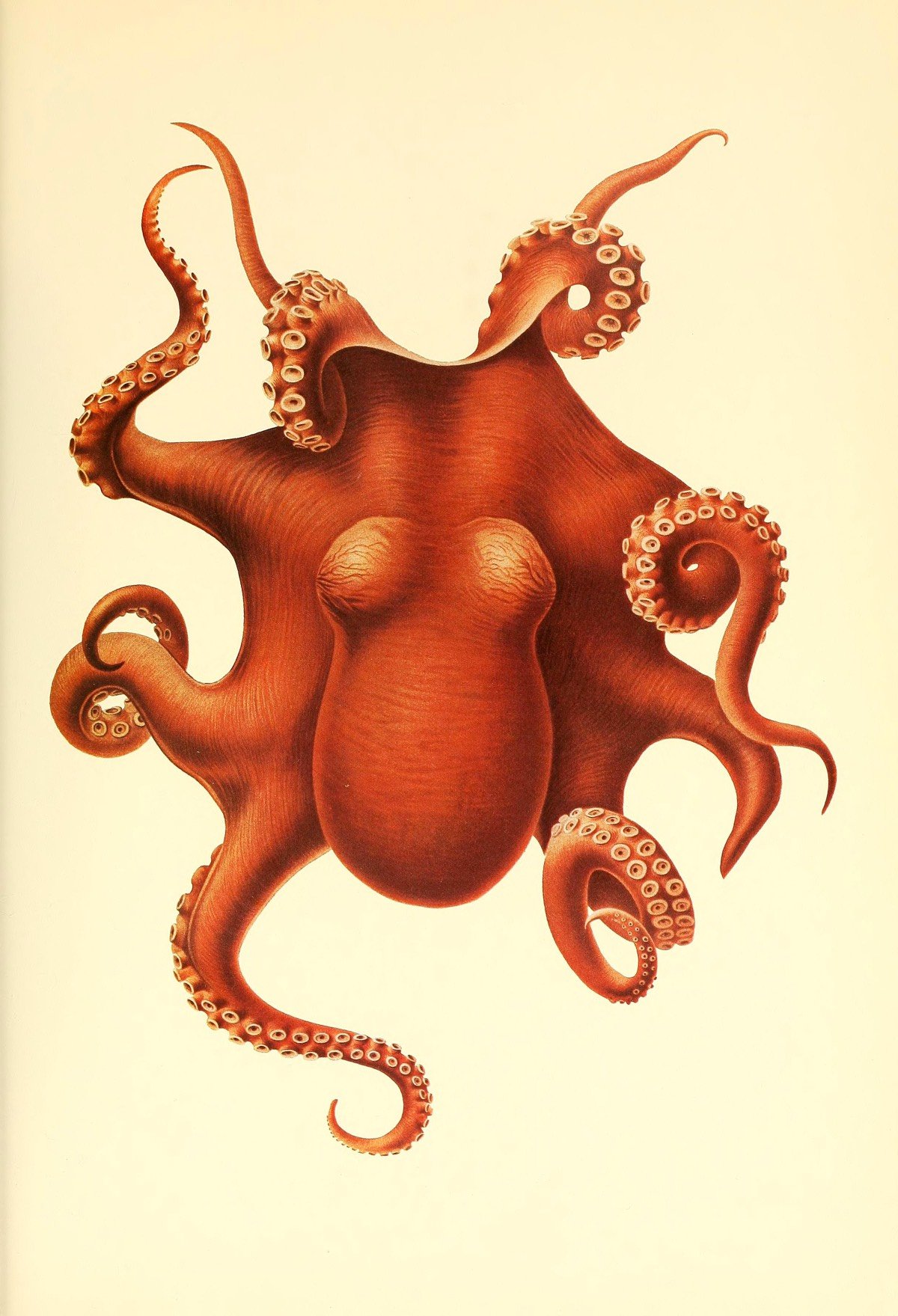
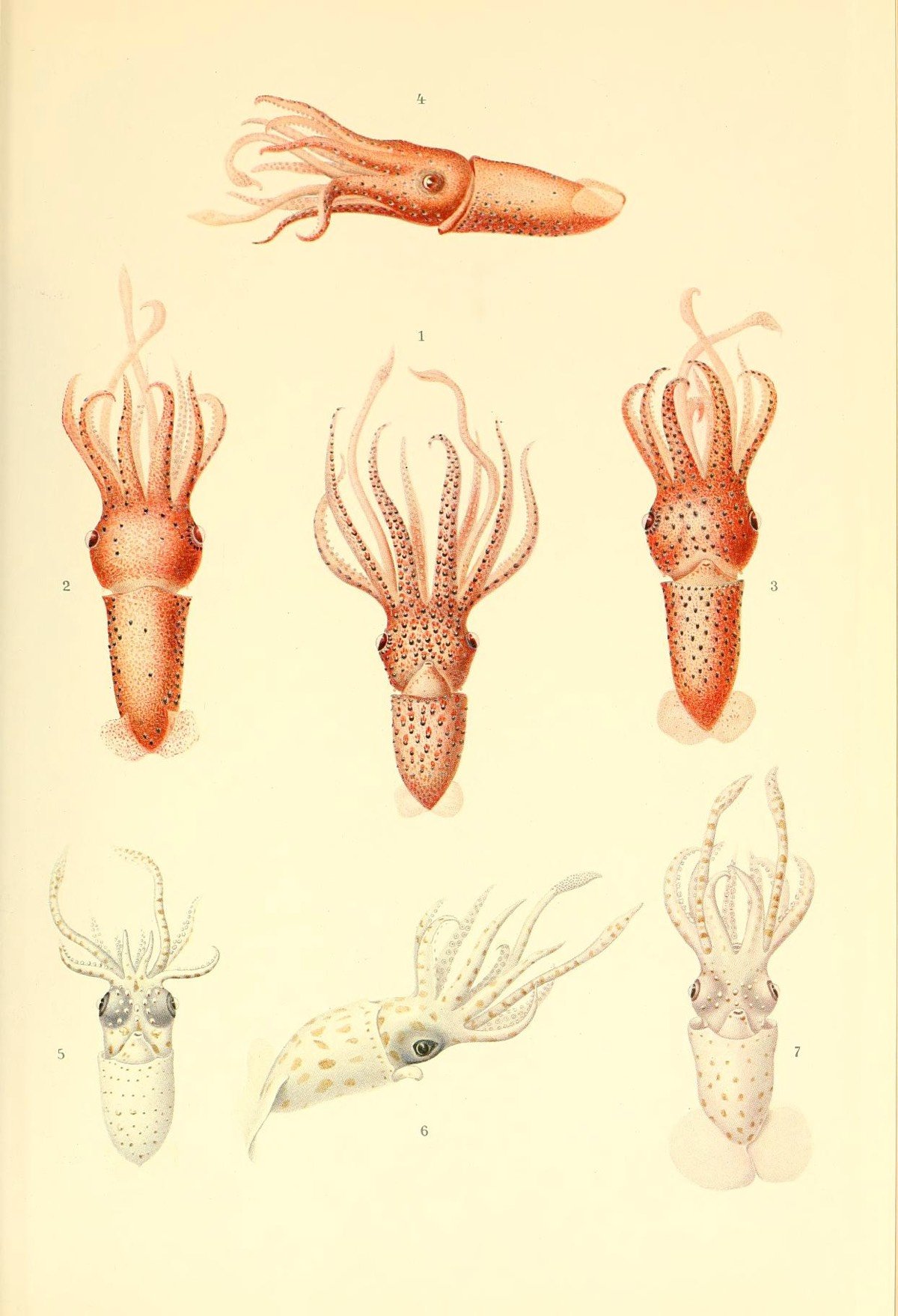
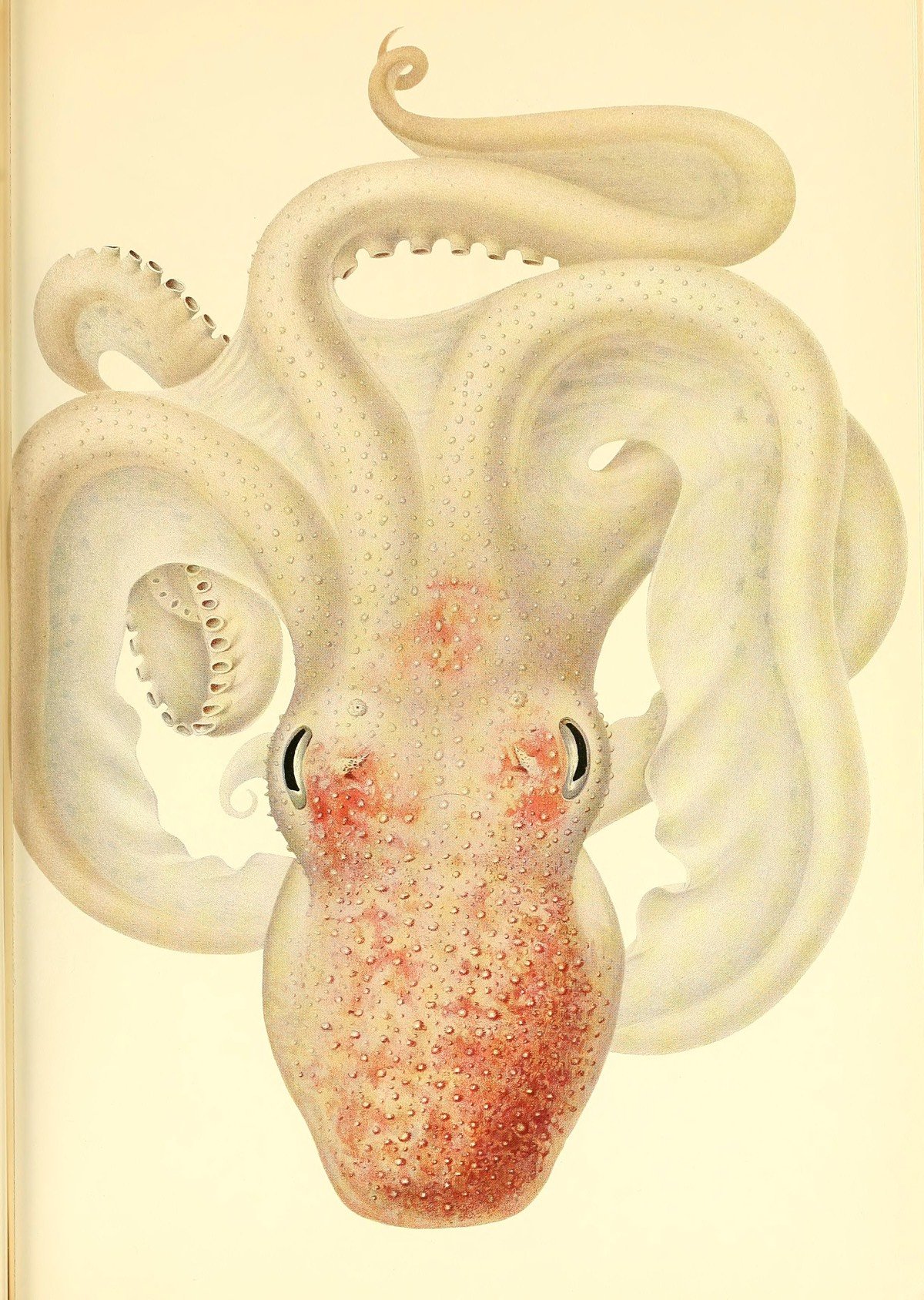
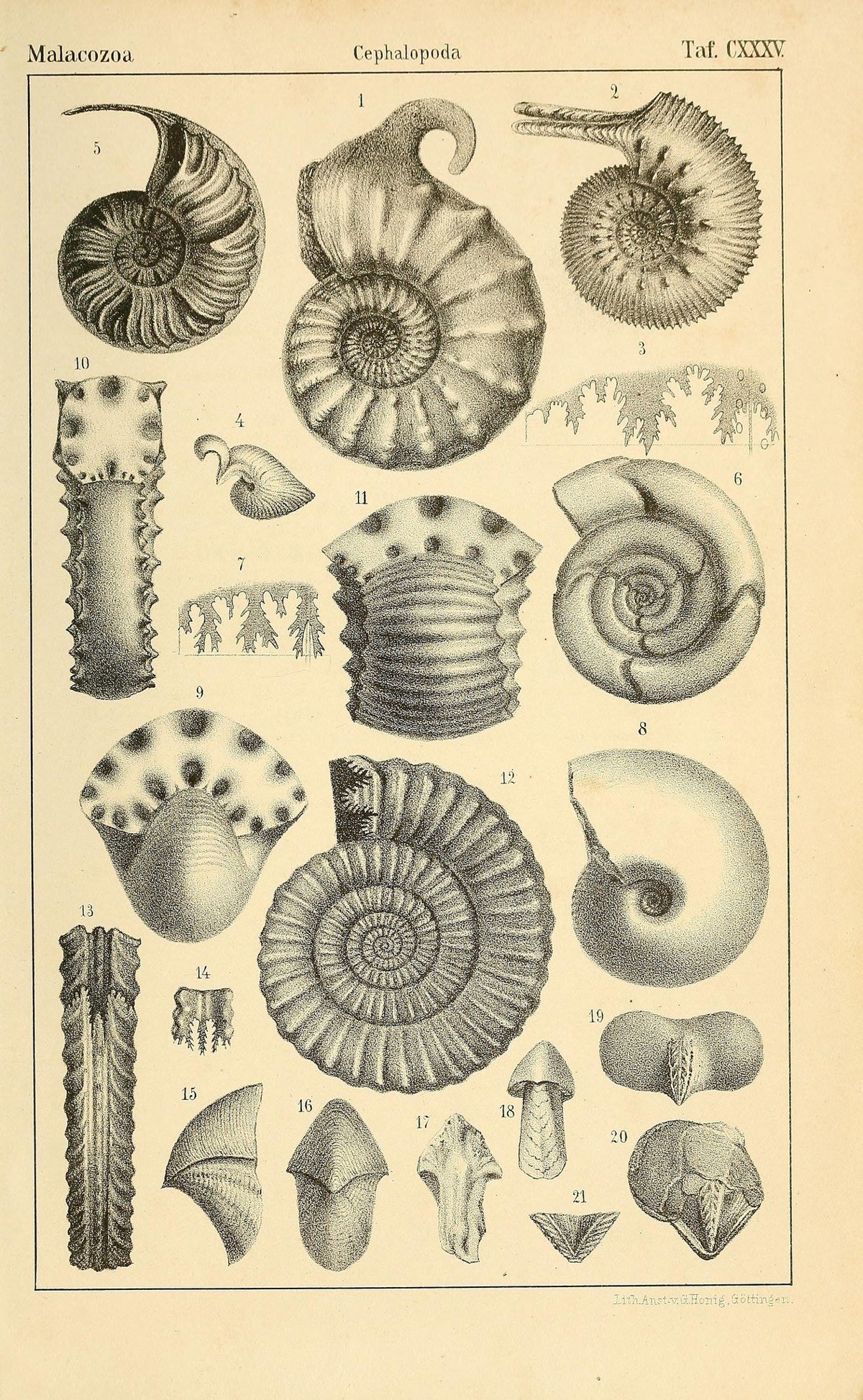
The Valdivia Expedition, led by German marine biologist Carl Chun in 1898-1899, was the first time humans had explored the ocean depths below 500 fathoms. What they found changed our conception of the oceans. The results, in the form of 24 volumes of text and illustrations, took decades to be published. Among the volumes was The Cephalopoda, published in 1910 and filled with colorful hand-illustrated drawings of octopuses and squid, courtesy of the Biodiversity Heritage Library.
I found this on Brain Pickings, which identifies the illustrator as Friedrich Wilhelm Winter, a credit I couldn’t find in the actual book itself. They’re also selling some of the illustrations as prints, like this one of the octopus featured above.
Darwin’s theory was of its time, born in “the heyday of classical liberalism, dominated by thinkers like Adam Smith, David Hume, and Thomas Malthus, who valorized an unregulated market.” And so, in itself and in multiple interpretations of the work through the years, was seen through a lens of competition. “Survival of the fittest” has become shorthand for his work and used time and again to “prove” the value of competition in evolution and in day to day human endeavours. But what if collaboration actually occupies a much more prevalent place?
Similarly, collectively owned spaces or institutions (like communal land trusts or co-ops) are often presumed short-lived or inefficient, doomed to suffer the “tragedy of the commons” as the innate self-interest of each member leads to an overuse of collective resources—a thesis that has been debunked again and again since its first articulation by Garrett Hardin in 1968. To put it simply, we have let Darwinism set the horizon of possibility for human behavior. Competition has become a supposed basic feature of all life, something immutable, universal, natural.
There have been numerous research projects in various fields trying to get us away from that focus on competition, notably biologist Lynn Margulis’s paper in 1967:
Rather than competition, it was collaboration, she argued, that constituted the origins of eukaryotic cells, which is to say, all complex life on planet Earth. Though her paper was rejected by as many as 10 journals before it was published in the Journal of Theoretical Biology, Margulis’ endosymbiont theory for the origin of eukaryotic cells is now the scientific consensus.
Since then, again and again, microbial species have shown us collaboration and interdependence in multiple settings, including our own digestive tract.
The National Institutes of Health recently found that over 10,000 microbial species occupy what they call “the human ecosystem,” outnumbering human cells 10 to 1 and doing diverse kinds of work at almost every level of the body’s processes. Bacteria, for instance, may make as much as 95 percent of the serotonin in our bloodstreams, meaning you have a diverse symbiont community to thank for your pleasant mood.
We can also look at mycorrhizal fungi, which collaborates with trees and various other plants in ways we are just starting to understand, like shown in the work of ecologist Suzanne Simard.
These are just some examples of a resurgence of understanding for collaboration in nature, instead of relying on our human focus on competition.
Darwin’s legacy aside, though, one critical takeaway from all this is that we must learn to recognize the impulse to naturalize a given human behavior as a political maneuver. Competition is not natural, or at least not more so than collaboration.
MIT Technology Review’s Antonio Regalado reports on an improved gene editing technique that can rewrite DNA without actually cutting the DNA (which can damage and introduce errors into the genome). It’s called “prime editing”.
Today, in the latest — and possibly most important — of recent improvements to CRISPR technology, Liu is introducing “prime editing,” a molecular gadget he says can rewrite any type of genetic error without actually severing the DNA strand, as CRISPR does.
The new technology uses an engineered protein that, according to a report by Liu and 10 others today in the journal Nature, can transform any single DNA letter into any other, as well as add or delete longer stretches. In fact, Liu claims it’s capable of repairing nearly any of the 75,000 known mutations that cause inherited disease in humans.
Prime editing substantially expands the scope and capabilities of genome editing, and in principle could correct about 89% of known pathogenic human genetic variants.
Ants are fascinating. They’re small and individually dumb, but together they can form very complex societies capable of activities like farming and altering entire ecosystems. In this video, Kurzgesagt shows how the Argentine ant became one of the most numerous and successful species of ant in the world, forming a single mega-colony across the entire Earth, from Argentina to the US to Japan.
“The enormous extent of this population is paralleled only by human society,” the researchers write in the journal Insect Sociaux, in which they report their findings.
However, the irony is that it is us who likely created the ant mega-colony by initially transporting the insects around the world, and by continually introducing ants from the three continents to each other, ensuring the mega-colony continues to mingle.
“Humans created this great non-aggressive ant population,” the researchers write.
Curious about the social behaviors of cephalopods, marine biologist David Scheel brought an octopus named Heidi home to live with him and his teenaged daughter. In this clip from an upcoming PBS show called Octopus: Making Contact, you can see the octopus changing colors while colors while she sleeps, which Scheel speculates is due to actions happening in the octopus’s dream.
If she is dreaming, this is a dramatic moment. You can almost just narrate the body changes and narrate the dream. So here she’s asleep and she sees a crab and her color starts to change a little bit. Then she turns all dark; octopuses will do that when they leave the bottom. This is a camouflage, like she’s just subdued a crab and now she’s going to sit there and eat it, and she doesn’t want anyone to notice her.
Heidi loves to play. Given a toy (an old pill bottle, say), she hurls it round as if it were a swimming aid, and she a toddler newly out of water wings. Scheel has trained her so effectively to pull on a string that activates a buzzer that in the end he has to dismantle the thing if he wants to get a night’s sleep. She loves to touch and be touched, entwining her arms with those of Laurel for minutes at a time. Does she recognise her owners? Indubitably. When Scheel approaches the tank as himself, she rushes to its side, as if in greeting. But when he approaches disguised in a rubber mask, she hides.
The YouTube channel Primer is running a series on evolution and how it works. Topics include mutations, selfish genes, and altruism in natural selection. The most popular video of the series is this one on the simulation of natural selection:
In it, you can see how different environments cause groups to tend towards certain traits (size, speed, sensing ability) based on food availability, with random mutation and reproduction in the mix as well. Seeing the populations’ traits change in realtime as the generations pass is a powerful way to make sense of a complex concept.
Biology is one field I don’t know supremely well, having had a couple of college courses and then mostly just public television documentaries. So it’s always cool to get a new concept or two to play with, like the Hayflick Limit.
What is it?
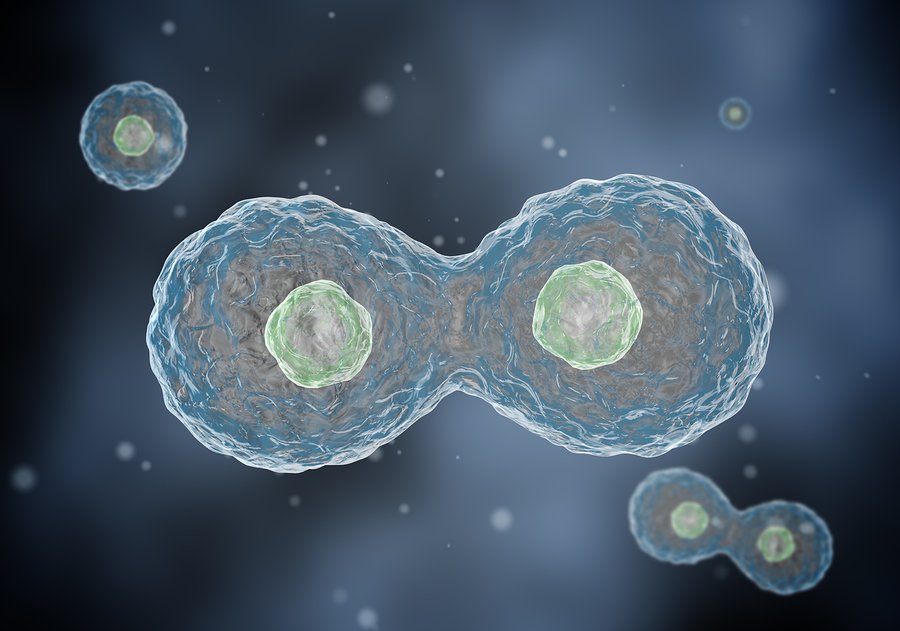
In normal, replicating cells, all the important genetic code in a cell’s nucleus is protected by telomeres—sections of non-coding DNA on the ends of chromosomes. (Elizabeth Blackburn, who won a Nobel for her work on telomeres, compares them to the caps on the end of shoelaces that keep them from fraying.) Every time cells divide, telomeres shorten ever so slightly; the white blood cells in newborn humans have telomeres that consist of about 8,000 base pairs, which falls to around 1,500 in the elderly.
The Hayflick limit is thought to occur when telomeres are gone and cell division would be risky, because without their protection, loss of genetic information would occur. When cells no longer replicate, they’re considered “senescent”: they carry on most of their normal cellular activity and eventually die. The Hayflick limit is one cause, but external stress, like an infection, physical trauma, or UV radiation can hasten cell death, according to Jan van Deursen, a cancer biologist at the Mayo Clinic in Rochester, Minnesota.
Senescent cells are a culprit in aging, but they also have benefits. They give off proteins that can recruit immune cells, which can promote wound healing, and they’re one of our body’s defenses against cancer. One of the reasons cancer occurs is when cells switch on a gene that allows them to rebuild their telomeres—kind of like speeding through a stop sign. That’s why the only immortal human cells are cancer cells.
So the Hayflick Limit, if it could be waived, could theoretically prevent or delay aging. But as it is, it’s a built-in cap on how many replications a body’s cells and tissues can undergo, so it guarantees our mortality.
To slow, or even arrest, the aging process in humans is fraught with serious problems in the relationships of humans to each other and to all of our institutions. By allowing asocial people, tyrants, dictators, mass murderers, and people who cause wars to have their longevity increased should be undesirable. Yet, that would be one outcome of being able to tamper with the aging process.
I guess at a minimum, as bad as everyone is, at least they (as an individual) are not around to be bad forever? I’ll take that silver lining.
Gizmodo’s Daniel Kolitz recently asked a panel of anatomists and evolutionary biologists about what the most useless part of the human body might be. Biology professor Dr. Nathan Lents reminds us that our bodies contain ample evidence of our design by evolution:
It’s hard to pick just one! The human wrist is a clunky hodgepodge of unnecessary bones. If we could design that joint from scratch, there is no way we would stick eight small, fixed, and mostly useless bones in there. We also have the stump of a tail that we could totally do without. It does nothing for us except occasionally gets injured or develops cancer.
I think my favorite useless body part is the pyramidalis muscle, which is located in our pelvic floor and attaches to the pelvis and some other connective tissue in our nether regions. What does it do? Well, when you flex this muscle, you can sort of squish the tissue in that area around pointlessly, but in monkeys and other mammals, it helps to manipulate the tail. So useless is this muscle that at least 20% of us don’t even have one and we don’t even miss it. I always enjoy telling people that, although humans and other apes don’t have tails, we still have the muscles to flex them!
In this time lapse filmed by Jan van IJken, the embryo of a salamander is shown transforming into a hatched tadpole, from a single cell to a complex organism in a three-week process that’s condensed into just six minutes of video.
The first stages of embryonic development are roughly the same for all animals, including humans. In the film, we can observe a universal process which normally is invisible: the very beginning of an animal’s life. A single cell is transformed into a complete, complex living organism with a beating heart and running bloodstream.
These nudibranchs (sea slugs) are lit up like the midway at a county fair because they’re warning predators that they use stinging cells called nematocysts to defend themselves when attacked. But the nematocysts are not native to nudibranch physiology — they hoover them up from hydroids, a jellyfish relative, and distribute them around their bodies.
The nudibranch’s gut has fingerlike branches that extend up into the long cerata on its back. The unfired stingers travel up into the cerata and concentrate in little sacs at the tips, where they continue to develop.
If a fish or crab tries to bite the nudibranch, it squeezes those sacs and shoots out the stingers, which immediately pop in the predator’s mouth. It doesn’t take long for predators to avoid the brightly colored nudibranchs.
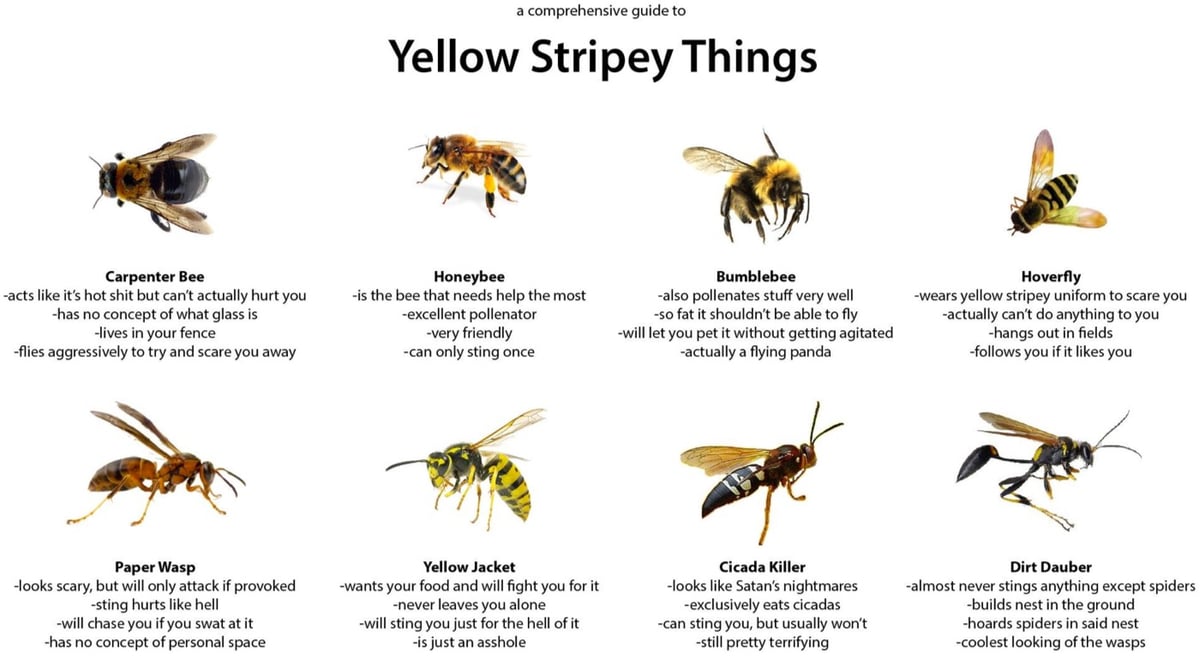
Bumblebee, honey bee, yellow jacket, paper wasp…what’s the difference? I don’t know if this comprehensive guide to Yellow Stripey Things is entirely truthful or not — a bumblebee is “actually a flying panda” and a yellow jacket “is just an asshole” — but it is pretty entertaining. Has anyone fact-checked this thing?
Male carpenter bees are quite aggressive, often hovering in front of people who are around the nests. The males are quite harmless, however, since they lack stingers. Female carpenter bees can inflict a painful sting but seldom will unless they are handled or molested.
A honey bee that is away from the hive foraging for nectar or pollen will rarely sting, except when stepped on or roughly handled. Honey bees will actively seek out and sting when they perceive the hive to be threatened, often being alerted to this by the release of attack pheromones (below).
Although it is widely believed that a worker honey bee can sting only once, this is a partial misconception: although the stinger is in fact barbed so that it lodges in the victim’s skin, tearing loose from the bee’s abdomen and leading to its death in minutes, this only happens if the skin of the victim is sufficiently thick, such as a mammal’s.
Queen and worker bumblebees can sting. Unlike in honeybees, a bumblebee’s sting lacks barbs, so the bee can sting repeatedly without injuring itself; by the same token, the sting is not left in the wound. Bumblebee species are not normally aggressive, but may sting in defence of their nest, or if harmed.
Unlike yellowjackets and hornets, which can be very aggressive, polistine paper wasps will generally only attack if they themselves or their nest are threatened. Since their territoriality can lead to attacks on people, and because their stings are quite painful and can produce a potentially fatal anaphylactic reaction in some individuals, nests in human-inhabited areas may present an unacceptable hazard
I couldn’t find a good all-in-one source about yellow jackets, but by all accounts, they are aggressive and easily agitated.
Solitary wasps (such as the eastern cicada killer) are very different in their behavior from the social wasps such as hornets, yellowjackets, and paper wasps. Cicada killer females use their sting to paralyze their prey (cicadas) rather than to defend their nests; unlike most social wasps and bees, they do not attempt to sting unless handled roughly.
Mud daubers don’t sting people that often and prey on spiders:
Black and yellow mud daubers primarily prey on relatively small, colorful spiders, such as crab spiders (and related groups), orb weavers and some jumping spiders. They usually find them in and around vegetation. Blue mud daubers are the main predator of the black and brown widow spiders.
All in all, this checks out.
Bonus stinging insect fact: There’s a sting pain index that entomologist Justin Schmidt first came up with in the 80s. Schmidt has been stung by almost everything with a stinger and rated the stings on a scale of 1 to 4 (least to most painful). He has also described the stings of individual insects more colorfully:
Western honey bee (level 2) — “Burning, corrosive, but you can handle it. A flaming match head lands on your arm and is quenched first with lye then with sulfuric acid.”
Giant paper wasp (level 3) — “There are gods, and they do throw thunderbolts. Poseidon has rammed his trident into your breast.”
I saw this great quote from Lily Tomlin today: “I always wondered why somebody doesn’t do something about that. Then I realized I was somebody.” No idea if she actually said that. I’ll let you track that one down…I’m busy with the bees.↩
Sarah Zhang writes about a support group on Facebook for people who have discovered surprising parentage through DNA testing.
Lisa, 44, admits she is still trying to go of that anger. She had always felt out of place in her family. Her hair — which she always straightened — was naturally fine and curly, her skin dark. “People would think I’m Hispanic, and would speak Spanish to me on the street,” she says. So when an DNA test in 2015 revealed her biological father was likely African American, it clicked into place. But her mom denied it. “She wouldn’t answer me. She would change the subject,” recalls Lisa. When she kept pressing, her mother broke down, saying it would destroy the family and that her dad — the man she grew up with — would kill her. She refused to say anything else about Lisa’s biological father.
I’ve written about this before (here and here) and reading these stories never gets any less heartbreaking. Back in 2010, I shared this:
I know someone who adopted a baby and they have never told her that she’s adopted and don’t plan to (she’s now in her 20s). When DNA testing becomes commonplace in another 5-15 years, I wonder how long that secret will last and what her reaction will be.
DNA testing confirms what we should have known all along: family is more than what biology says it is. Families already look quite differently than they did 40-50 years ago and they will continue to shift in the future, MAGA be damned.
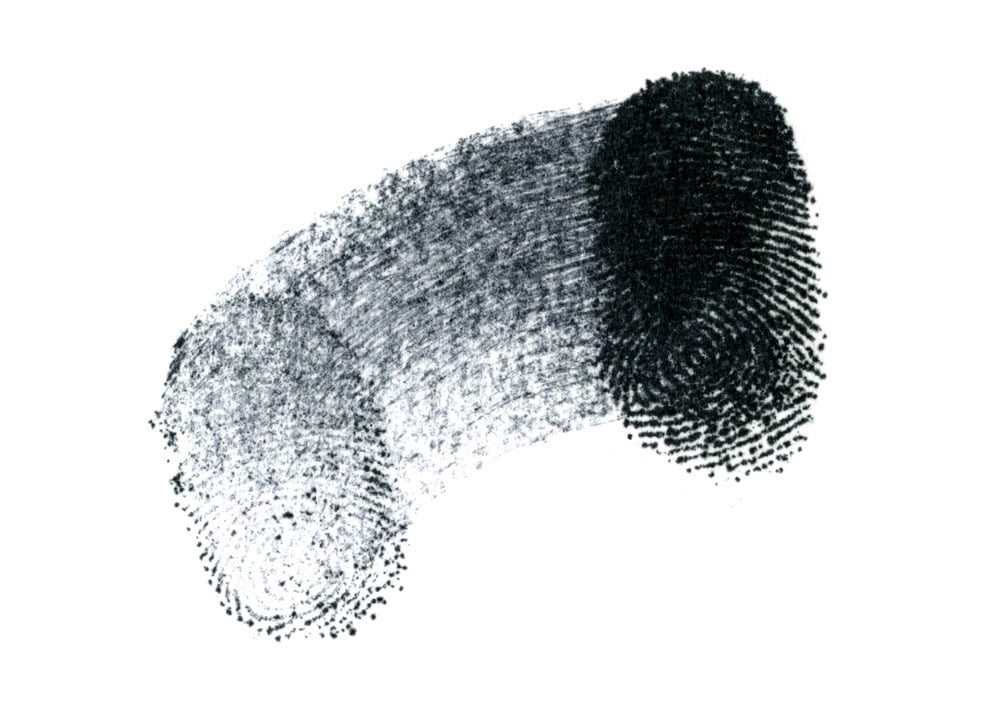
It is true that every print is unique to every finger, even for identical twins, who share the same genetic code. Fingerprints are formed by friction from touching the walls of our mother’s womb. Sometimes they are called “chanced impressions.” By Week 19, about four months before we are issued into the world, they are set.
WHAT?! Is this true? A cursory search shows this might indeed be the case, although it looks as though there’s not established scientific consensus around the process.
Also, Picasso was fingerprinted as a suspect in the theft of the Mona Lisa from the Louvre:
When French authorities interrogated Pablo Picasso, in 1911, at the Palais de Justice about the theft of the Mona Lisa from the Louvre that August, he was clad in his favorite red-and-white polka-dot shirt. Picasso cried. He begged forgiveness. He was in possession of two statuettes filched from the museum, but he hadn’t taken her.
“In possession of”? Turns out a pal of Picasso’s lifted the statuettes from the museum, which was notoriously easy to steal from, and sold them to the artist, who knew exactly what he was buying.
True to Pieret’s testimony, Picasso kept two stolen Iberian statues buried in a cupboard in his Paris apartment. Despite the artist’s later protestations of ignorance there could be no mistaking their origins. The bottom of each was stamped in bold: PROPERTY OF THE MUSÉE DU LOUVRE.
If one is pressed to describe what makes a tree a tree, long life is right up there with wood and height. While many plants have a predictably limited life span (what scientists call “programmed senescence”), trees don’t, and many persist for centuries. In fact, that trait — indefinite growth — could be science’s tidiest demarcation of treeness, even more than woodiness. Yet it’s only helpful to a point. We think we know what trees are, but they slip through the fingers when we try to define them.
Ehrenberg then suggests that we should think about tree-ness as a verb rather than a noun.
Maybe it’s time to start thinking of tree as a verb, rather than a noun - tree-ing, or tree-ifying. It’s a strategy, a way of being, like swimming or flying, even though to our eyes it’s happening in very slow motion.
Microorganisms are so small compared to humans that you might be tempted to think that they’re all about the same size. As this video shows, that is not at all the case. The rinovirus and polio virus are 0.03 micrometers (μm) wide, a red blood cell is 8 μm, a neuron 100 μm, and a frog’s egg 1 mm. That’s a span of 5 orders of magnitude, about the same difference as the height of a human to the thickness of the Earth’s atmosphere.
Watching the animation, you might have noticed the T4 bacteriophage, which looks like a cross between the aliens in Arrival and a lunar lander. Can’t be real, right? Bacteriophages are really real and terrifying…if you happen to be a bacteria. Bacteriophages attack by attaching themselves to bacteria, piercing their outer membranes, and then pumping them full of bacteriophage DNA. The phage replicates inside of the bacteria until the bacteria bursts and little baby bacteriophages are exploded out all over the place, ready to attack their own bacteria.
Physiology is a thing, but physiology is shaped and mediated by our social context.
Look back at those pictures of “women”. Those petite, delicate bodies, those faces we process as “beautiful”. Those are the qualities that globally dominant Western cultures associate with “femininity”.
And sport is one of the institutions that fiercely guards and reproduces dominant ideas about gender, masculinity and femininity. This plays out differently in different sports.
Generally, men and women compete separately. And for the purposes of sport “men” and “women” are defined as people whose bodies were assigned male or female at birth and whose gender matches that assignment.
The obvious example here is South African runner Caster Semenya. But Popova continues with a more subtle (and admittedly speculative) situation:
Now, what really gets me is snowboarding. Because on the face of it that’s not a sport that’s judged on the same gendered criteria of artistry and aesthetics as figure skating or gymnastics.
You’d think under all the skiing gear, helmets, scarves and goggles, it would be quite hard to perform femininity.
And still, as my friend whom I made watch slope style and half pipe for the first time in her life last night pointed out, the body types of the men and women riders are really rather different. You can tell even under all the gear.
And that translates to performance. Women get an amplitude of about 3m above the half pipe, men about 4-5m. The best women do 1080s (three revolutions), the best men 1440s (four revolutions).
…
But much like any other subculture snowboarding reproduces hierarchical structures. Moves are named after people, some people find it easier to access than others (hint: it’s a massively expensive sport), some people set trends.
One of the structures it reproduces is a gendered hierarchy. It’s a very masculine culture. Women find it harder to access the sport, find it harder to be taken seriously as athletes in their own right rather than “just hangers-on”.
And I have the sneaky suspicion that because the people with the most subcultural capital tend to be men and they decide whom they will admit and accept to the community, there are certain looks and body types of women who find it less hard (not easy!) to gain access.
And those happen to be the body types that may find it harder to do 1440s and to get 5m amplitude above the half pipe.
Another example from figure skating is Surya Bonaly, a French figure skater who landed a backflip on one skate in a performance at the 1998 Olympics. While backflips weren’t banned because of Bonaly’s relative ease in performing them (as claimed here), her athletic style was outside the norm in women’s figure skating, in which traditional femininity is baked right into the rules & judging. This was also a factor in Tonya Harding’s career (as depicted in I, Tonya).
Nature has amassed 3.8 billion years of R&D on how to engineer and design things and systems. So when designers are looking at how to solve problems, they should pay closer attention to how the evolutionary process dealt with similar situations. For example, an engineer working on a redesign of the Japanese bullet train used his birdwatching knowledge to borrow design elements from birds like a kingfisher, an owl, and a penguin.
Japan’s Shinkansen doesn’t look like your typical train. With its long and pointed nose, it can reach top speeds up to 150-200 miles per hour.
It didn’t always look like this. Earlier models were rounder and louder, often suffering from the phenomenon of “tunnel boom,” where deafening compressed air would rush out of a tunnel after a train rushed in. But a moment of inspiration from engineer and birdwatcher Eiji Nakatsu led the system to be redesigned based on the aerodynamics of three species of birds.
I love the idea of the Shinkansen as a chimerical creature constructed from the bodies of three very different types of birds. (via the kid should see this)
In her book The Sixth Extinction, Elizabeth Kolbert warns that we are in the midst of the Earth’s sixth mass extinction of life, this time caused by humans.
Over the last half a billion years, there have been five mass extinctions, when the diversity of life on earth suddenly and dramatically contracted. Scientists around the world are currently monitoring the sixth extinction, predicted to be the most devastating extinction event since the asteroid impact that wiped out the dinosaurs. This time around, the cataclysm is us.
This is a mainstream view of humanity’s effect on the Earth flora and fauna…for evidence, you don’t need to look any further than all of the large mammal species that have gone extinct or are endangered because of human activity.
A more controversial take is offered by Chris Thomas in his recent book, Inheritors of the Earth: How Nature Is Thriving in an Age of Extinction. Thomas allows that there’s a “mini mass extinction” happening, but he also argues that the extreme evolutionary pressure brought by our increasing dominance of our planet’s ecosystems will result in a “sixth mass genesis”, a dramatic increase in the Earth’s biodiversity.
Human cities and mass agriculture have created new places for enterprising animals and plants to live, and our activities have stimulated evolutionary change in virtually every population of living species. Most remarkably, Thomas shows, humans may well have raised the rate at which new species are formed to the highest level in the history of our planet.
Drawing on the success stories of diverse species, from the ochre-colored comma butterfly to the New Zealand pukeko, Thomas overturns the accepted story of declining biodiversity on Earth. In so doing, he questions why we resist new forms of life, and why we see ourselves as unnatural. Ultimately, he suggests that if life on Earth can recover from the asteroid that killed off the dinosaurs, it can survive the onslaughts of the technological age.
The history of life on Earth is a history of extinctions and ecological failures, but it is also a story of formation of new forms and spread of those new forms around the world. The net result has been a gain in diversity. In the human era we are seeing great losses, but we are also seeing all these biological gains of new animals and plants spreading around the world, new hybrids coming into existence. I am not saying there is yet a balance between the two. I accept the losses, but it is also scientifically, and in terms of our human attitudes to nature, extremely interesting to contemplate the gains simultaneously.
If the processes that are going on at the moment continue for a very long time, it is my expectation that the number of species on Earth will grow enormously. We are moving species of existing animals and plants back and forth across the world, so that they are all arriving in new geographic regions. We know when species have done this in the ancient past, they have turned into new species in those different regions. If you fast-forward a million years or a few million years, all of these introduced species that leave surviving descendants will have turned into new species. And that is going to generate many more species. We have effectively created a massive species generator.
That certainly does put an interesting spin on extinction and invasive species.
In the first in a series of videos, Kurzgesagt tackles one of my favorite scientific subjects: how the sizes of animals governs their behaviors, appearance, and abilities. For instance, because the volume (and therefore mass) of an organism increases according to the cube of the increase in length (e.g. if you double the length/height of a dog, its mass roughly increases by 8 times), when you drop differently sized animals from high up, the outcomes are vastly different (a mouse lands safely, an elephant splatters everywhere).
When humans get smaller, the world and its resources get bigger. We’d live in smaller houses, drive smaller cars that use less gas, eat less food, etc. It wouldn’t even take much to realize gains from a Honey, I Shrunk Humanity scheme: because of scaling laws, a height/weight proportional human maxing out at 3 feet tall would not use half the resources of a 6-foot human but would use somewhere between 1/4 and 1/8 of the resources, depending on whether the resource varied with volume or surface area. Six-inch-tall humans would potentially use 1728 times fewer resources.
At the height of his power and wealth in the 1980s, Colombian drug lord Pablo Escobar was one of the richest men in the world. On one of his many properties, Escobar built a private zoo, complete with animals from around the world, including zebras, rhinos, ostriches, and hippos.
As Escobar’s power waned and he was eventually killed, the animals in his zoo were transferred to proper zoos…except for four hippos that escaped into the wilderness. Nature did its thing and now the Colombian wild hippo population stands at nearly 40 and could rise to 100 in the next decade.
For the second part of an ongoing series, Wired asked biologist Neville Sanjana to explain CRISPR to five people with different levels of knowledge: a 7-year-old, a high school student, a college student, a grad student, and an expert on CRISPR. As I began to watch, I thought he’d gone off the rails right away with the little kid, but as soon as they connected on a personal issue (allergies), you can see the bridge of understanding being constructed.
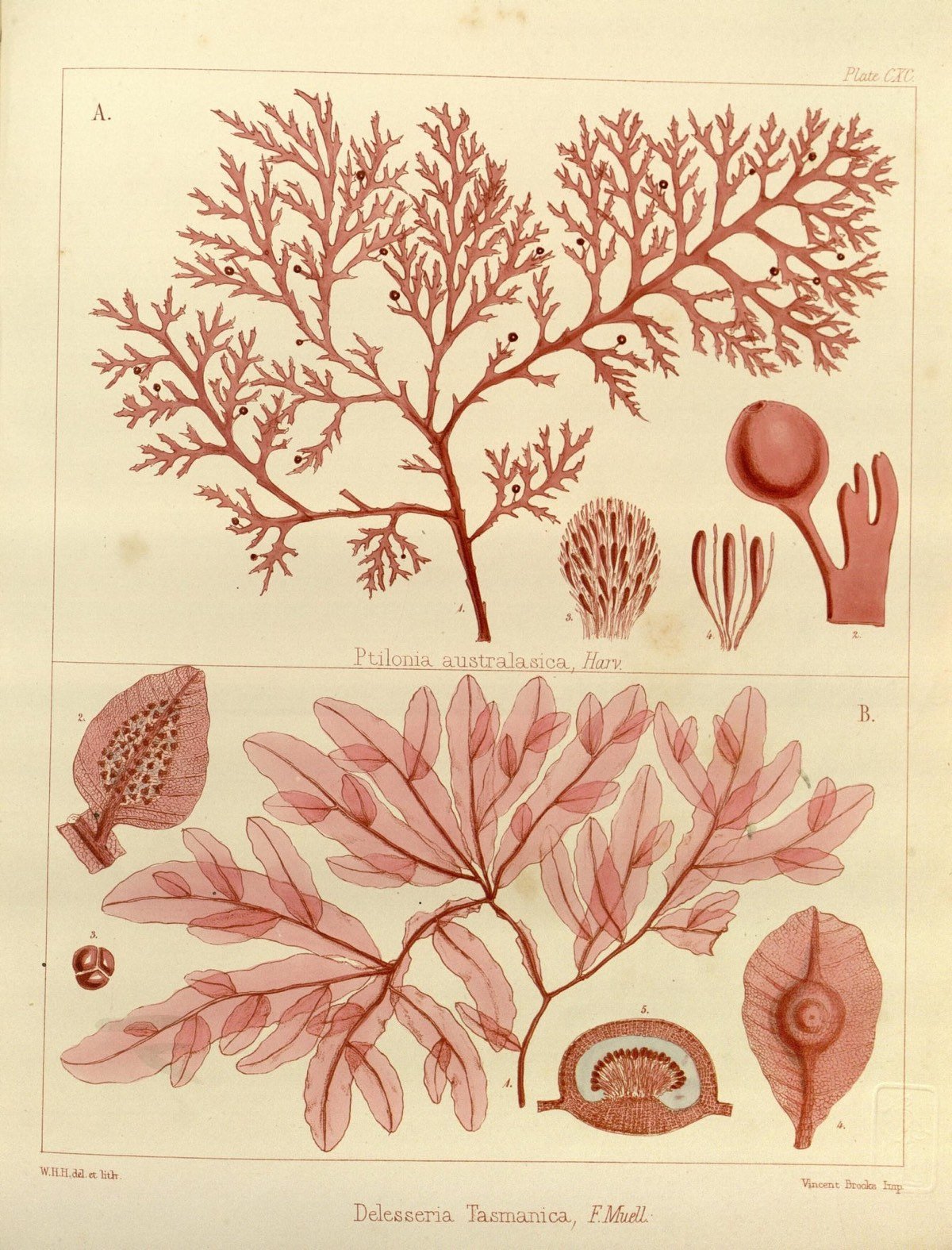
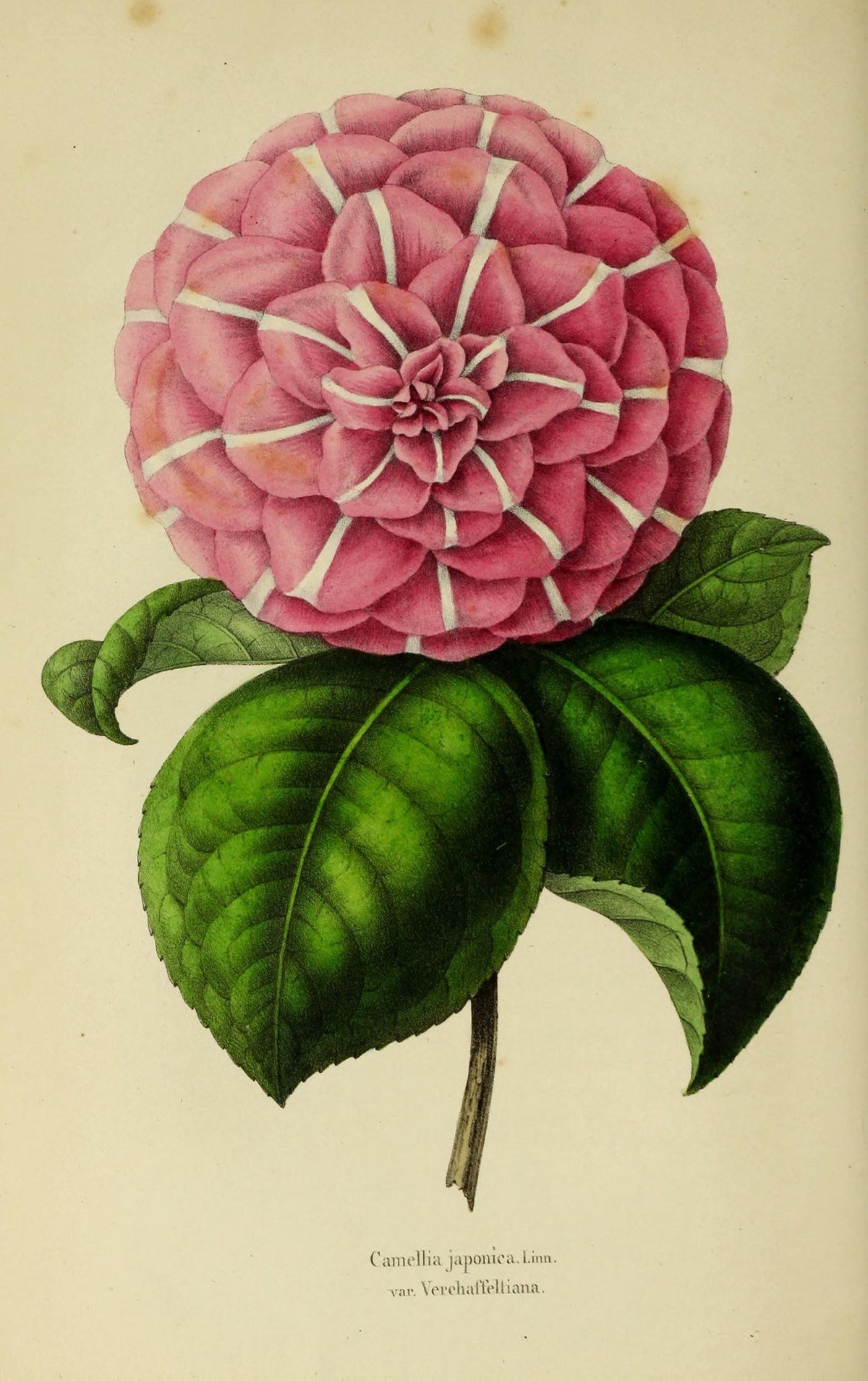
The Biodiversity Heritage Library (BHL) is a consortium of natural history and botanical libraries that cooperate to digitize the legacy literature of biodiversity held in their collections and to make that literature available for open access and responsible use as a part of a global “biodiversity commons.”
Over 110,000 images are available, organized into hundreds of albums. You could easily lose an entire afternoon in there.
P.S. While the Biodiversity Heritage Library doesn’t appear to be an official participant, Flickr’s The Commons project remains one of the under-appreciated gems of the Web.
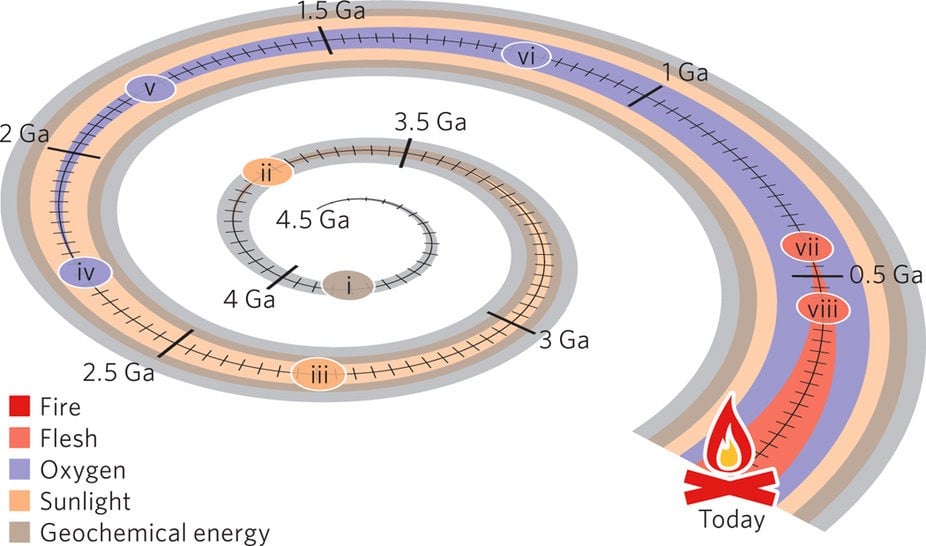
Since life first formed on Earth billions of years ago, the ability of organisms to use more powerful and efficient energy sources has been key in driving the diversity and complexity of life. According to this provocative piece in Nature by Olivia Judson, the history of life on Earth can be divided into five energetic epochs characterized by the following energy sources: geochemical energy, sunlight, oxygen, flesh and fire.
The first two were present at the start, but oxygen, flesh and fire are all consequences of evolutionary events. Since no category of energy source has disappeared, this has, over time, resulted in an expanding realm of the sources of energy available to living organisms and a concomitant increase in the diversity and complexity of ecosystems. These energy expansions have also mediated the transformation of key aspects of the planetary environment, which have in turn mediated the future course of evolutionary change. Using energy as a lens thus illuminates patterns in the entwined histories of life and Earth, and may also provide a framework for considering the potential trajectories of life-planet systems elsewhere.
Organisms formed on Earth and changed the planet, which led to the formation of new organisms more suited to the new environment. For instance, when a type of bacteria evolved to turn sunshine into oxygen, it completely changed the planet.
In the absence of a biotic source of oxygen, trace quantities of the gas can be generated abiotically: water molecules can be split by sunlight or radioactive decay. However, these abiotic processes are much less efficient than their biotic equivalent. Had cyanobacteria, or something like them, never evolved, oxygen would never have built up in the atmosphere of the Earth.
But build up it did. Between 2.45 and 2.32 Ga, significant quantities of oxygen began to accumulate in the air, an episode known as the Great Oxidation Event. Before the Great Oxidation, atmospheric oxygen levels were less than 10^-5 of the present atmospheric level of ~21%. By ~2 Ga, they had risen to perhaps 0.1-1% of the present atmospheric level. Although the subsequent history of oxygen is complex and many details are uncertain, Earth’s atmosphere has contained an appreciable level of the gas ever since. (Full oxygenation of the oceans, however, would not happen until around 1.8 billion years after the Great Oxidation.)
The original piece in Nature is fairly readable for a science journal, but this summary in The Atlantic is worth a look if you’re short on time or attention. (via @CharlesCMann)
This is a stunning time lapse video of the cells in a tadpole egg dividing over a period of 33 hours. The filmmaker, Francis Chee, built a custom microscope and lighting system to capture the action.
I can say that it was done with a custom designed microscope based on the “infinity optical design” It is not available by any manufacturer. I built it. I used LEDs and relevant optics to light the egg. They too were custom designed by me. The whole microscope sits on anti-vibration table. I have to say that it doesn’t matter too much what microscope people use to perform this. There are countless other variables involved in performing this tricky shot, such as for example: the ambient temperature during shooting; the time at which the eggs were collected; the handling skills of the operator; the type of water used; lenses; quality of camera etc etc.
Rove beetles have evolved the ability to look and smell enough like army ants that they can live amongst them. Until it’s dinner time.
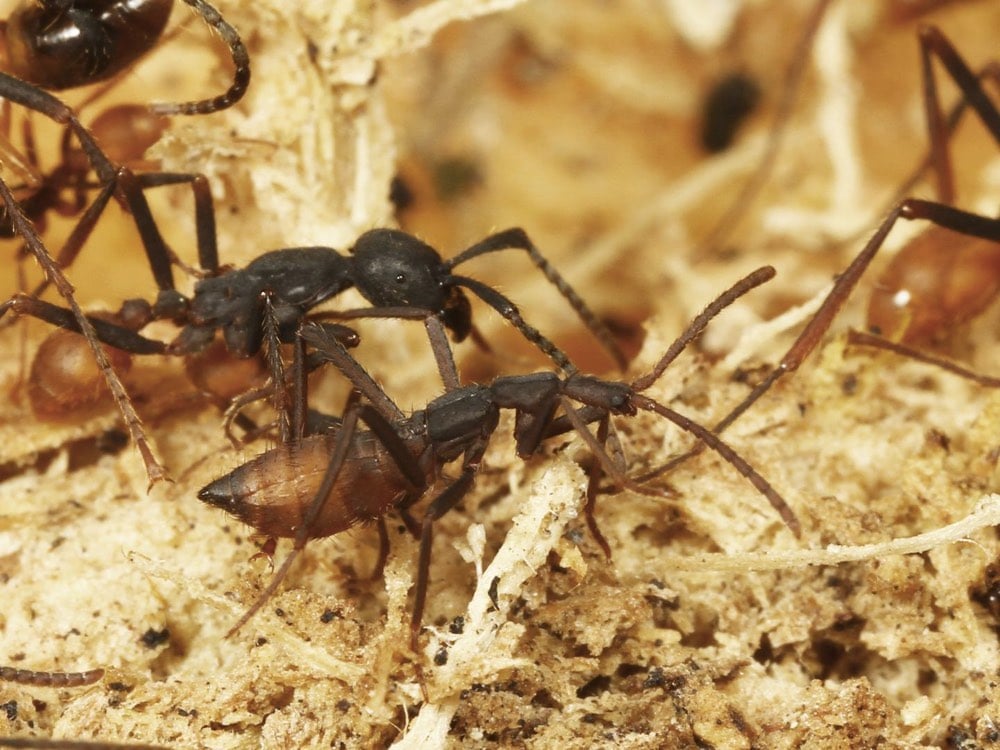
The impostors look and smell like army ants, march with the ants, and even groom the ants. But far from being altruistic nest-mates, these creatures are parasitic beetles, engaged in a game of deception. Through dramatic changes in body shape, behavior, and pheromone chemistry, the beetles gain their hostile hosts’ acceptance, duping the ants so they can feast on the colony brood.
As you can see in the photo above, the resemblance is strong…the beetle is in the foreground with the larger headed ant behind.
But that’s not even the most amazing part. A recent discovery has shown that rove beetles have evolved this capability at least a dozen separate times, suggesting that certain evolutionary possibilities are more likely than other in the presence of strong environmental factors and traits.
The ant-mimicking beetles all belong to the Staphylinidae, or rove beetles, but don’t mistake them for close relatives: the last common ancestor of the beetles in the study lived 105 million years ago, at about the time that humans split from mice. “What’s exceptional is that this convergent system is evolutionarily ancient,” says Parker. Although most other convergent systems, such as Darwin’s finches, three-spined stickleback, and African lake cichlid fish, are a few million years old at most, this newly discovered example extends back into the Early Cretaceous.
Given this great age, Parker and his co-author Munetoshi Maruyama of the Kyushu University Museum argue that their finding challenges Stephen J. Gould’s hypothesis that if time could be rewound and evolution allowed to replay again, very different forms of life would emerge. “The tape of life has been extremely predictable whenever rove beetles and army ants have come together,” says Parker. “It begs the question: why has evolution followed this path so many times?”
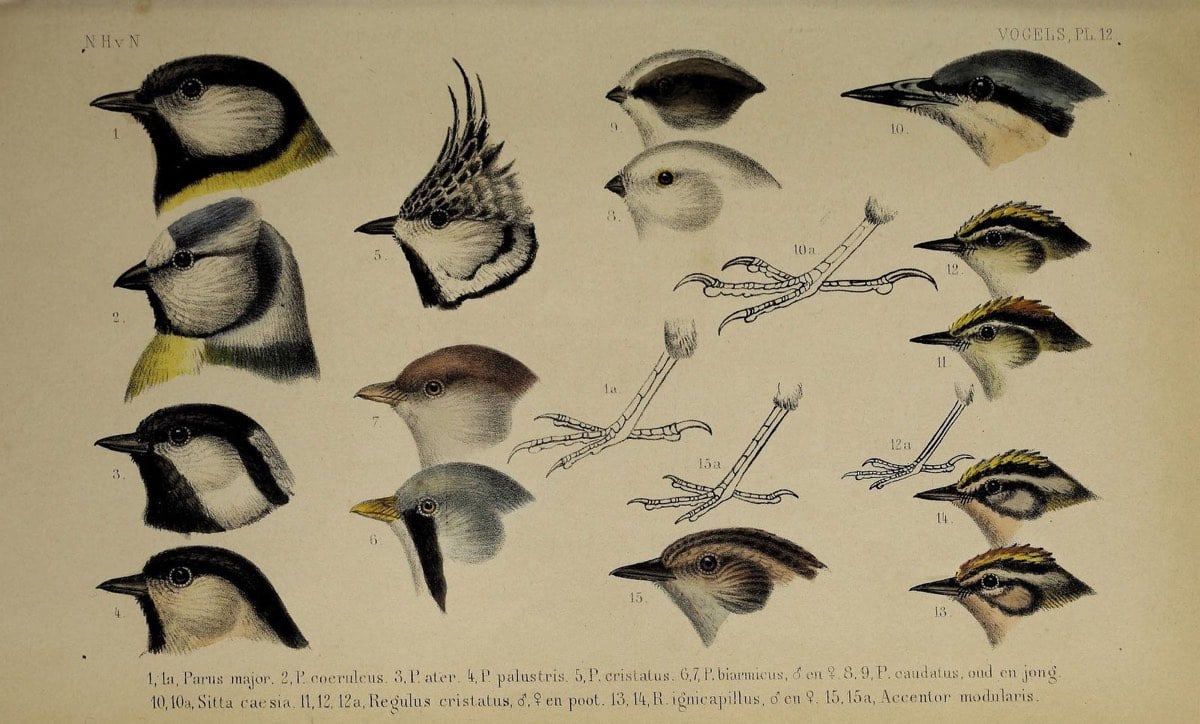
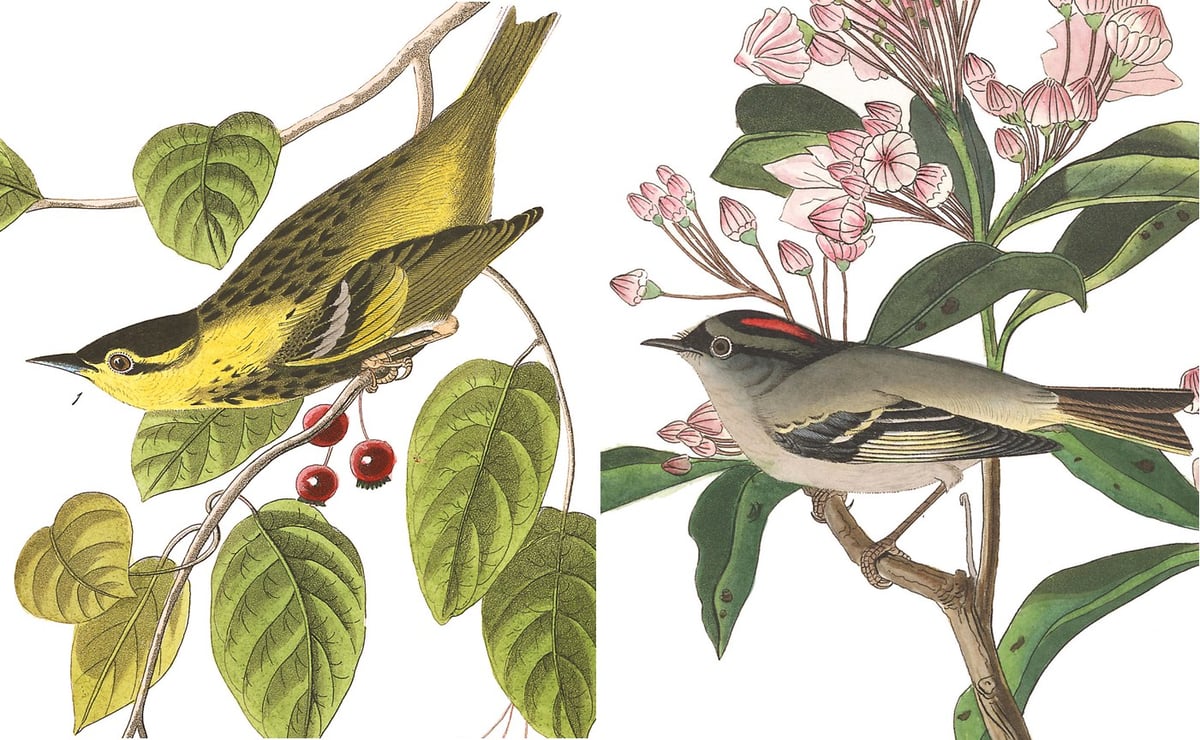
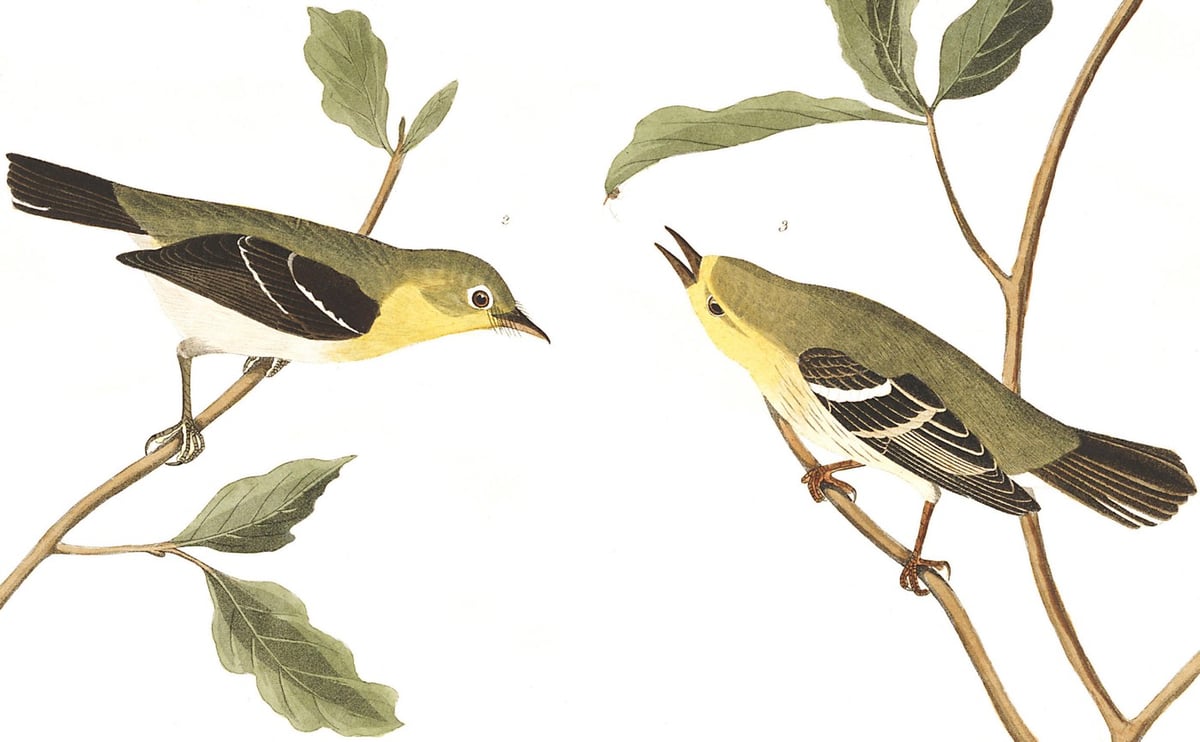
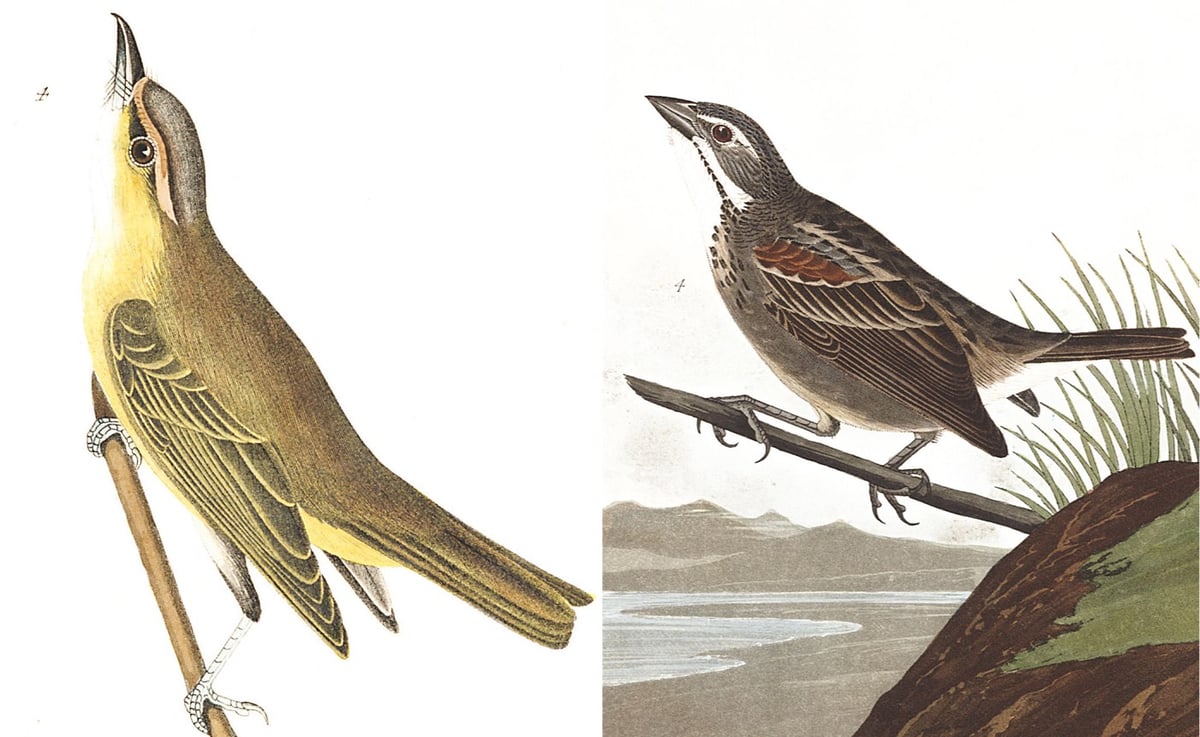
Over a period of thirteen years beginning in the 1820s, John James Audubon painted 435 different species of American birds.1 When he was finished, the illustrations were compiled into The Birds of America, one of the most celebrated books in American naturalism. Curiously however, five of the birds Audubon painted have never been identified: Townsend’s Finch, Cuvier’s Kinglet, Carbonated Swamp Warbler, Small-headed Flycatcher and Blue Mountain Warbler.
These birds have never been positively identified, and no identical specimens have been confirmed since Audubon painted them. Ornithologists have suggested that they might be color mutations, surviving members of species that soon became extinct, or interspecies hybrids that occurred only once.
The specimen that Audubon used to paint Townsend’s Bunting is now in the Smithsonian Museum of Natural History, identified as Townsend’s Dickcissel, but no bird exactly like it has been reported, Dr. Olson, an authority on Audubon’s work, noted in an email. Ornithologists suggest that it is either a mutation of the Dickcissel or a hybrid of Dickcissel and Blue Grosbeak, she said.
And indeed, there are several birds painted and explained in Birds of America that are not, in fact, actual species. Some are immature birds mistaken for adults of a new species (the mighty “Washington’s Eagle” was, in all likelihood, an immature Bald Eagle). Some were female birds that didn’t look anything like their male partners (“Selby’s Flycatcher” was a female Hooded Warbler).
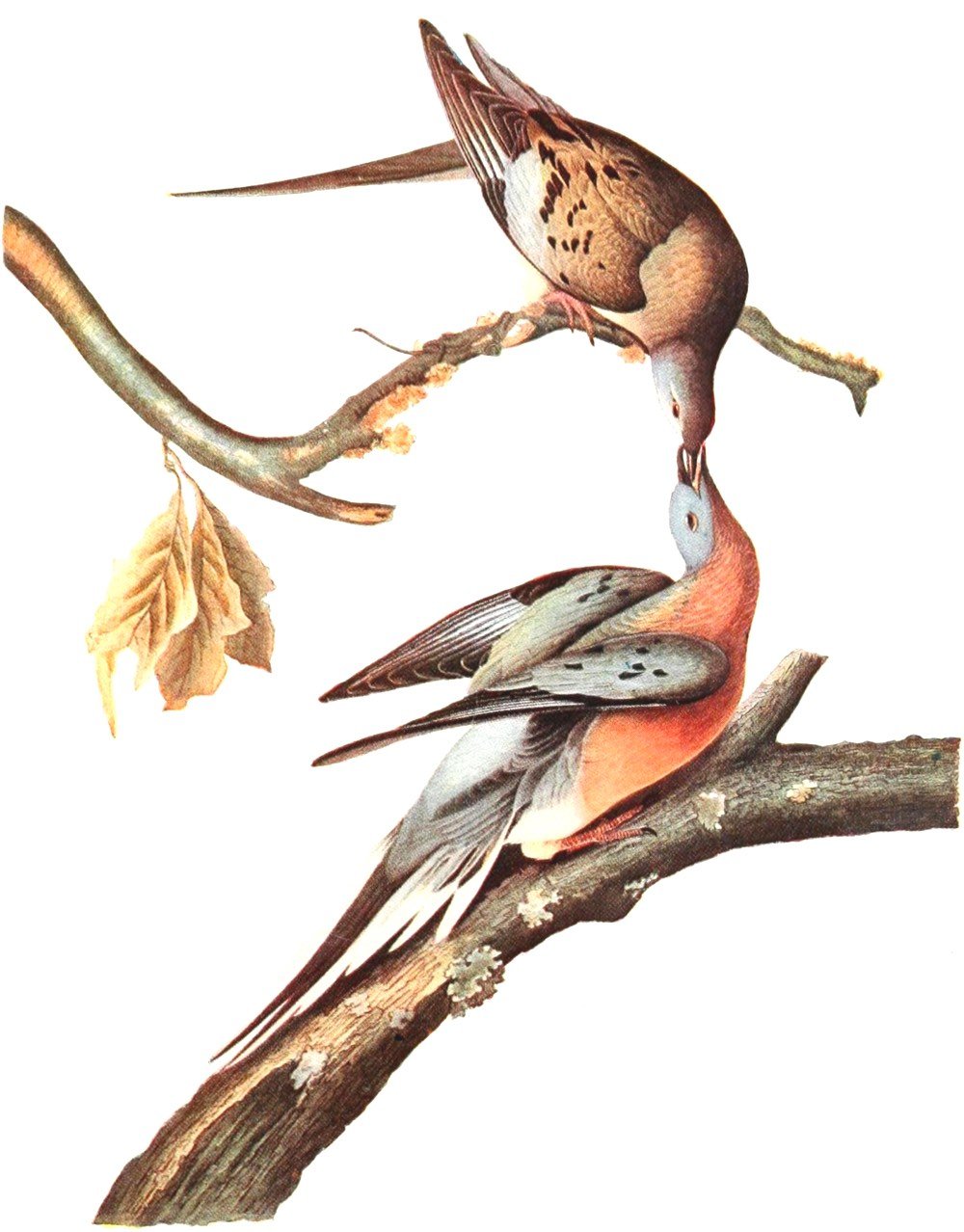
Audubon also painted six species of bird that have since become extinct: Carolina parakeet, passenger pigeon, Labrador duck, great auk, Eskimo curlew, and pinnated grouse. Here’s his portrait of the passenger pigeon:
There were an estimated 3 billion passenger pigeons in the world in the early 1800s — about one in every three birds in North America was a passenger pigeon at the time. Their flocks were so large, it took hours and even days for them to pass. Audubon himself observed in 1813:
I dismounted, seated myself on an eminence, and began to mark with my pencil, making a dot for every flock that passed. In a short time finding the task which I had undertaken impracticable, as the birds poured in in countless multitudes, I rose and, counting the dots then put down, found that 163 had been made in twenty-one minutes. I traveled on, and still met more the farther I proceeded. The air was literally filled with Pigeons; the light of noon-day was obscured as by an eclipse; the dung fell in spots, not unlike melting flakes of snow, and the continued buzz of wings had a tendency to lull my senses to repose… I cannot describe to you the extreme beauty of their aerial evolutions, when a hawk chanced to press upon the rear of the flock. At once, like a torrent, and with a noise like thunder, they rushed into a compact mass, pressing upon each other towards the center. In these almost solid masses, they darted forward in undulating and angular lines, descended and swept close over the earth with inconceivable velocity, mounted perpendicularly so as to resemble a vast column, and, when high, were seen wheeling and twisting within their continued lines, which then resembled the coils of a gigantic serpent… Before sunset I reached Louisville, distant from Hardensburgh fifty-five miles. The Pigeons were still passing in undiminished numbers and continued to do so for three days in succession.
But the sad echo of the loss of passenger pigeons still reverberates today because its extinction probably exacerbated the proliferation of Lyme disease. When the passenger pigeons existed in large numbers, they subsisted primarily on acorns. However, since there are no pigeons to eat acorns, the populations of Eastern deer mice — the main reservoir of Lyme disease — exploded far beyond historic levels as they exploited this unexpected food bonanza.
Interesting note: Audubon financed this project through a subscription plan. Each month or two, each subscriber would receive a set of five prints and the proceeds covered the costly printing process and Audubon’s nature travels.↩
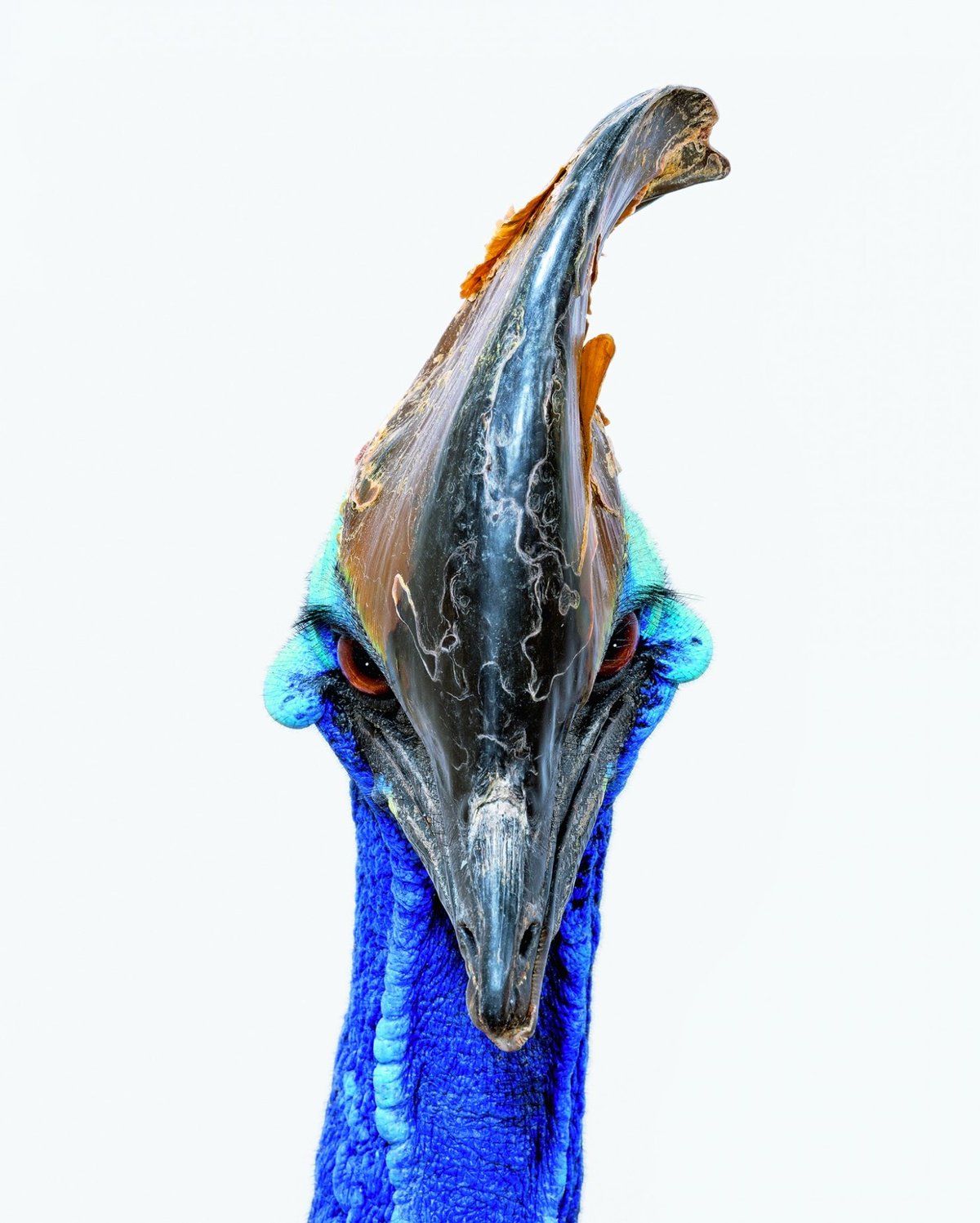
For his new book, Evolution: A Visual Record, photographer Robert Clark has collected dozens of images that show the varying ways in which plants and animals have adapted to their changing surroundings.
Evidence of evolution is everywhere. Through 200 revelatory images, award-winning photographer Robert Clark makes one of the most important foundations of science clear and exciting to everyone. Evolution: A Visual Record transports readers from the near-mystical (human ancestors) to the historic (the famous ‘finches’ Darwin collected on the Galapagos Islands that spurred his theory); the recently understood (the link between dinosaurs and modern birds) to the simply astonishing.
The photo above is of a southern cassowary, a flightless bird that is particularly dinosaur-esque in stature and appearance.
Maxime also shows us a section of animated reaction-diffusion patterns, where simple chemical feedback mechanisms can yield complex flowing bands of colour — these forms of system were originally thought up by Alan Turing, and were part of the early seeds of the field of systems biology, which seeks to simulate life with computers, in order to better understand the systems producing the complexity we see in the living world. They were also the starting point of my main research area many years ago before I got lost in music! (where I began with the question of what patterns could be produced via reaction-diffusion forms of system as opposed to gene-regulatory network controlled patterning).
There’s a blue brain coral pattern at the 1:30 mark and a neuron-ish pattern at 2:30 that I wish would go on forever. Headphones recommended, psychoactive drugs optional. (via colossal)
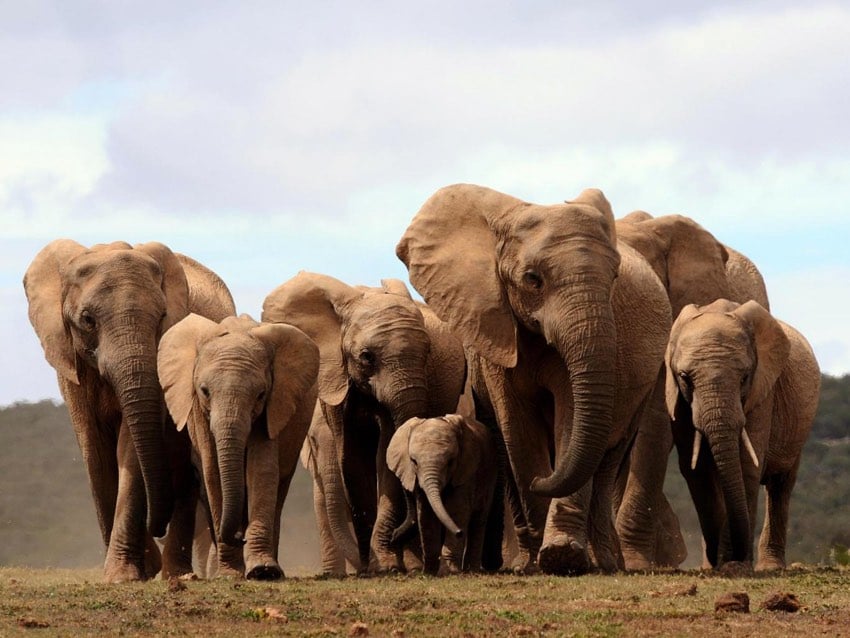
In Gorongosa National Park in Mozambique, 90 per cent of elephants were slaughtered between 1977 and 1992, during the country’s civil war. Dr Poole said that because poachers disproportionately targeted tusked animals, almost half the females over 35 years of age have no tusks, and although poaching is now under control and the population is recovering well, they are passing the tuskless gene down to their daughters: 30 per cent of female elephants born since the end of the war also do not have tusks.
“Females who are tuskless are more likely to produce tuskless offspring,” she said.



Stay Connected